
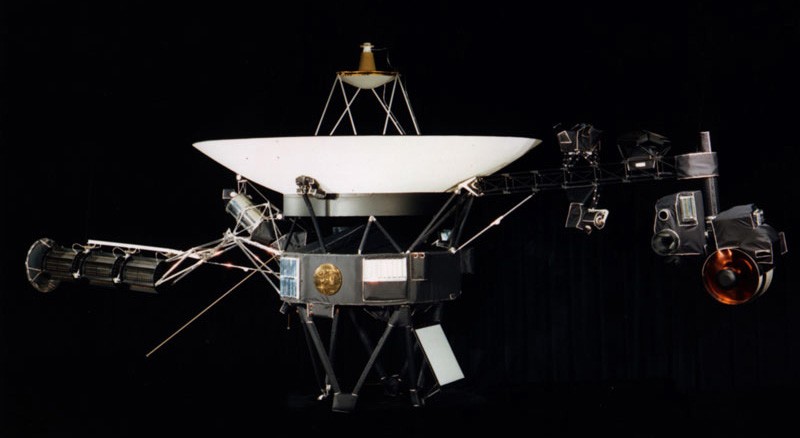
On November 18, 2026, NASA’s Voyager 1 spacecraft achieved a landmark moment in humanity’s exploration of space: it reached a distance of one light-day from Earth, or roughly 16.1 billion miles (25.9 billion kilometers) from its home planet. The feat, marking a span light would cross in 24 hours, is a testament to the endurance and ambition of a mission launched nearly half a century ago. Yet this historic milestone arrives just as Voyager 1’s flow of science and engineering data to Earth has abruptly halted, prompting a race by engineers to diagnose and restore full communication with the distant craft.
According to NASA and documentation from the Jet Propulsion Laboratory, communication problems began on November 14, when Voyager 1 stopped sending its usual stream of telemetry and science data to Earth. While ground stations in Australia continued to receive a stable carrier signal—evidence that Voyager 1’s hardware was still operational and properly oriented toward Earth—the vital data content embedded within that signal was missing. Mission teams quickly began analyzing the problem, focusing on the spacecraft’s onboard computers and data formatting systems as likely sources.
Despite the setback, mission engineers were able to confirm Voyager 1 had crossed the light-day threshold based on established trajectory models and the continuing carrier wave sent by the probe. While awaiting the arrival of signals confirming its status (delayed by the 24-hour transit time of radio waves at such a distance), teams used these precise calculations to announce the achievement. The moment underscores not only technical achievement but also the immense challenge and lag in deep-space communications—every exchange between mission control and Voyager 1 now takes a full two days to complete (24 hours each way).
Voyager 1, launched in 1977, is the farthest human-made object from Earth and, along with its twin Voyager 2, among the only spacecraft operating in interstellar space. The probe has withstood decades of radiation, vacuum, and cold, delivering groundbreaking discoveries from planets to the boundary of the Sun’s influence. This is not its first brush with communications difficulty: similar data gaps have been resolved in the past, including a two-day silence in October 2026 and an issue in 2023, both traced to aging onboard systems. Teams are drawing on this past experience as they investigate the current blackout, which may take weeks or longer to resolve due to the long transmission times and complex systems onboard.
Even as troubleshooting continues, NASA marked the light-day milestone as a symbol of human ingenuity and persistence. The agency also acknowledged the reality that, sooner or later, unfixable technical failures are inevitable, but until then, Voyager 1’s odyssey continues to break records and inspire further exploration. For now, the mission team and scientists worldwide await the return of data from the probe, hopeful that Voyager 1’s voice from the edge of the solar system will soon be heard once again.