
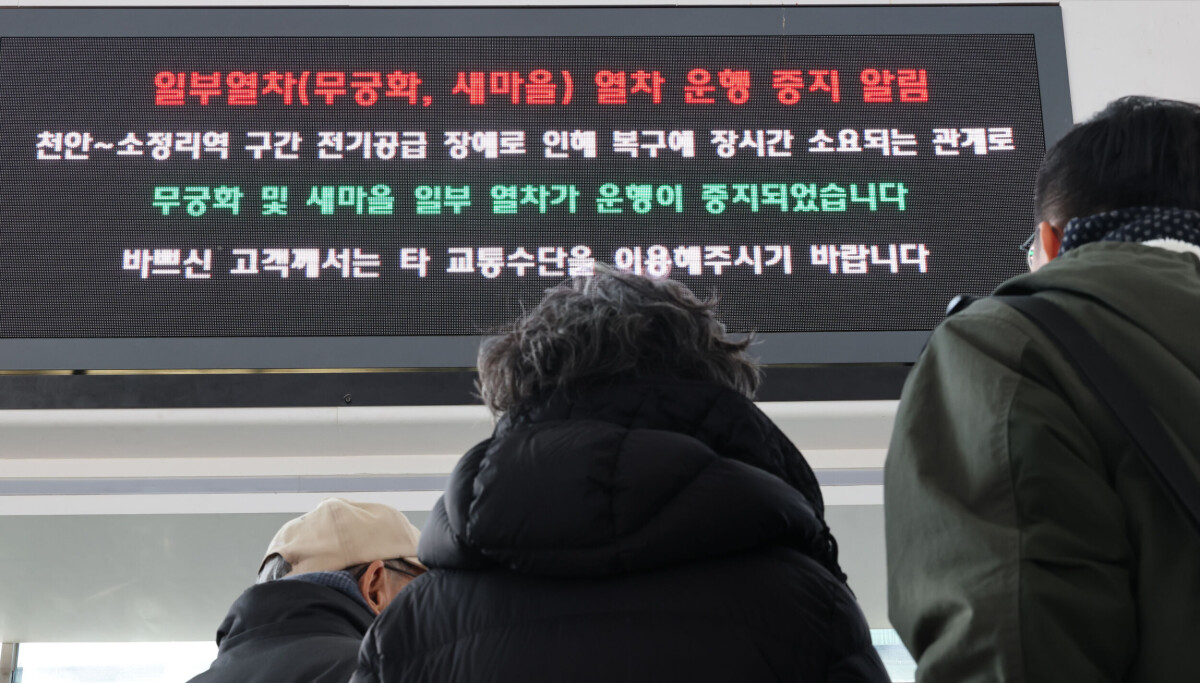
Early on November 21, 2026, a freight train derailment at Sojeong-ri Station in Sejong City brought a key stretch of South Korea’s vital Gyeongbu Line to a standstill, stranding hundreds of rail passengers and sending ripple effects through the nation’s transportation network on a crucial test day for university admissions.
The incident, involving Freight Train No. 3810, occurred at approximately 5:37 a.m. KST as the train initiated an emergency stop while entering the station. Five of the train’s 21 cars derailed, colliding with a steel beam that supported the overhead electrical lines. According to Korail and reporting by outlets including the Korea JoongAng Daily, this impact severed power lines and triggered a blackout between Cheonan and Jeonui stations, north of Daejeon. (Korea JoongAng Daily)
Officials from the Korea Railroad Corporation (Korail) responded by swiftly halting all regular passenger services on the Gyeongbu Line between Cheonan and Daejeon. Service interruptions struck commuter and intercity trains including the popular ITX-Maum, Saemaeul, and Mugunghwa routes. The high-speed KTX services and trains operating on the Chungbuk Line, which use different tracks and electrical systems, remained operational. (Herald Corporation)
The disruption could hardly have come at a worse time for passengers: the derailment coincided with South Korea’s university entrance examinations, a high-stakes event drawing thousands of students and parents onto the rails. Concerns quickly mounted that stranded travelers would miss test start times; as recovery crews mobilized, authorities urged those affected to seek alternative transport.
Despite the significant damage—including the toppled cars and power infrastructure—no injuries or casualties were reported among crew or bystanders, officials confirmed. Recovery operations, led by Korail’s special teams with cranes and diesel locomotives, were still underway late Friday morning, with the corporation pledging a full investigation once the site was cleared and regular operations restored.
As of this update, regular services between Cheonan and Daejeon remain suspended. There is no immediate timeline for full resumption, and affected travelers should prepare for continued delays as crews work to repair the damaged corridor.
The last incident of this scale on the Gyeongbu Line took place in December 2020, when a separate freight accident near Cheonan resulted in fatalities and widespread service suspension—raising fresh questions about operational safety on one of Asia’s busiest railway arteries.
With a critical transportation link disrupted and the annual university examination rush ongoing, the incident at Sojeong-ri promises to test not just emergency response but the resilience of South Korea’s rail infrastructure under pressure.