
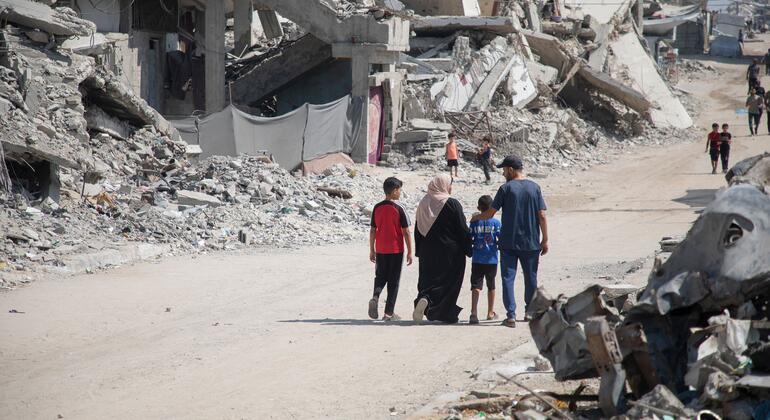
Progress once measured in decades has collapsed in a matter of months. On Monday, the United Nations’ deputy chief, Amina Mohammed, delivered a stark warning: the war between Hamas and Israel in Gaza has reversed 77 years of human development for Palestinians, according to a joint UN and World Bank assessment. Despite a ceasefire declared in October 2025, violence, mass displacement, and dire living conditions persist, undermining not only lives but the very fabric of Palestinian society.
Speaking on behalf of Secretary-General António Guterres ahead of the International Day of Solidarity with the Palestinian People, Mohammed condemned both the Hamas attacks of October 7, 2023, and the ongoing collective punishment of the Palestinian people. She underscored that tens of thousands have died in Gaza, while an alarming rise in settler violence in the West Bank continues to force families from their homes at record rates. The prospect of recovery, the UN makes clear, remains painfully distant for most.
At the heart of the suffering is a multidimensional crisis: essential infrastructure has collapsed, and access to clean water, healthcare, education, and livelihoods remains out of reach for much of the population. Mohammed urged immediate, unhindered humanitarian access to Gaza and called for robust protection of aid workers. She stressed, “Aid must never be obstructed, diverted, or used as a bargaining chip.” Yet, humanitarian access remains severely limited, exacerbating need and trauma for those trapped by circumstance and conflict.
Political and financial support for UNRWA—the UN agency for Palestine refugees—was highlighted as crucial in meeting basic needs and providing emergency assistance. But the challenge, Mohammed noted, extends well beyond rebuilding homes and infrastructure. Real recovery requires repairing the social fabric and ensuring that Palestinians—women and youth included—lead the process of reconstruction and healing.
No matter how intensive the aid or reconstruction, the UN deputy chief emphasized, these efforts cannot substitute for a genuine political solution. The vision she outlined is explicit: both political and territorial unity for the Palestinian territories, and the establishment of two independent, sovereign states—Israel and Palestine—living side by side along pre-1967 borders. In her words, this remains “the only vital path forward.”
The question now confronting the international community is immediate: Will governments move swiftly to support this vision, or will inertia prevail as humanitarian and developmental losses deepen further? As Mohammed concluded, “There is no time to waste. No excuse for inaction. And no place for impunity.”