
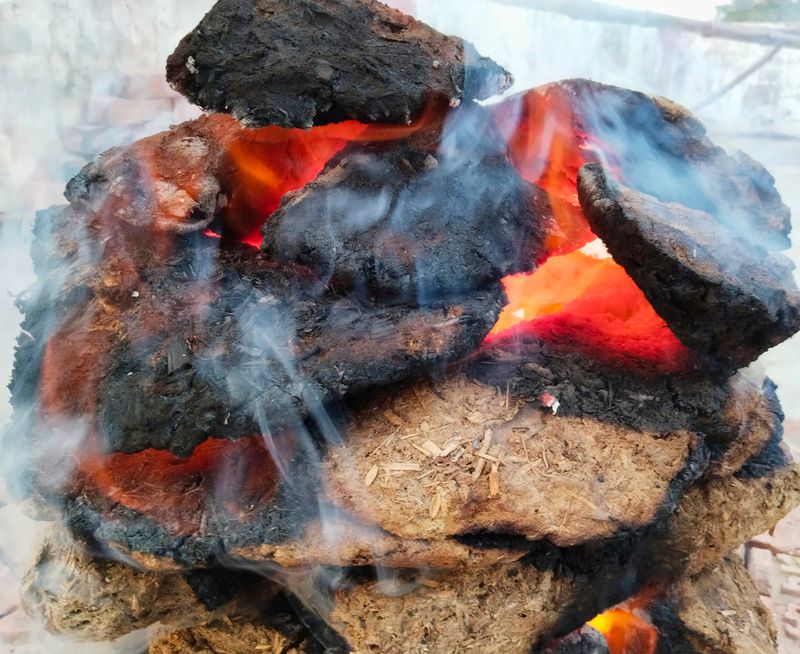
Kitchen smoke—not factory chimneys or traffic jams—remains the biggest generator of toxic PM2.5 air pollution across the Indo-Gangetic Plain, according to fresh data released in late November 2026 by the Council on Energy, Environment and Water (CEEW). The landmark study challenges conventional narratives and points to the kitchen hearth as the key battleground if India is to make real progress against hazardous air quality in its populous north.
According to the CEEW analysis, cooking with traditional solid fuels such as firewood, dung cakes, and coal now accounts for between 36% and 49% of all primary PM2.5 emissions in the most pollution-burdened states spanning Punjab to West Bengal. These fine particles, less than 2.5 microns in diameter, are a key public health crisis in South Asia, linked with millions of premature deaths each year.
One major change has come from government intervention. The Pradhan Mantri Ujjwala Yojana (PMUY), launched in 2016 to provide free liquefied petroleum gas (LPG) connections to low-income families, helped avert an estimated 834 kilotonnes of household PM2.5 emissions in 2025–26 alone. This finding underscores how policy can directly impact air quality in a region where tens of millions still use ancestral cooking methods reliant on smoke-producing fuels.
Yet, the study’s conclusions remain sobering. Despite the inroads made by PMUY, a large portion of rural and peri-urban families continue to rely on solid fuels—often toggling between wood and their subsidized LPG stoves. The price of LPG refills remains a significant burden for many, especially in the winter months, when extra fuel is needed for both cooking and heating. As a result, the practice of fuel stacking, mixing modern and traditional fuels, is widespread and keeps emission levels stubbornly high during the most polluted season.
The CEEW researchers recommend a targeted policy response: a winter-specific subsidy of INR 200 per LPG refill for PMUY households in the IGP, to directly address the affordability crisis during high-pollution months. This intervention, they argue, could deliver large and quickly measurable health and environmental gains for millions.
The findings add urgency to India’s ongoing struggle with air pollution in the Indo-Gangetic Plain—one of the world’s most densely populated and pollution-affected regions. Over decades, scientists have documented the outsize impact of household cooking practices on regional air quality, but this latest study quantifies just how decisive household emissions remain even after several years of aggressive public policy effort.
According to CEEW and corroborating news reports, the persistent use of solid fuels is not simply a symptom of poverty, but also of structural policy gaps—such as insufficiently calibrated gas subsidies and limited winter-focused support. Despite government progress, household air pollution continues to fuel a cycle of poor health outcomes and environmental degradation.
Experts assert there are no easy solutions, but the data make clear: unless cleaner cooking becomes economically feasible for all, kitchen fires will continue to darken the skies over the Indo-Gangetic Plain each winter, holding back wider efforts to secure clean air and improve public health.