
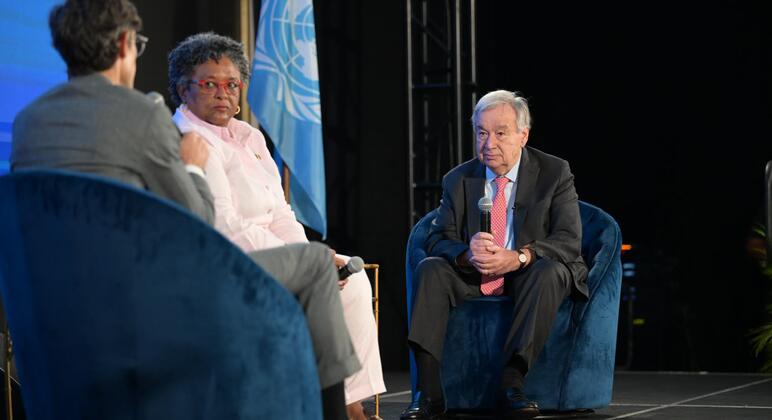
As technology rapidly outpaces regulation, UN Secretary-General António Guterres has issued a stark appeal for international cooperation on artificial intelligence. Concluding the Bridgetown Special Summit on AI Safety in Barbados on Monday, Guterres warned of a historic shift in power from nation-states to a handful of corporations and individuals who control advanced AI—an accumulation the world’s governing systems are not equipped to oversee.
“We are witnessing the biggest transfer of power in the history of humankind,” Guterres told Member States, calling for the immediate start of negotiations on a multilateral AI Risk Management Framework. He outlined key pillars: shared safety measures, basic transparency rules, standardized testing and evaluation, and independent oversight, with the aim that all countries, regardless of size or resources, can apply these safeguards effectively.
The summit spotlighted the dangers emerging from rapid AI deployment, including recent cyberattacks and system failures that exposed global vulnerabilities. Guterres stressed challenges like technology developing without accountability, and capabilities advancing without adequate safety nets. He pressed for reforms that give governments—and especially smaller nations—a meaningful role in setting rules which so far have been dominated by private entities, noting the UN’s unique legitimacy for such initiatives.
Barbadian Prime Minister Mia Mottley underscored the plight of smaller states, demanding that purchasers of AI systems have emergency ‘kill switches’ and that responsibility fall squarely on developers if their technologies cause harm, such as a rogue AI agent targeting a Caribbean bank. Mottley also warned that “the horse has already bolted” regarding the pace and concentration of tech power, emphasizing the need for robust regulation and legislation.
The summit drew additional commitments: French President Emmanuel Macron, via video, highlighted his Paris Call for AI Security, endorsed by multiple heads of state and AI leaders, advocating for adherence to its principles as a condition for market access. Microsoft Vice Chair Brad Smith acknowledged AI advancements were “moving faster than the speed of safety,” pressing for equitable AI adoption, especially in the Global South.
Guterres flagged the dangerous consolidation of AI weaponization in just two countries and a few companies, repeating his call for a global ban on autonomous weapons capable of lethal decisions. He also introduced a proposal for a Global Fund to help developing nations evaluate AI systems’ safety in local contexts, addressing deep disparities in multilingual performance—over a thousand languages have foundational gaps that must be bridged to prevent widening global inequalities.
The central question remains: Will member states overcome fragmented approaches to establish a shared foundation before the next wave of AI-driven disruptions, or will the concentration of power outpace governance reforms, leaving global society to manage cascading consequences?