
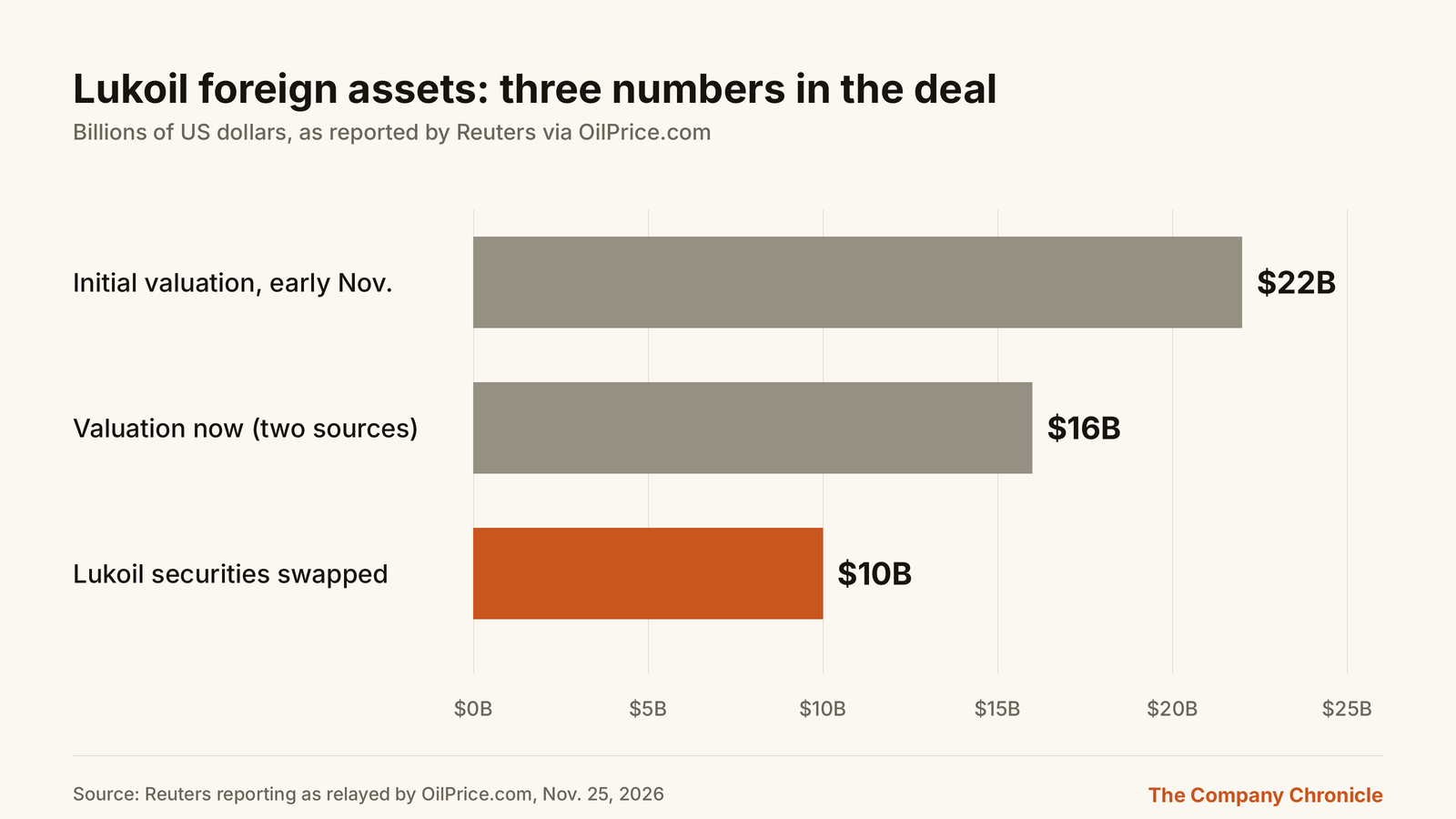
In a move with significant geopolitical and energy market ramifications, a consortium led by Todd Boehly’s Eldridge Industries, joined by the US International Development Finance Corporation (DFC), has signed a deal valued at $10 billion to acquire Lukoil’s international energy assets. The US-backed consortium announced the agreement on November 25, 2026, as verified by multiple sources, including statements from Eldridge. The transaction centers on a share swap, exchanging Lukoil securities—rather than cash—for a portfolio that includes oilfields, refineries, and service stations spanning 11 countries, producing around 350,000 barrels of oil per day.
The agreement arrives at a critical juncture for Lukoil, Russia’s second-largest oil producer, which has been under US sanctions since October 2025 due to the ongoing conflict in Ukraine. Facing mounting restrictions, Lukoil has sought to offload its foreign holdings to preserve its operations outside Russia. The US Treasury, the architect of these sanctions, must now review and approve the deal to ensure it aligns with national security goals. The review process, according to sources familiar with US procedures, is expected to be lengthy because of the deal’s scope and the sensitive context of Lukoil’s sanctioned status.
Strategic Objectives and Structure
The consortium’s acquisition is not a straightforward purchase. Under the deal’s terms, Lukoil’s securities will be placed in an escrow account in the United Arab Emirates—ensuring that, while Lukoil’s international assets change hands, the Russian parent does not receive a direct financial windfall. Additionally, the US government will claim a share of future profits generated by these assets, marking an unprecedented approach to both reining in Moscow’s global economic power and augmenting American influence in crucial markets.
The transaction’s value underscores the shifting sands of the global energy economy: once valued near $22 billion, the international asset portfolio has been marked down to approximately $16 billion, reflecting recent declines in market valuations and regulatory uncertainty. Boehly and the DFC are joined in the venture by UAE-based Catena Investment Holding and US bank Xtellus Partners. The Al-Khayyat brothers and Abu Dhabi’s International Holding Company, both initially involved, exited the consortium last week.
Obstacles and Uncertainties
This agreement follows failed attempts by other bidders, including trading house Gunvor and private equity giant Carlyle, both of which withdrew or were unable to secure approvals from the US Treasury’s Office of Foreign Assets Control (OFAC). The main challenge now rests again with OFAC, as any transfer involving a sanctioned entity must meet strict regulatory standards. As of November 26, the deal remains subject to review; Boehly indicated closure could take up to a year, depending on how long approvals take.
Lukoil declined to comment on the agreement when approached by Reuters. The company’s urgency to reach a deal, coupled with the complex international regulatory landscape, could determine whether the sale becomes a defining moment in the decoupling of Russian and Western energy interests.
Potential Impact
If finalized, the sale would shift a significant tranche of global oil production capacity from Russian to US and allied control. The move has the potential to alter regional market dynamics and send a signal about the future boundaries of Russian commercial influence abroad. As governments and regulators weigh the deal’s compliance and implications, market observers will be watching closely for ripple effects across the energy sector and international relations.