
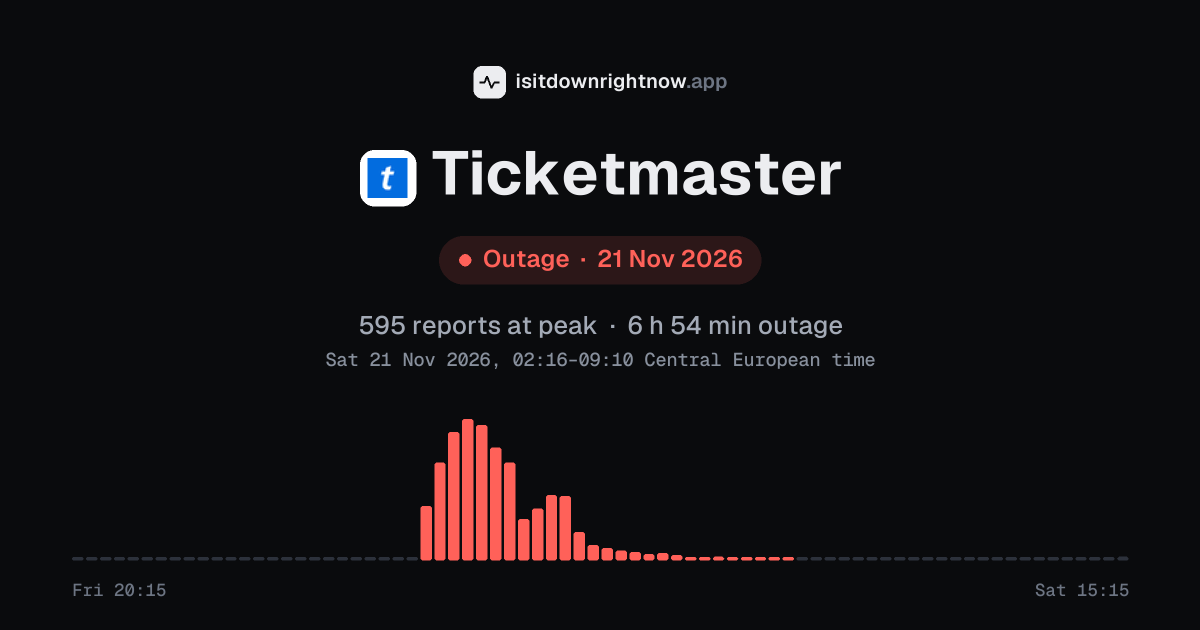
For nearly seven hours beginning the evening of November 20, 2026, Ticketmaster users around the globe faced a rare digital blackout, temporarily losing access to critical ticketing services during a peak slate of live events. The outage, monitored by independent tracking sites and widely reported by users in the United States and other countries, delayed and frustrated concert-goers at high-profile venues—including fans hoping to see Usher and Chris Brown at New Orleans’ Superdome.
According to independent outage monitoring services, the disruption began around 8:33 PM Eastern Standard Time and persisted until Ticketmaster restored operations by 9:10 AM Central European Time the following day, amounting to almost seven hours of downtime [isitdownrightnow.app]. The ripple effects were felt from the United States to Canada, Australia, and Mexico, as customers reported being unable to log in, download, or present their tickets digitally—a critical setback for those without printed copies or pre-saved mobile tickets [isitdownrightnow.app].
At the Superdome in New Orleans, the outage intersected with concerts by Usher and Chris Brown, causing confusion at entry for many would-be attendees. With the official ticketing platform unresponsive, venue staff and Ticketmaster advised users, through rapid online communications, to rely on printed tickets or screenshots already saved to devices to enter the venue [wafb.com].
While the technical breakdown inconvenienced attendees and drew hundreds of complaints online, Ticketmaster responded by acknowledging the interruption and pledging recovery efforts. However, during the peak of the issue, some corporate postings claimed there were “no reported issues”—a message at odds with widespread independent monitoring sites and user feedback [hindustantimes.com].
The incident, one of the more extensive and prolonged disruptions in Ticketmaster’s recent history, has drawn attention to the industry’s reliance on centralized digital ticketing systems, especially during moments of high demand. As of November 24, 2026, monitoring services report that Ticketmaster’s systems are currently stable, but customers are being encouraged to maintain backup ticketing options for future events [downhunter.com].
While Ticketmaster has restored all normal operations, analysts and customers alike note the episode as a warning: the convenience of digital tickets can quickly become a vulnerability for fans when systems fail. For now, Ticketmaster’s infrastructure remains under scrutiny, with many watching for assurances against future mass disruptions.