
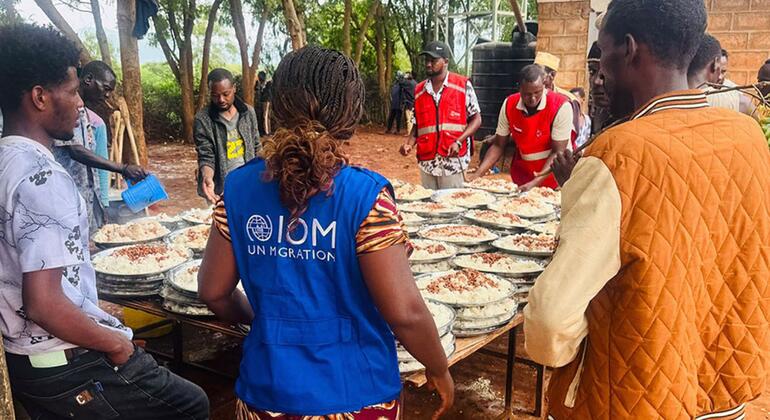
Over recent weeks, the small but vital border town of Moyale on Kenya’s northern frontier has found itself at the center of a crisis. As violence erupted across Ethiopia’s Oromia and Somali regions, roughly 50,000 people streamed south, taking refuge in Moyale and further stressing already scarce resources.
The sudden population surge has left both new arrivals and the town’s residents in precarious circumstances. A joint rapid assessment conducted by Kenyan authorities and the International Organization for Migration (IOM) found urgent needs: 71 percent of surveyed refugees do not have enough to eat, and 80 percent listed food as their highest priority. Water is nearly as scarce, with 44 percent reporting insufficient drinking supplies, and more than three-quarters lacking any handwashing facility.
Pressures on Fragile Resources
Many of the displaced are staying with relatives or host community members, further stretching Moyale’s existing resources. Others have resorted to sleeping in schools, temporary shelters, or outdoors. A striking 90 percent of surveyed families reported their entire village had fled, illustrating the comprehensive nature of the displacement and its potential long-term impacts on both sides of the border.
Health concerns loom especially large. Over half of the surveyed households reported struggling to access healthcare—mainly due to high costs and persistent shortages of essential medicines. As more than half of those arriving are children, many under the age of five, humanitarian organizations warn of heightened vulnerability amid worsening living conditions.
A Community Still Reeling from Recent Health Threats
Compounding these pressures, Moyale and its cross-border communities are still recovering from a mpox (formerly monkeypox) outbreak that struck less than eighteen months earlier. In May 2025, a suspected cluster of cases in a newborn and her family set off an Ethiopian Ministry of Health response, assisted by the World Health Organization. With Moyale’s status as a bustling border town, the threat of rapid cross-border contagion called for urgent action.
Within days, isolation units were set up, medical supplies delivered, and volunteers recruited for community-based surveillance and risk communication in three languages. Outreach efforts, spanning from door-to-door tracing to mosque and school visits, reached an estimated 92,000 people on both sides of the border. This coordinated effort managed to reverse the surge in cases, but not without exposing deep vulnerabilities: logistical constraints, supply shortages, and community hesitance, aggravated by fears of stigma and economic disruption during quarantines.
Piling Crises, Dwindling Capacity
As Moyale faces its current challenges, the memory of last year’s outbreak remains fresh. While international aid, including support from the Government of Japan and the European Union, enabled a temporary strengthening of health infrastructure, today’s refugee influx threatens to undo those fragile gains. Counseling and community engagement efforts had reduced stigma and improved care during the outbreak, but access to healthcare has once again become strained, with medicine in short supply and basic hygiene impossible for many new arrivals.
Aid organizations insist that urgent funding and resources are needed—not just to supply food and water, but to prevent hunger and disease from compounding disaster for both refugees and their hosts. As displacement continues and humanitarian needs mount, the people of Moyale look to the world for answers to a pressing question: how much more strain can this border community bear before relief arrives?