
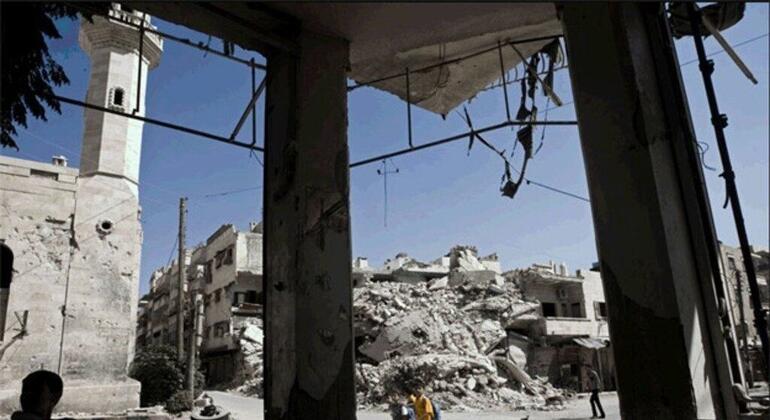
Nearly two years since the end of the Assad regime, Syria’s fitful recovery is marked by undeniable if precarious progress, darkened by a deadly new toll on its youngest citizens and a looming humanitarian funding crisis. Senior United Nations officials, appearing before the Security Council on November 16, warned that the remnants of the war—especially unexploded ordnance—combined with spiraling health system collapse and severe shortfalls in humanitarian aid, could unravel the fragile gains achieved since regime change.
This warning arrives on the heels of stark numbers: In the past month alone, explosive remnants have killed at least 30 people—19 of them children—and injured more than 80, including 35 children, according to Mohamed Yahya, briefing on behalf of UN relief chief Tom Fletcher. Even as the return of nearly four million Syrians since December 2024 points to hopes of stabilization, these returns have not ended humanitarian vulnerabilities. Many families are coming home only to dangerous, damaged environments, with more than 730,000 people still languishing in camps and 200,000 living in compromised shelters, exposed to both the approaching winter and the omnipresent threat of mines and leftover ordnance.
Funding Gaps and Looming Winter
Syria’s humanitarian appeal is chronically underfunded—barely a third of required resources have materialized. As winter nears, nearly 2.4 million people face heightened vulnerability, but the current emergency winter plan can only reach 40% of those at risk. The World Food Programme has been forced to halve its food assistance, and the UN population agency (UNFPA) shuttered 28 health facilities, compounding an already critical care deficit. WHO’s latest public health situation overview underlines a stark reality: over 15 million Syrians—almost two-thirds of the population—need urgent health support, while more than half of all health facilities are non-functional.
Health System in Crisis
The public health system has buckled under relentless pressure. The resurgence of poliovirus in children in Deir Ez Zor and outbreaks of other communicable diseases signal deeper systemic failures. WHO reports emphasize that nearly 90% of Syrians now live in poverty, with basic infrastructure—hospitals, schools, water supplies—either devastated or severely degraded. Displacement continues to expose millions, especially women and children, to food insecurity, infectious diseases, and the risk of further trauma, even as humanitarian teams on the ground strive to manage chronic disease and deliver essential care amid workforce shortages and rising medical costs.
Security, Justice, and Political Uncertainty
Political transition, while marking a new era, has also created pockets of instability. In regions like As-Sweida, clashes between local factions and Bedouin tribes have recently displaced over 90,000 people, with all hospitals now non-functional according to WHO’s July 2025 update. International airstrikes and ongoing violence in contested areas further imperil civilians; October saw Kurdish returnees targeted in Tel Abyad and deadly raids in Dara’a by Israeli and Jordanian forces resulting in civilian casualties, including children and people with disabilities.
Efforts at justice and accountability have arrived at a crossroads. The draft Law on Transitional Justice, formally presented to Syria’s interim parliament, is an attempt to reckon with past abuses—but as Deputy Special Envoy Claudio Cordone noted, its legitimacy hinges on inclusiveness and an end to selective justice. Civil society voices warn that genuine peace is hamstrung by outdated laws restricting assembly and expression, especially for women, who have faced targeted online harassment when speaking out within this fragile societal thaw.
With the World Bank estimating reconstruction needs at $216 billion for damaged assets alone, senior officials and humanitarian leaders are calling for urgent, increased international investment—not only to sustain life-saving aid and mine clearance but to prevent Syria from slipping back into the abyss. For now, the humanitarian window narrows daily, and Syrians—especially their youngest—remain trapped between the promise of recovery and the unresolved hazards of a shattered past.