
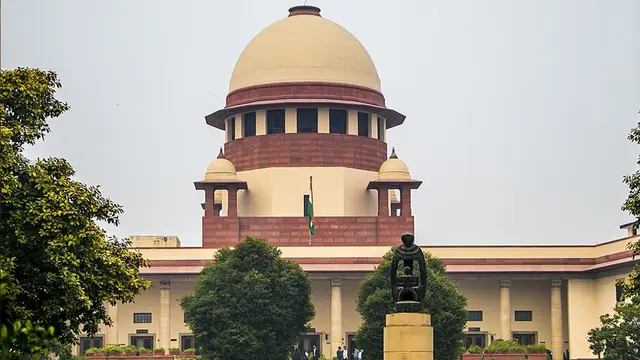
The Supreme Court of India has stepped into the ongoing dispute over the future of police associations in Kerala, issuing a stay on a lower court’s decision that had, at least temporarily, protected the Kerala Police Officers Association (KPOA) from dissolution. This judicial intervention, delivered on November 23, 2026, leaves the status and organization of Kerala’s police unions shrouded in uncertainty until the Supreme Court takes up the matter again in March 2027.
The controversy began in July 2026 when the Kerala state government issued an order aiming to restructure police associations within the state. A central feature of this order was the abolition of the longstanding KPOA, which has represented the interests of various ranks in the police force since its formation in 1979. The government argued this move was needed for administrative efficiency, but it faced immediate pushback from association members who insisted it infringed on their constitutional rights—specifically, the right to form associations as guaranteed under Article 19(1)(c) of the Indian Constitution.
In September 2026, the Kerala High Court sided with the KPOA, quashing the state government’s order as an unlawful encroachment on the rights of police personnel. However, the state quickly appealed, and the Supreme Court’s stay now means the High Court’s protective ruling will remain in place only until further hearings conclude.
The government’s attempt to overhaul police associations remains on hold, and for now, the KPOA continues to function under the shield of the High Court’s earlier order. The Supreme Court has not yet addressed the underlying legal and constitutional questions; its stay is a temporary measure that preserves the current situation as both sides prepare arguments on the profound implications for labor rights within the law enforcement sector.
This legal battle is the latest in a series of courtroom challenges for police unions in Kerala, reflecting the enduring tension between government policy and organized representation among state employees. While the government claims restructuring is in the public interest, union representatives warn that abolishing the KPOA could undermine police morale and organizational accountability.
The Supreme Court is expected to take up the complex case again in March 2027. Until then, police association members—and their government employers—face lingering uncertainty about how India’s top court will ultimately interpret the scope of their rights and the state’s authority to reshape employee organizations.