
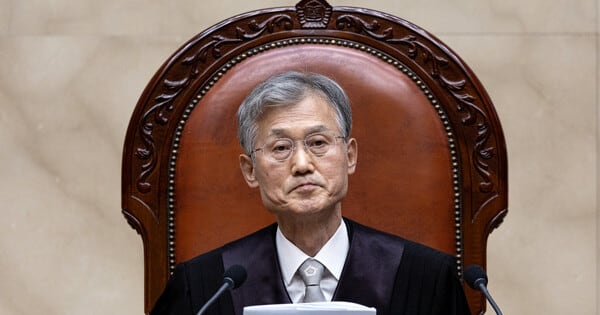
South Korea’s top court has set off a fresh political storm after partially acquitting former Prime Minister Han Duck-soo of charges stemming from the controversial 2024 martial law declaration. The Supreme Court’s November 19, 2026 ruling drew a swift and fierce backlash from the ruling Democratic Party of Korea (DPK), culminating in a vow to impeach Chief Justice Jo Hee-de over what party leaders call a dangerous breach of historical justice.
The Supreme Court decision found that Han’s role in proposing a Cabinet meeting before the imposition of martial law was not supported by sufficient evidence to prove he intended to subvert the constitutional order. However, the bench upheld convictions related to Han’s post-declaration conduct—including pressuring government ministers to sign documents and discussing measures to cut power to media organizations. The ruling distinguished between preparatory advice offered in Cabinet debate and subsequent efforts to consolidate military rule after martial law was declared on December 3, 2024.
The DPK reacted almost immediately, convening an emergency gathering late on November 19. Party chief Kim Min-seok delivered an unreserved condemnation of the justices, describing the judgment as both “cunning and anti-historical.” Kim warned that the ruling risked legitimizing officials who failed to resist or even tacitly aided in the imposition of military authority. The party’s leadership agreed to initiate the process to impeach Chief Justice Jo Hee-de, whom they accuse of judicial malfeasance and distorting a pivotal historical moment. “We have concluded that we can no longer tolerate a historical distortion seeking to justify the insurrection,” Kim told colleagues, making clear the party would seek accountability at the court’s highest level.
This rapid escalation has triggered heated debate in legal and political spheres. While DPK lawmakers insist their response is about defending Korea’s democratic order, critics and some legal scholars caution that impeachment risks undermining judicial independence and inflaming partisan divisions at the apex of government. The scope of the impeachment proposal, and whether it can muster the necessary support in the National Assembly, remains uncertain as the process moves into its initial stages.
The court’s decision arrives two years after the martial law declaration of December 2024—a crisis that plunged South Korea into street protests and institutional crisis. Former President Yoon Suk-yeol’s emergency powers and the roles played by Han Duck-soo and other senior officials have since been the subject of major legal battles and public soul-searching. The Supreme Court’s latest intervention will likely shape the broader debate about the boundaries of executive authority, ministerial responsibility, and the lines between legal judgment and political accountability.
As of November 24, the DPK remains poised to file its impeachment motion, and the coming weeks are expected to see intense parliamentary activity and potential calls for judicial reform. With public scrutiny high and the stakes for South Korea’s political and legal future clear, the aftermath of this ruling is only beginning to unfold.