
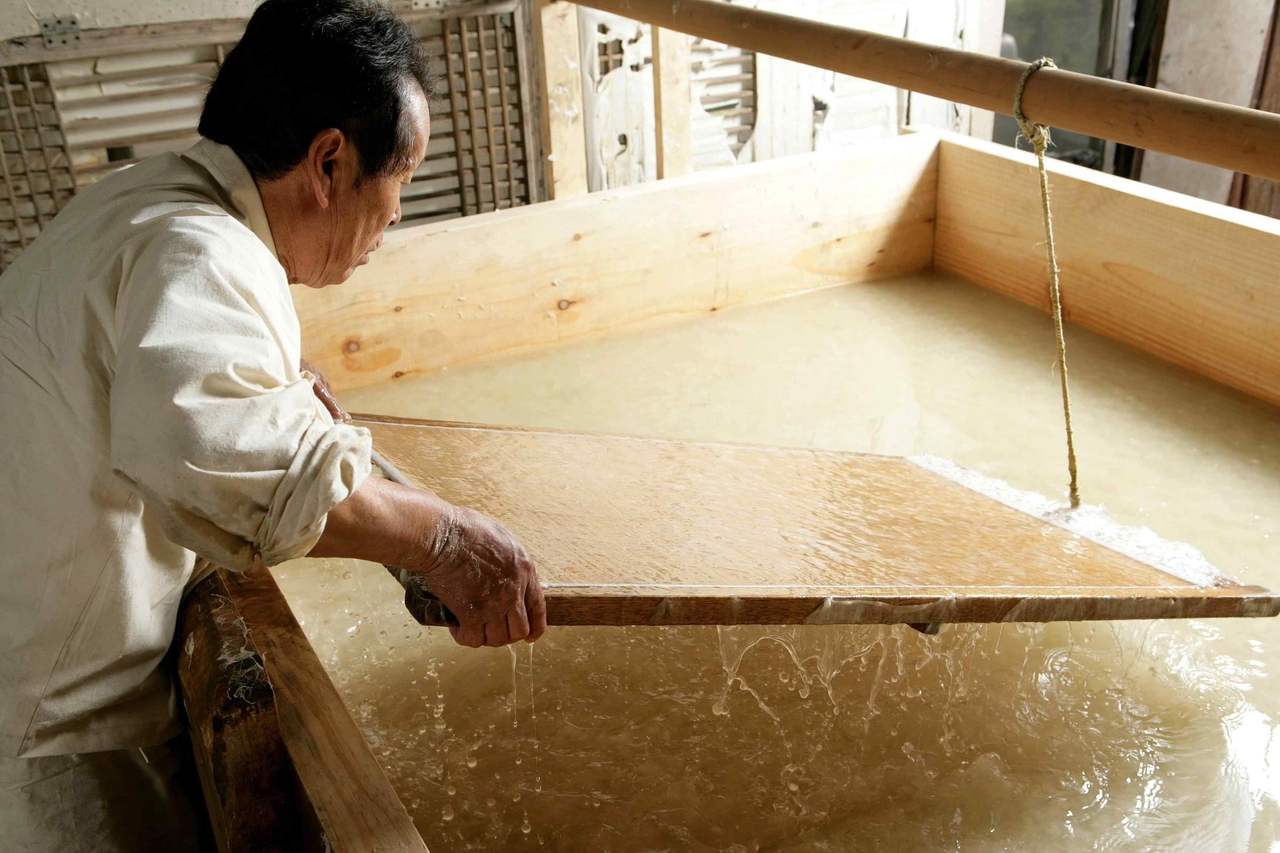
Centuries-old Korean papermaking stands on the cusp of renewed global influence after the National Research Institute of Cultural Heritage (NRICH) unveiled a substantial reference guide to lightweight Hanji—a move poised to deepen expertise and fuel international adoption of this traditional material in artifact restoration.
The newly published “Our Paper, Hanji: A Reference Guide to Lightweight Hanji,” released on November 24, 2026, builds on rising worldwide attention for Hanji’s resilient properties. The guide, issued under South Korea’s Korea Heritage Service, is the first comprehensive documentation focusing on Hanji with a basis weight of less than 15 grams per square meter, targeting the specialized demands of conservation and restoration professionals worldwide.
Documenting Tradition for Modern Restoration
This reference work includes physical specimens of lightweight Hanji crafted by six master artisans, formally recognized as holders of National or City/Provincial Intangible Cultural Heritage designations. By presenting side-by-side measurements of fundamental physical properties and detailed characterizations, the guide enables conservators to compare the subtle differences in Hanji—differences shaped by both the papermaker’s craft and environmental factors during production.
Hanji, made primarily from the inner bark of the mulberry tree and valued for its exceptional durability, has been a cornerstone of Korean cultural preservation for centuries. Advances in material science, documented by NRICH, confirm Hanji’s resilience and ability to withstand restoration stresses, particularly when wet—a quality essential for restoring delicate, centuries-old documents and artworks.
Global Validation and Rising Demand
The international turn toward Hanji is unmistakable. Italy’s leading conservation institute, ICRCPAL, officially adopted select types of Korean Hanji for restoration projects as early as 2016. One high-profile example is its role in repairing the “Chartula,” a thirteenth-century document penned by St. Francis of Assisi. More recently, France’s Louvre Museum has opted for Hanji over the previously preferred Japanese washi, further bolstering its credibility in the global art world.
Hanji’s recognition is not limited to practical use. South Korea is advancing efforts to list Hanji on the UNESCO Intangible Cultural Heritage register, which would formalize its status as a “living heritage”—a material that carries centuries of accumulated knowledge and cross-border relevance.
Setting Standards and Sustaining Knowledge
Recent years have also seen the formalization of Hanji-related terminology into national standards, providing consistency for researchers and artisans alike. Scientific validation by NRICH—including customized testing methods for paper’s wet stress resistance—contributes to creating robust quality standards, guiding both domestic and international conservation projects.
As more heritage institutions look for sustainable and time-tested materials, the publication of this reference guide represents not only a landmark for Korean cultural heritage, but also a practical resource for conservators worldwide seeking alternatives with proven longevity and historical resonance. The restoration of treasured artifacts increasingly rests in the delicate strength of Hanji—a testament to Korean tradition and its global relevance in safeguarding humanity’s shared past.