
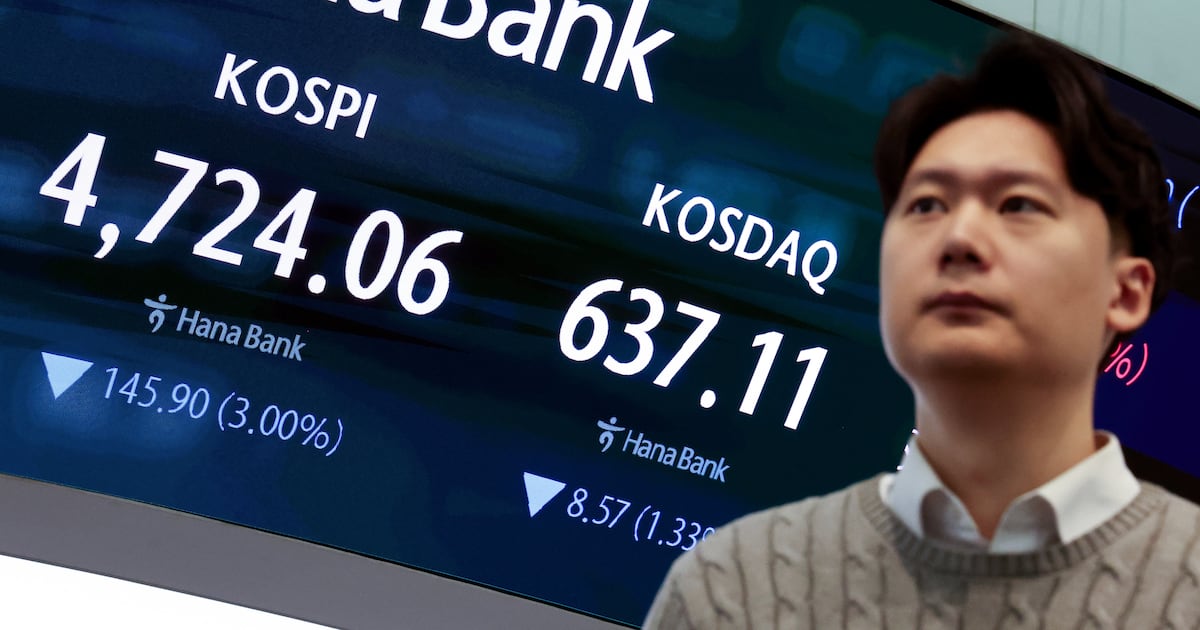
The South Korean stock market has come under acute stress, with the KOSPI index tumbling to a 10-month low and dipping below 5,000 points for the first time since February. This downturn, intensified by a global technology sector rout, has thrust President Lee Jae Myung’s administration into the center of mounting criticism and policy urgency.
Weakness in U.S. tech stocks, amplified by investor worries over artificial intelligence company valuations and profitability, set off steep losses across world markets late last week. The U.S. S&P 500 index fell 3.7%, with the Nasdaq dropping 5.3% on November 20, according to multiple international outlets. The shockwaves quickly spread to South Korea, home to some of the world’s leading semiconductor and technology exporters, leading to the KOSPI’s sharp decline by November 21 (Seoul Economic Daily).
Amid market turmoil, the South Korean government announced on November 22 that it had readied the Stock Market Stabilization Fund (SMSF) for deployment—a contingency usually reserved for periods of severe market stress (Chosun Ilbo). This fund aims to provide support and restore confidence among investors fearing further losses. The policy step is accompanied by fresh pledges from President Lee, who on November 13 committed to addressing the chronic undervaluation of South Korean stocks, promising steps to boost market trust and tackle corporate governance issues (Yonhap). Lee has also promoted more frequent hostile mergers and acquisitions as a way to resolve entrenched governance issues that weigh on valuations (Korea Times).
However, the government’s response has drawn immediate fire from political opposition and market participants. The opposition People Power Party openly blamed the Lee administration for mishandling the market decline and called for parliamentary investigations into recent financial policy decisions (Korea JoongAng Daily). On November 22, opposition leaders warned of a potential “Black Monday” and demanded bolder emergency measures, arguing that the official response was slow and insufficient (Seoul Economic Daily).
Skepticism also runs deep in financial circles. Market analysts have questioned whether President Lee’s reform proposals, including regulatory and governance changes, contain enough substance to attract sustainable investment or address broader market weaknesses (Korea Times). Editorial voices in the South Korean press added to the chorus of concern, criticizing what they describe as the government’s delayed and reactive approach (Chosun Ilbo).
The unfolding volatility underscores both South Korea’s vulnerability to global market swings and the persistent structural issues limiting the country’s equity market appeal. With political and investor pressure rising, the effectiveness of the SMSF and the government’s next steps may soon determine whether confidence can be restored—or if calls for more sweeping action will intensify as markets brace for further turbulence.