
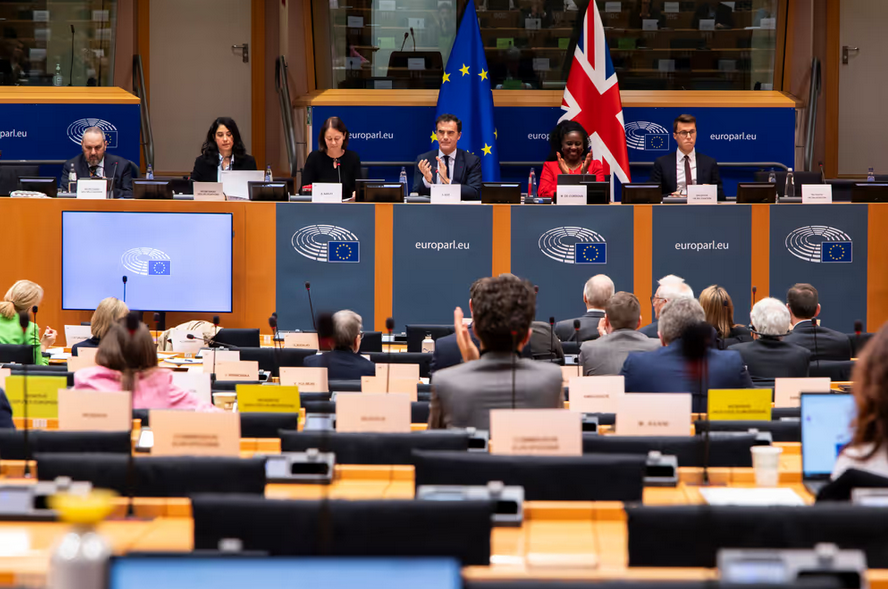
Amid a shifting global landscape, the European Union and United Kingdom convened parliamentary leaders and government officials in Brussels on March 16–17, 2026, for their seventh Parliamentary Partnership Assembly—with a common recognition that robust bilateral ties are now more critical than ever. The two-day gathering united Members of the European Parliament and UK MPs, determined to convert a multi-year thaw in post-Brexit relations into measurable outcomes for citizens on both sides.
Key Priorities: From Trade to Defence
Delegates, including European Commissioner Maroš Šefčovič and UK Minister for European Relations Nick Thomas-Symonds, zeroed in on areas where their interests align: economic and energy security, trade resilience, and industrial defence cooperation. Senior representatives such as Raffaele Fitto and UK Ambassador Lindsay Croisdale-Appleby provided perspectives on regional dimensions, while experts like Chris Bryant and Dennis Redonnet led discussions on bolstering trade links and safeguarding economic stability in the wake of global supply chain disruptions.
Sessions extended to reforms in sanitary and phytosanitary (SPS) standards—a persistent friction point since the UK left the EU single market—and further explored plans to integrate emissions trading systems, cooperate on defence procurement, and bridge the gap on youth mobility programs and electricity market access. These threads represent issues where talks are active but, as yet, unresolved.
From Rhetoric to Results
Sandro Gozi and Marsha de Cordova, the Assembly’s co-chairs, highlighted both progress and the need for persistence. They welcomed emerging consensus around strengthening practical cooperation but underscored that political promises must rapidly convert into substantive agreements. While there was hope that UK participation in the EU’s internal electricity market would advance quickly, the Assembly emphasized that momentum post–May 2025’s EU–UK Summit must be sustained.
Parliamentary involvement itself was in focus, with calls from both sides to bolster democratic oversight and maintain accountability as the relationship is rebuilt. Building on prior agreements and trust developed at the Partnership Council, co-chairs Gozi and de Cordova argued that neither bloc could meet their economic and security imperatives in isolation—and that detailed, trackable agreements must underpin the optimism of such summits.
Unfinished Business and Future Prospects
Despite expressions of goodwill, the Assembly did not announce breakthrough deals. Key issues—the specifics of the SPS framework, finalization of youth mobility schemes, and the technical alignment of emissions trading—remain works in progress, with both sides voicing support but offering few new specifics on timelines or mechanisms for delivery. Participants acknowledged the complexity of forging durable post-Brexit frameworks, exposing the challenge of translating political will into detailed, enforceable arrangements.
The Parliamentary Partnership Assembly concluded with mutual declarations of intent and the assertion that consensus had rarely been stronger. Yet, the history of EU–UK negotiations is replete with delayed outcomes. The open question facing both Brussels and London: when, and how, will these promising discussions result in concrete policy shifts visible beyond the negotiating table?