
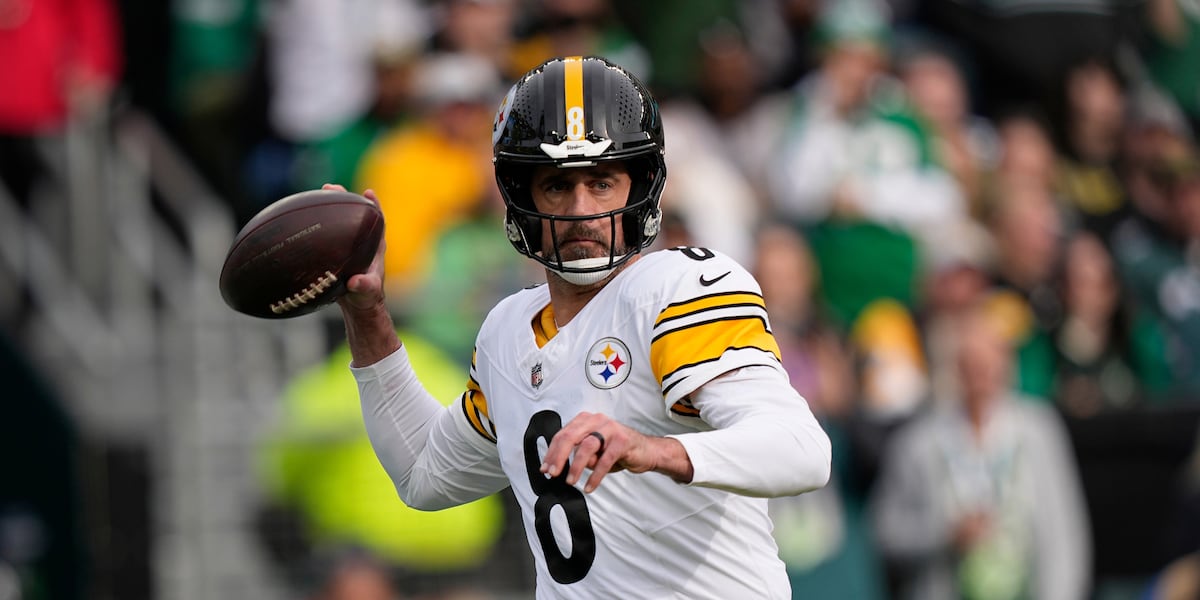
For much of Aaron Rodgers’ career, Mike McCarthy was the coach on the other side of the headset. On Wednesday, their relationship became the subject of a nationally televised dispute, as the quarterback offered his version of how the partnership deteriorated in Pittsburgh.
Appearing on The Pat McAfee Show on November 25, Rodgers said that he had learned of the team’s quarterback change through tight end Pat Freiermuth rather than directly from McCarthy. The account, reported by the Associated Press, offered a glimpse into what Rodgers described as an increasingly strained working relationship.
Rodgers also alleged that McCarthy had fallen asleep during position meetings and missed team activities. NBC Sports reported his further claim that the coach had used the Packers’ name while addressing the Steelers during the Philadelphia game. These allegations have not been independently verified by GREIGNOR NEWS, and they should not be read as a medical assessment or as proof of any underlying condition.
The interview extended beyond criticism of individual meetings. Rodgers described challenging the team’s approach to offensive play-calling and asking that changes be made. According to his account, he had told McCarthy that if the coach would neither adjust the arrangement nor keep him in the lineup, the team ought to let him go.
McCarthy’s perspective is essential to understanding what happened. The public quarterback announcement does not explain the private conversations Rodgers described, and the sources reviewed for this report did not establish a detailed response from the coach to those specific allegations. What the Steelers have confirmed is the selection of Mason Rudolph for Friday’s game and Rodgers’ inactive status.
There is an important separation between a coach’s authority to choose the starting quarterback and the quality of communication around that decision. A team can have legitimate reasons to change personnel while the people affected disagree about how the process was handled. The interview raises questions about that communication, but does not independently answer them.
The dispute carries additional weight because McCarthy and Rodgers were once central figures in Green Bay’s sustained success. They worked together for more than a decade and won a Super Bowl. The possibility of another season together in Pittsburgh drew attention precisely because of that shared history.
This time, the relationship is unfolding under the pressure of a tight postseason race, not the promise of a new partnership. The team must prepare for Denver while its former starting quarterback publicly challenges the leadership responsible for the change. For the other players, preparation and execution remain urgent regardless of the attention surrounding the interview.
Wednesday’s remarks provide Rodgers’ perspective on the fracture. They do not establish the entire history of the dispute. The next meaningful developments will be a direct response from McCarthy or the organization, any corroboration of the claims, and an official decision about Rodgers’ roster status. Until then, the public has heard one participant’s account of a partnership that once brought both men to the summit of the sport.
Reporting sources
- Associated Press via WTAP — interview and developments
- Associated Press via ABC News — Rodgers interview
- NBC Sports — account of McCarthy allegations
- SB Nation — Rodgers interview
- Pittsburgh Steelers — official quarterback announcement
- Reuters — earlier practice and benching report
Watch: Aaron Rodgers on The Pat McAfee Show
ESPN, November 25, 2026. Rodgers gives his account of the Steelers quarterback change and his relationship with Mike McCarthy.
Watch the original ESPN interview on YouTube.
File photo: Cramerwiki / Wikimedia Commons, Rodgers and McCarthy at Steelers training camp, August 4, 2026. CC0. Archival photograph; not taken during the November 25 developments. Photo source · License.
