
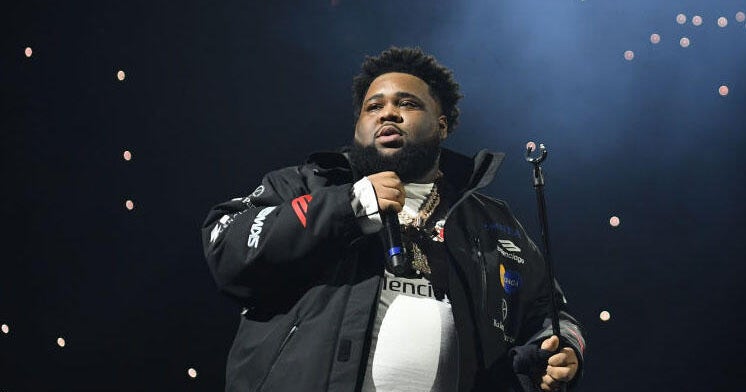
The high-profile legal battle facing rapper Rod Wave, born Rodarius Green, has intensified after a Fulton County grand jury indicted him on multiple felony charges stemming from a November 2025 traffic stop in Atlanta. The musician, who recently celebrated his first Grammy nomination, now finds himself at the center of a case that raises questions about law enforcement tactics and due process.
Background: Arrest and Allegations
According to police accounts and public court filings, Green was stopped by Atlanta police on November 7, 2025, after allegedly running a stop sign on Defoor Avenue NW and driving 45 mph in a 30 mph zone. Officers followed him to a gas station on Howell Mill Road, where he was arrested for reckless driving. During the stop, authorities say they discovered a firearm concealed in Green’s waistband and controlled substances—including oxycodone and promethazine—inside the vehicle.
Green was initially booked on charges including reckless driving, possession of a Schedule II and Schedule V controlled substance, and having a weapon during the commission of a felony. He was released on an $8,000 bond the following day.
Escalation: Grand Jury Indictment
The case escalated on October 30, 2026, when a grand jury formally indicted Green on felony charges: possession of oxycodone, possession of a firearm during commission of a felony, and reckless driving. He has pleaded not guilty to each allegation. The indictments formalize the prosecution’s position but do not constitute proof of guilt.
Defense Challenges and Disputes
Green’s defense team has publicly condemned the arrest as unjust and claims he was racially profiled by officers in the Atlanta Police Department’s Crime Suppression Unit—a squad known for aggressive arrest tactics. They contest the legality of the initial stop, the search that uncovered the drugs and firearm, and the admissibility of evidence. Defense attorneys argue that Green had been targeted and insist their client is prepared to fight the charges.
Broader Context and Industry Impact
This indictment comes on the heels of a previous, ultimately dropped, felony firearm case against Green in Florida. That matter, unrelated to the Georgia charges, was resolved after errors were found in his records stating he was a convicted felon. Despite ongoing legal woes, Green’s career momentum has continued; his song “Sinners,” featured in a 2025 film, earned him a Grammy nomination shortly before the Georgia grand jury acted.
What Comes Next
As of November 2026, the case remains unresolved in the Georgia court system. Both the prosecution and defense have signaled that evidentiary and constitutional disputes over the circumstances of Green’s arrest will play a prominent role as the proceedings move forward. The outcome could affect not only the fate of one of hip hop’s most distinctive voices but also broader debates over police conduct in high-stakes celebrity arrests. No trial date has yet been set.