
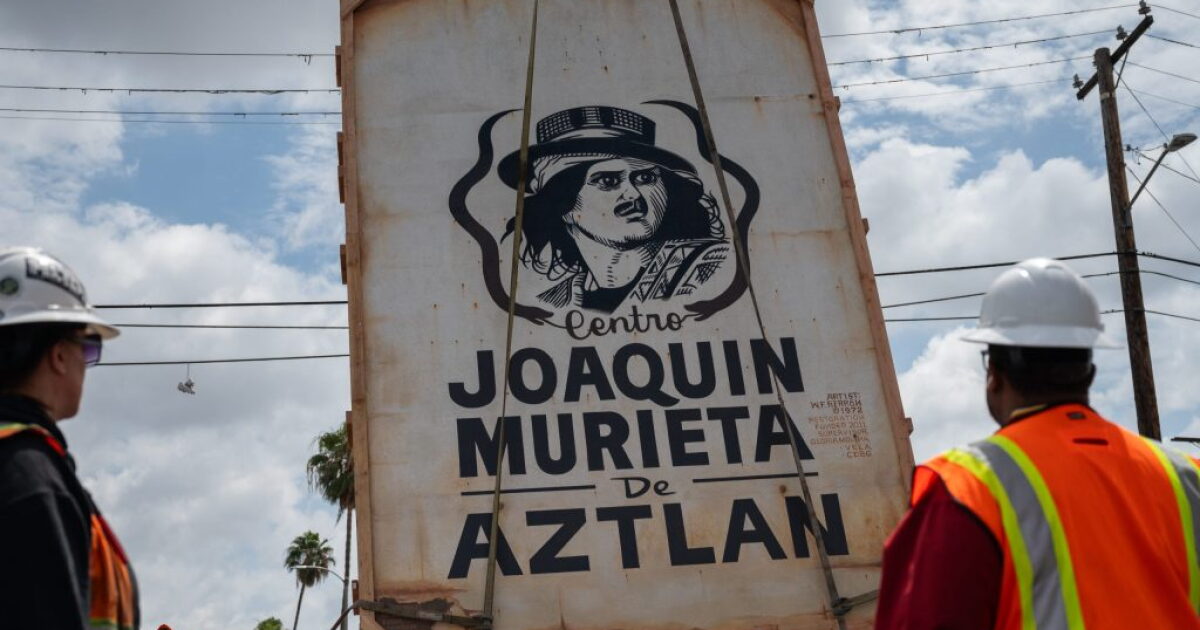
In September 2026, a pivotal moment unfolded on Whittier Boulevard in East Los Angeles as the vibrant “Joaquín Murieta de Aztlán” mural returned to public view. The mural—first painted in 1972 by artist Willie Herrón III—depicts the folklore hero Joaquín Murieta, immortalized as a champion of resistance during the California Gold Rush, and stands as a powerful symbol of Chicano identity and struggle.
This restoration was set in motion when the Legal Aid Foundation of Los Angeles (LAFLA) planned to rebuild its building, which housed the nearly 6,000-pound artwork. Recognizing the mural’s deep community value, LAFLA Executive Director Silvia Argueta prioritized its preservation, allocating $200,000 from the project budget for a comprehensive restoration. In 2024, contractors meticulously removed the mural, transporting it from the construction site to the City Terrace home of Herrón. There, Herrón and his wife, Leah Moscozo-Herrón, spent two years painstakingly reviving the mural’s colors and surface, working atop a dedicated 16-foot metal easel custom-built for the task.
Restoring the half-century-old mural also meant ensuring its long-term survival. In early 2026, the mural was transferred to the Boyle Heights design studio Small Green Door for structural reinforcement and fumigation, bringing together engineers and fabricators whose expertise was tested when initial attempts to install the mural back onto a new bracing wall in April faced technical setbacks. Adjustments were made, and in September, a crane operator was brought in to delicately maneuver the three-ton mural into its final position, aligning the historic artwork precisely on its East L.A. stage.
The return of “Joaquín Murieta de Aztlán” offered more than a restored artwork; it ignited community engagement. Events ranging from art workshops to public readings and screenings underscored the mural’s importance as a living cultural legacy. Herrón, reflecting on the process, described the restoration as an honor, emphasizing the mural’s ongoing role in teaching future generations about the narratives of resistance and dignity embedded in local history.
Today, the brilliantly revitalized mural stands once again on Whittier Boulevard—not only as an emblem of Chicano heritage, but as a testament to East Los Angeles’ commitment to preserving and celebrating its artistic landmarks. The project aligns with larger efforts across the city to protect historic public art, reaffirming the community’s investment in its own story and spirit.