
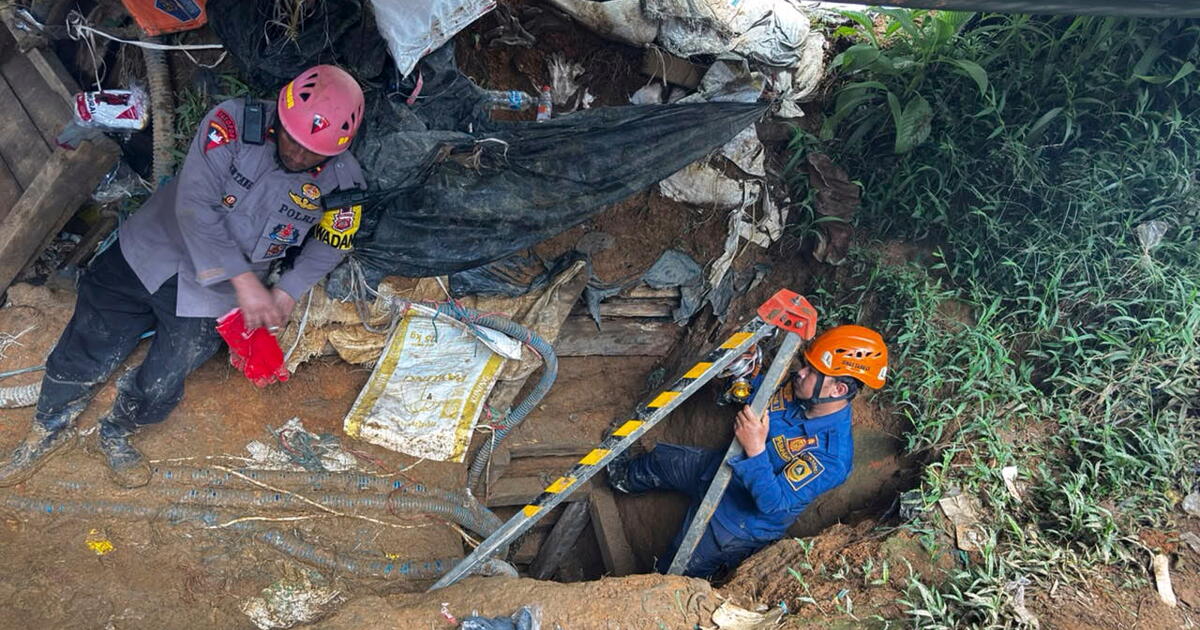
Rescuers in Indonesia’s West Java province are racing against time to reach the remains of 13 miners and locate 13 others still missing after catastrophic flooding swept through an illegal gold mine on November 23, 2026, following days of heavy rainfall. The disaster occurred beside the overflowing Ciseureuh River in Bogor regency, where water rapidly inundated a mine shaft approximately 100 meters deep, trapping 26 miners underground.
According to officials and as reported by multiple international outlets and local authorities, emergency teams faced daunting conditions as they pressed on with the rescue mission. The current operation involves a contingent of 325 personnel—drawn from emergency services, police, military, health officials, and local volunteers—working in muddy, waterlogged terrain hindered by a narrow access tunnel, unreliable lighting, and dangerous, shifting ground. Submersible pumps were deployed to remove water from the flooded shaft, while rope-access teams attempted to reach the trapped miners and recover those already found.
Despite these efforts, the high-risk environment and the aftermath of the flood complicated progress. As of November 26, at least 13 bodies had been recovered from the depths of the mine, with rescue workers continuing to search for the remaining miners whose fate remains uncertain. Local sources indicate that six of the recovered bodies have been identified; the identities of others are pending confirmation as families await word from the ongoing effort.
The mine involved had been operating illegally, reportedly without significant safety controls or government oversight, and the disorderly circumstances led to delays in notifying authorities. According to evidence from the Los Angeles Times, initial rescue attempts were made by fellow miners and residents who tried to pump out water themselves prior to the deployment of official teams. The mine is located close to state-owned PT Antam’s Pongkor gold mining facility, though the company states the unauthorized operations and accident are unrelated to its projects.
Informal Mining’s Deadly Reckoning
This incident highlights broader issues that have plagued Indonesia’s sprawling informal mining sector for years. Illegal extraction is widespread across the archipelago, with thousands of workers facing substantial risks daily—including landslides, flooding, and tunnel collapses, often with little to no protective equipment. Some of the worst hazards come from the use of toxic substances such as mercury and cyanide used to process gold in makeshift facilities.
Authorities have acknowledged the scale of the problem but face significant challenges in regulating, let alone eliminating, unauthorized operations—especially in remote or economically marginalized communities where mining income may outpace other available work. Tragedies such as the Bogor mine flooding have become grimly familiar, underscoring the urgent need for formal oversight and enforcement to protect vulnerable laborers.
As the rescue continues, the province’s emergency response leaders have said the top concern is the safety of search teams, noting the potential for additional rainfall or further collapse. The operation is set to proceed barring adverse weather developments. The names and status of the missing miners—along with answers for their families—remain unresolved. With conditions underground uncertain, the number of final casualties could rise as the effort unfolds in the days ahead.
The disaster throws a harsh spotlight on the perils of Indonesia’s illegal mining trade and the mounting cost borne by workers at the margins of the nation’s gold rush. The incident stands as a test for the local and national authorities now grappling with rescue, recovery, and ultimately, accountability in the wake of tragedy.