
The Los Angeles Rams’ 26-13 victory over the Green Bay Packers on November 25, 2026, was overshadowed by the dramatic and controversial ejection of Rams safety Kamren Kinchens following a violent collision with Packers wide receiver Christian Watson. The play, which occurred late in the first half, has reignited intense debate about player safety, rule enforcement, and the ever-evolving standards of officiating in the NFL.
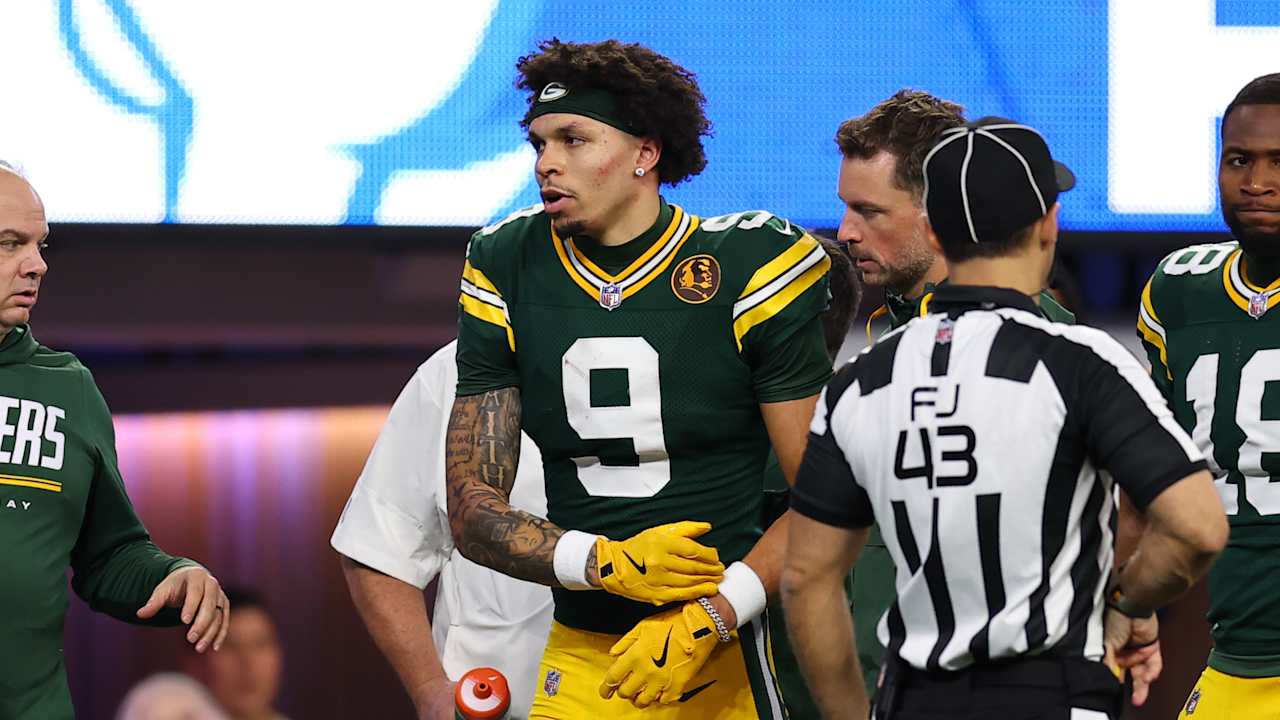
With just under two minutes left before halftime, the Packers faced a pivotal fourth-and-1 at the Rams’ 30-yard line. Quarterback Jordan Love targeted Watson on the sideline, and as the ball arrived, Kinchens launched himself at the receiver. According to NFL executive vice president Troy Vincent, Kinchens left his feet and made helmet-to-helmet contact with Watson—a violation resulting in his immediate ejection, a decision made from the league’s New York office. The hit left Watson down on the sideline before he walked off under his own power for evaluation. He was later ruled out for the remainder of the contest after being diagnosed with a concussion, depriving Green Bay of its most productive receiver for the rest of the night.
The play did not directly result in a penalty, as offsetting fouls wiped out both the illegal hit and an offensive pass interference by the Packers’ Matthew Golden. However, Kinchens’ removal had immediate personnel implications for the Rams, who were forced to compensate for the loss of one of their key defensive backs. Despite this disadvantage, Los Angeles maintained defensive stability and gradually pulled away in the second half, limiting a now-shorthanded Packers offense that managed only two first downs after Watson’s exit.
The incident has stirred strong opinions across the football community. Some former players, such as ex-defensive back Jason McCourty, voiced frustration with the league’s approach. In a statement cited by Yahoo Sports, McCourty acknowledged the importance of player safety but argued that the nature of Kinchens’ play did not meet his threshold for an automatic ejection. “I understand that we want to protect players, and making the game safer… is incredibly important… but that should not be an ejection,” McCourty said. Social media reactions mirrored this divide, with some fans applauding the league’s firmness in enforcing rules designed to prevent head injuries, while others questioned whether the punishment fit the context of the play.
Christian Watson’s absence was felt immediately on the field. Despite leading the team in receptions and yards in the first half, his night was cut short, and his health remains a concern beyond this single game. The NFL, which has spent years tightening protocols and raising penalties for dangerous hits—particularly those involving helmet-to-helmet contact—finds itself once again at the center of a debate over the interpretation and proportionality of its own rules.
As of Wednesday night, the league had not announced any further sanctions against Kinchens. The conversation, both inside and outside league offices, remains focused on whether the line between player protection and the spirit of competition is being drawn in the right place. What is clear is that, for the Rams and Packers alike, the consequences of that second-quarter collision will linger far beyond a single night’s result.