
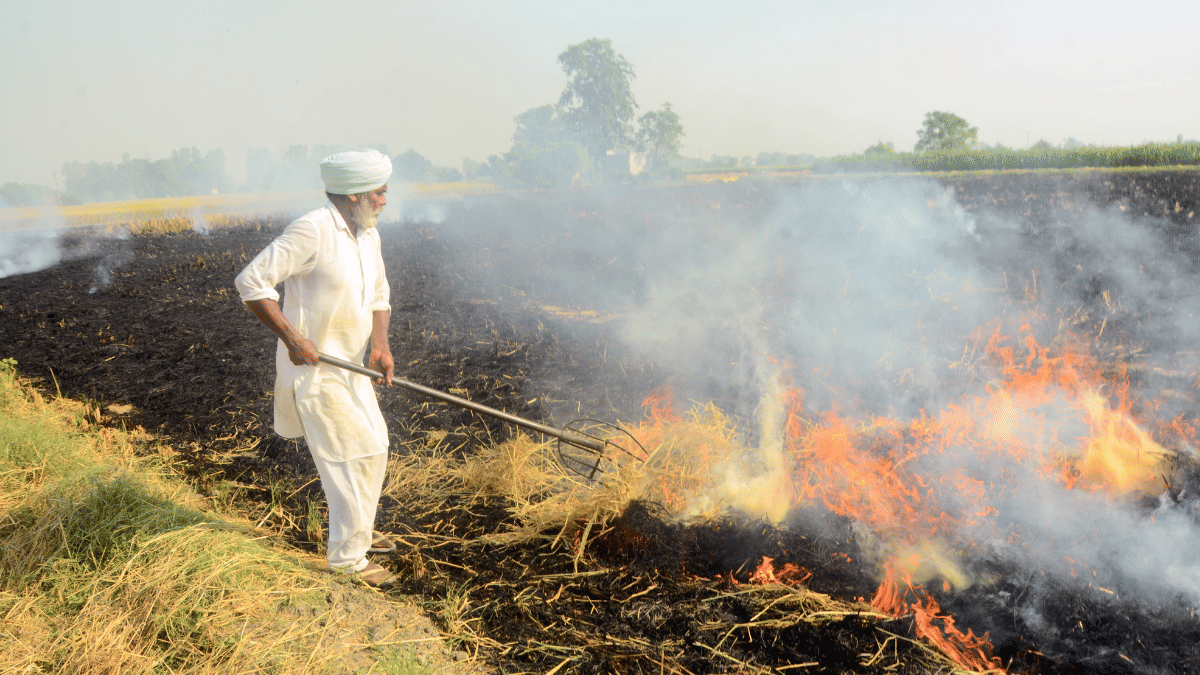
The fields of Punjab, long associated with smoky post-harvest skies, are witnessing a new chapter: a sharp reduction in the burning of crop residues, once a primary source of hazardous air pollution in northern India. This transformation, unfolding during the Kharif season of 2025 and accelerating into 2026, is fueled by a growing alliance between local farmers and the emerging biomass industry. Instead of setting their rice stubble alight, more farmers are now transporting it to processing facilities that convert the residue into energy.
Until recently, stubble burning was almost synonymous with Punjab’s agricultural cycle. The practice, driven by a tight harvest window, labor shortages, and limited alternatives, was the fastest way to clear fields for the next crop. Yet, the consequences were severe: acrid smog blanketed cities, public health deteriorated, and every winter sparked intense debate about responsibility and solutions.
This year, local media and government officials report a significant shift. In places like Sedha Singh Wala village, many farmers are choosing to collect and sell their paddy stubble to biomass firms. The trend is no accident. With the expansion of biomass manufacturing facilities—such as the plants established in Mansa district—farmers have found a ready market for what was once considered waste. This shift is credited with a marked decline in fire incidents, a claim supported by satellite data and public statements, though some technical limits in fire detection are reported.
Alongside the private sector, Punjab’s government has stepped up, rolling out incentives and technical support for crop residue management. Policies introduced in 2025 and reinforced in 2026 provide subsidies for mechanical collection and transport, as well as direct incentives. According to official statements cited in local and national media, stubble fires have decreased by more than half compared to previous seasons. This policy mix aims not only to clean the air, but also to boost soil health and continue increasing rural incomes.
The economic logic is clear. Farmers who once paid the price—in fines, lost soil nutrients, and criticism—now see an alternative revenue stream. “The practice is gaining traction as a sustainable income source,” reports The Print, capturing a sentiment echoed across affected districts. Biomass operators now serve as intermediaries, purchasing stubble and reducing the burden on farmers to manage crop residue alone.
The environmental payoff is tangible. Air quality monitors in Punjab and neighboring regions have registered improvements during the 2025 post-harvest season, and the trend continues into 2026. This shift is closely watched in India’s capital and beyond, where seasonal smog has long been tied to upwind farm fires.
Challenges and Next Steps
Yet, the picture is not uniform. Some farmers continue to rely on burning, citing lack of access to biomass processors, limited government reach, or economic constraints. NDTV and other outlets highlight the continuing financial and logistical hurdles, despite subsidies and machinery support. The Punjab government acknowledges that adoption remains uneven, and is working to extend support to hard-to-reach communities.
Meanwhile, questions remain about scalability and consistency. Discrepancies in satellite fire data and on-the-ground reporting reflect not only technical challenges, but also the complexity of shifting a decades-old agricultural routine at scale.
A Model for Other Regions?
Punjab’s experience is already sparking interest elsewhere. Policymakers and environmentalists view the transition as a possible model for other intensive rice-growing regions facing similar pollution challenges. For now, the trend marks a cautiously optimistic milestone in India’s drive to balance farm livelihoods with environmental responsibility—and the positive results in Punjab may soon shape responses in fields far beyond its borders.