
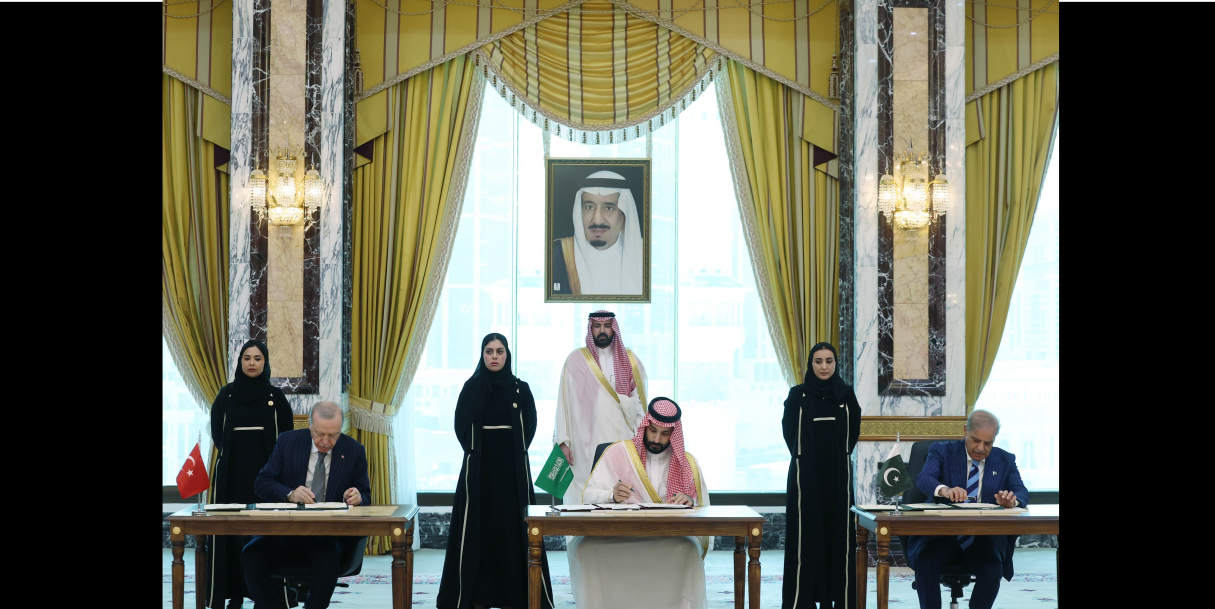
The trilateral defense alliance uniting Pakistan, Turkey, and Saudi Arabia is moving into a decisive phase, as Islamabad is set to welcome senior delegations from the three nations for talks under the newly ratified Mecca Joint Defense Agreement. The gathering on November 27, 2026, marks the most substantial step yet towards operationalizing a pact that has the potential to reshape regional security dynamics in the Middle East.
The historic Mecca Joint Defense Agreement was signed on August 7, 2026, in Mecca, Saudi Arabia. At its core is a mutual defense clause: an attack on any member will be treated as an attack on all, signaling an explicit commitment to collective security. The agreement’s signatories emphasize that the pact remains defensive in character and is not directed against any specific nation, including Iran—a point Turkish officials have highlighted repeatedly during the ratification process (iletisim.gov.tr; xn--anadoluajans-d5b.gov.tr).
Alliance Moves Beyond Symbolism
In recent weeks, the Mecca pact has progressed rapidly from diplomatic blueprint to institutional reality. Both Saudi Arabia and Pakistan completed their ratifications in October 2026, with Turkey’s parliament following suit on November 5 (279-119 in favor), a day now capped by President Recep Tayyip Erdogan’s formal approval (washingtonpost.com; apnews.com).
The alliance’s structure is taking shape: a permanent secretariat will open in Riyadh, and Pakistan has supplied the first secretary-general, retired Lt. Gen. Nauman Mahmood (aljazeera.com). This step embodies the coalition’s aim for equitable collaboration, bringing together major Sunni-majority military powers at a moment of acute regional stress—particularly given ongoing drone and missile attacks on Saudi territory by Yemen’s Iran-backed Houthi rebels.
Contours of Cooperation
The agenda for Islamabad’s trilateral summit is expected to focus first on immediate security challenges, such as the Houthi attacks and the broader implications of conflict spillover across the region (apnews.com). Enhanced military cooperation, intelligence sharing, and defense industry collaboration have all been cited as key areas for joint action. Pakistani Prime Minister Shehbaz Sharif recently reiterated his country’s “unwavering commitment” to Saudi Arabia’s defense, anchoring the alliance’s promise of mutual support (anadoluajansi.gov.tr).
While the alliance’s leaders frame it as a stabilizing force, outside observers watch closely for signals as to how far the component militaries are willing—or able—to coordinate, and what rules of engagement might govern a joint response in the event of an actual crisis. The Mecca Defense Alliance remains open to additional regional partners, illustrating a bid for broader security inclusion (aljazeera.com).
Diplomacy Amid Uncertainty
The trilateral alliance enters the Islamabad talks with momentum, but also unresolved questions about implementation. Pakistani officials have confirmed operational details remain under negotiation among the three parties. The outcomes of this summit will do much to clarify how the new bloc intends to navigate the fast-moving, and often volatile, security environment in and around the Gulf and the broader Middle East.
Whatever the immediate results, the Mecca Joint Defense Agreement—and the tangible steps toward putting it into effect—marks an unmistakable new chapter in the political-military landscape of the region. Whether the alliance can fulfill its promise of stability and coordination will depend not only on the unity of its founding members, but on their ability to build trust and practical interoperability where, until now, none existed.