
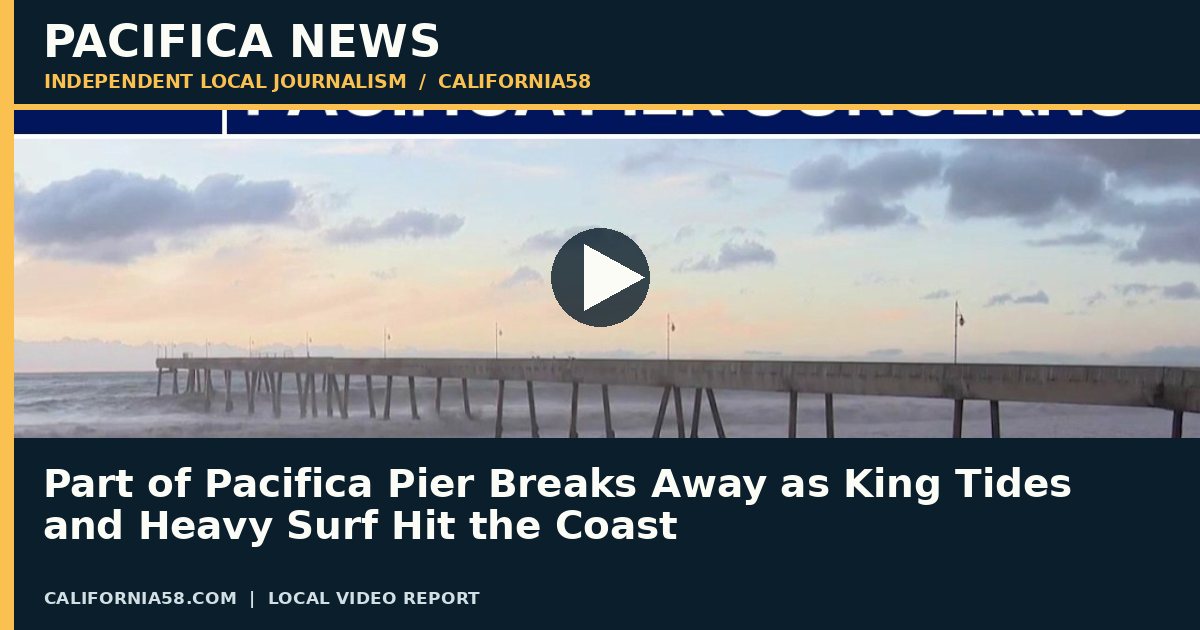
A dramatic collapse shook Pacifica, California, on the morning of November 25, 2026, as a significant portion of its iconic Municipal Pier broke away and plunged into powerful surf. The incident, which unfolded during one of the highest king tide events in recent memory, underscores the mounting pressure on California’s coastal infrastructure as climate and ocean conditions become more extreme.
Pacifica’s L-shaped pier, stretching 1,140 feet out from the shoreline roughly 15 miles south of San Francisco, had already been cordoned off to the public since June after inspectors discovered structural vulnerabilities at its base. Even so, the force unleashed by pounding 20- to 30-foot waves and king tides, supercharged by an ongoing super El Niño, proved overwhelming. Eyewitnesses and city officials confirm that heavy surf battered the concrete structure, causing an entire section to snap and fall into the churning Pacific. (Los Angeles Times, KCRA, California58)
The collapse comes during a week of coastal tumult across northern California. The National Weather Service declared coastal flood and high surf warnings for the region, with beachfront homes in Pacifica and elsewhere inundated by water and debris. Marin County authorities issued evacuation advisories in Stinson Beach, cautioning that conditions could quickly turn life-threatening. At the time of the collapse, public access to Pacifica Pier had been restricted, and no injuries were reported. Still, city officials have warned the public to steer clear of the pier, especially as debris may remain hidden beneath the surface and hazardous surf persists. (AP, California58)
This year’s king tides—annual events when sun and moon alignment raises sea levels to uncommonly high marks—are being exacerbated by super El Niño conditions, which both warm the ocean and increase sea volume. Those forces, coupled with the pier’s pre-existing decay, left it vulnerable. While Pacifica’s famed pier has weathered many storms since it opened more than fifty years ago, the 2026 collapse highlights both the accelerating impacts of climate-driven coastal hazards and the challenges facing communities up and down California’s shoreline. (AP, LA Times)
As of Wednesday, the majority of the pier remains off-limits, with no timetable for repairs or reconstruction. Pacifica’s city government is assessing the extent of damage and exploring whether the structure can be restored, but neither cost estimates nor rebuilding plans have been determined. For now, residents and visitors have been advised to stay away from the beach and barricaded pier area, and to avoid surfing, swimming, or boating until conditions stabilize and hidden wreckage is cleared. (City of Pacifica, California58)
The collapse stands as a visual warning of California’s vulnerable coast—a pressing reminder for local leaders, residents, and visitors not just of changing ocean conditions, but of the growing urgency to strengthen critical public infrastructure.