
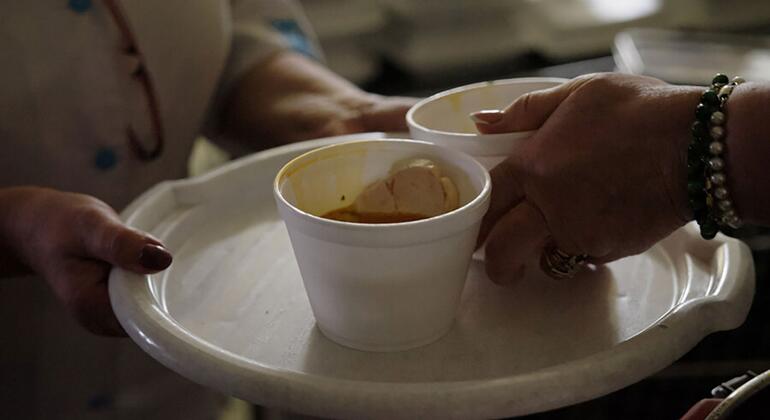
For hundreds escaping the war-ravaged streets of Oleshky, a steaming bowl of chicken soup in a Kyiv hospital corridor signified more than sustenance; it marked the end of years spent in the shadow of starvation. Staff and volunteers with the World Food Programme (WFP) and local partner Iskra Dobra moved briskly, carrying hot meals to the recently evacuated arrivals from Ukraine’s southern Kherson region—occupants of a territory isolated under Russian control since 2022.
For evacuees like Olha and her husband, Serhii, this was the first proper meal since the Russian occupation severed all channels of humanitarian aid. Resourcefulness became survival: neighbors consumed every last pigeon, and Olha braved shellfire to grow cucumbers and zucchini in the rubble of their unheated home. Price gouging was routine—one rare kilo of flour climbed as high as $12. May brought a total halt to food distributions, leaving most to scrape by on whatever wild plants they could gather.
The journey to Kyiv, made possible by a brief ceasefire in late October, was fraught with uncertainty. Until they crossed the border, Olha remembers fearing they might never escape. But on the road north, the presence of Ukrainians brandishing flags and welcome signs offered not only safety, but the restorative energy of homecoming.
Older evacuees like 78-year-old Valentyna described her own ordeal—making soup from wild plants, enduring winters in bombed-out dwellings. “There was no bread, no flour, nothing at all,” she recounted. The simple comfort of a hospital table brimming with borscht and porridge in Kyiv has become a revelation: “Here, you can eat until you’re full! I hadn’t seen so much food in years,” she marveled.
The scale of relief reflects continued need. Since Russia’s full-scale invasion began, WFP says it has supplied the equivalent of 4.1 billion meals to Ukrainians, reaching monthly 357,000 people in frontline areas and delivering daily school meals to 200,000 children. Yet for those just now leaving occupied zones, the trauma of isolation and deprivation lingers—alongside an uncertain future, with homes lost and no immediate prospect of return.
For now, in the safety of a Kyiv hospital room, evacuees are rediscovering simple pleasures: warmth, community, and the reassurance of a meal unshadowed by hunger.