
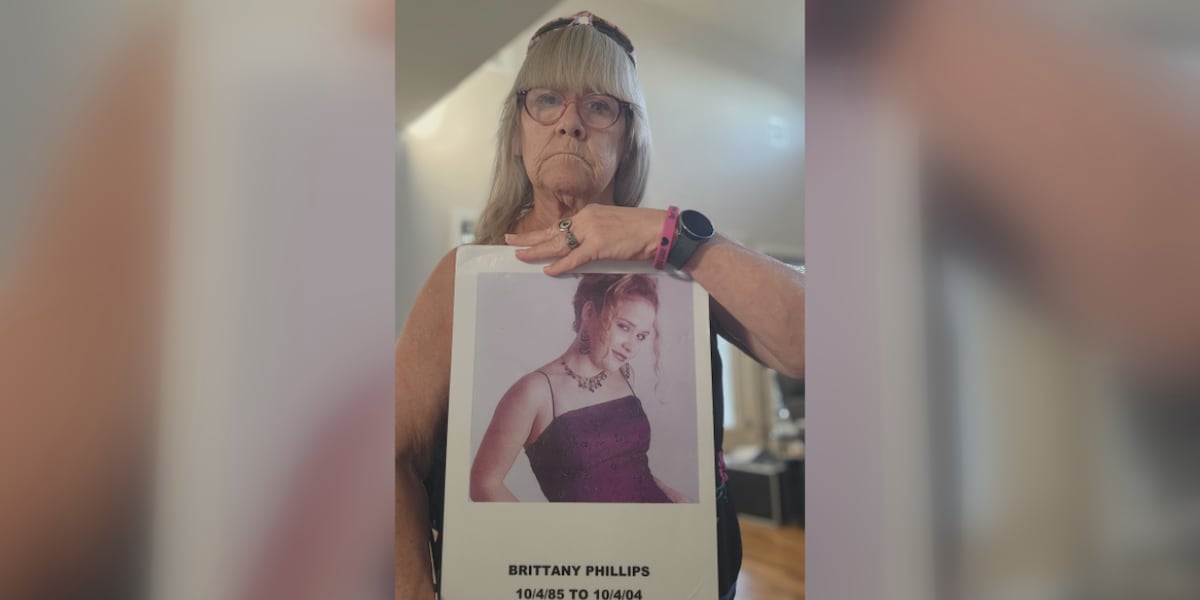
After more than two decades struggling for answers, Oklahoma families with loved ones lost to unsolved violent crime now have new recourse—and overdue recognition. Oklahoma’s Senate Bill 1636, which took effect on November 1, 2026, grants immediate family members the right to request a formal review of cold cases. The statute’s passage follows persistent advocacy by Dr. Maggie Zingman, whose daughter Brittany Phillips was raped and suffocated in her Tulsa apartment in 2004—a crime that remains unsolved despite national awareness campaigns and years of investigation.
Under the new law, surviving spouses, parents, children, and siblings of victims can submit a written request to the investigative agency in charge of a cold case. Agencies must acknowledge the submission within 30 days and then complete a thorough review within six months—analyzing everything from witness statements to physical evidence and the possibility of modern forensic testing. Previously, families often faced opaque processes, bureaucratic delays, or were simply ignored for years (oklahoma.gov).
From Personal Tragedy to Statewide Change
Dr. Zingman’s advocacy stretched across Oklahoma and beyond. Her daughter Brittany—a promising college graduate killed at age 18—became the face of families’ frustrations with the law enforcement system. Since Brittany’s death, Dr. Zingman has traveled, organized rallies, and appeared in the press to call for reforms, culminating in her direct role pushing for SB 1636 (kswo.com).
With the law now active, Dr. Zingman became one of the first to submit an official request to the Tulsa Police Cold Case Unit, seeking the mandated review for Brittany’s case. While the law does not guarantee new leads or even that the case will reopen, its procedures require agencies to reevaluate investigative steps—a process that could potentially uncover missed angles or support forensics not previously possible (krmg.com).
Community Action and Enduring Challenges
To help other families navigate the new system, Dr. Zingman recently launched “Brittany’s Bridge,” a multiday event in Lawton, Oklahoma dedicated to educating the public and providing resources for those seeking reviews for their unsolved cases. Since November 1, scores of Oklahoma families have taken up the law’s offer, learning how to file formal requests and search for answers to long-standing tragedies.
Despite the progress, challenges persist. Law enforcement agencies, often limited by underfunding or dated forensics, are not required to solve or reopen cases merely because a review is requested. The law’s impact will depend on agency resources, the availability of new evidence, and future reforms inspired by Oklahoma’s precedent (oklahoma.gov, oklahomacityrecord.com).
For Dr. Zingman and families like hers, Senate Bill 1636 is both a personal vindication and a first step toward justice—offering hope, transparency, and a reminder that the stories behind Oklahoma’s cold cases will not be forgotten.