
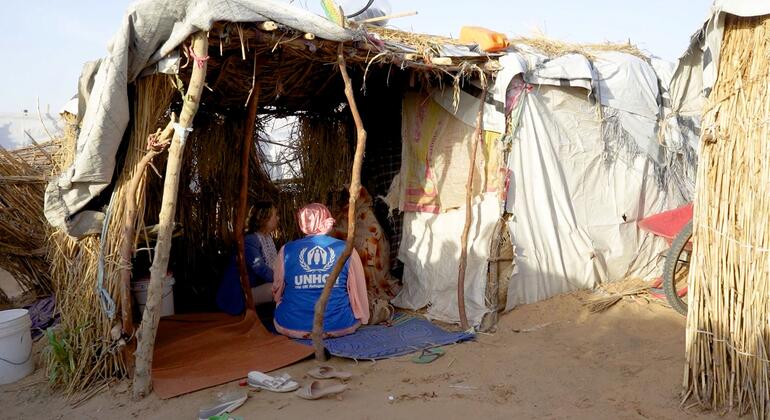
Nearly 64,000 people have poured across Nigeria’s northern border into Niger since the beginning of 2026, accelerating what humanitarian agencies describe as a mounting crisis in one of West Africa’s most fragile regions. The United Nations refugee agency (UNHCR) reports that Niger’s capacity to shelter and provide for these refugees—many of them children escaping jihadist violence and armed banditry—is increasingly overwhelmed.
Decades of overlapping security crises in northern Nigeria have pushed millions from their homes. This year, however, the exodus has swelled as violence, compounded by drought and disrupted livelihoods, forced tens of thousands to make a dangerous trek toward what they hoped would be safety. While a few hundred have crossed into Benin, the vast majority—by far—have arrived in Niger, a country whose own resources are stretched perilously thin.
Host Cities Overwhelmed, Camps Under Strain
Refugees arrive in regions of Niger where insecurity and poverty are entrenched. In October alone, approximately 1,200 crossed into the southeast’s Diffa region, while another 3,400 entered the western Tahoua area. Diffa, which has borne more than 70 percent of Niger’s reported security incidents this year, has become especially volatile. This region faces frequent armed attacks and violence against civilians, deepening the hardship for both new arrivals and established residents.
For many, sanctuary remains elusive. UNHCR warns that newcomers frequently live in makeshift shelters with limited protection from the elements. Drought, compounded by irregular rainfall, has devastated both agriculture and pastureland: an estimated 700 of Diffa’s 1,000 villages are expected to fall short of needed grain, and 70 percent of pastureland has been lost over the year. Host communities and authorities have offered what UNHCR’s Dominique Hyde calls “remarkable solidarity,” sometimes allocating land for temporary shelter, but practical support no longer keeps pace with need.
Basic Services, Registration, and Mounting Needs
The scale of the flow presents daunting logistical challenges. Only about five percent of this year’s Nigerian arrivals have been registered, largely due to funding shortfalls stalling the process. Without documentation, refugees are cut off from essential assistance—food, healthcare, and protection—leaving thousands more vulnerable, especially women and children. Educational barriers add to the hardship: children schooled in Nigeria’s English-based system confront an environment where Hausa is Niger’s sole official language, and transitional classes in refugee settlements are rare or nonexistent.
Those who have fled often face additional hardship, as food and clean water remain in short supply. Women report walking for kilometers to find water, and humanitarian partners flag high rates of malnutrition, poor hygiene, and respiratory infections. As the population in these camps swells, the dangers of disease and deprivation multiply.
Appeals for International Support
Before this new surge, Niger was already sheltering over half a million refugees and asylum-seekers—about 327,500 of them from Nigeria itself—amidst substantial numbers of internally displaced people. With existing services stretched to the limit, the UNHCR is calling for urgent international intervention, seeking $11.4 million for an emergency response spanning Niger, Nigeria, and Benin, of which $2 million is earmarked for immediate needs like water, food, shelter, registration, and medical care. As displacement continues, the risk is that thousands more families could be left without even the minimum required to survive.
As the region waits for increased support, the compound crisis in Niger stands as a stark illustration of how regional instability, climate pressures, and resource shortfalls converge to challenge humanitarian response—and leave vulnerable populations exposed to multiple hazards without a clear path forward.