
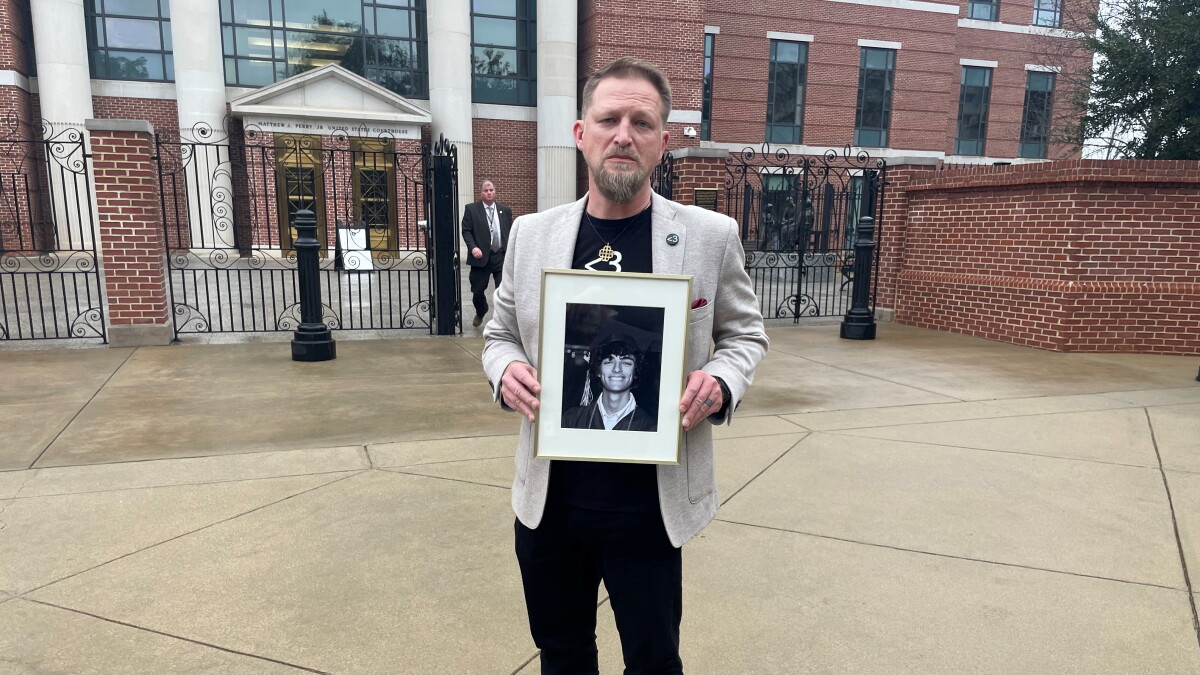
The ongoing fight against online sextortion took a consequential turn this November as Hassanbunhussein Abolore Lawal, a 24-year-old Nigerian national, pleaded guilty in a federal courtroom for his role in a scheme that led to the suicide of a South Carolina teenager. Lawal’s admission—entered as part of a plea deal on November 5, 2026—closes a distressing chapter for the family of Gavin Guffey, the 17-year-old son of South Carolina State Representative Brandon Guffey, and signals an aggressive legal approach to tackling emerging threats against minors online.
According to federal court records and reporting from South Carolina Public Radio, Lawal admitted to one count of child pornography and one count of cyberstalking resulting in death. He faces a federal prison sentence between 15 and 20 years, followed by supervised release and mandatory sex offender registration. The sentencing hearing before Judge Mary Geiger Lewis is set for December 10, 2026, in Columbia, S.C.
The case resonates far beyond the courtroom. In 2022, Gavin Guffey was coaxed by a figure posing as a young woman on social media into sharing intimate images. After Lawal, controlling the fraudulent account, began blackmailing the teenager with threats to publicize the photos, Gavin died by suicide. His story galvanized public and legislative attention to the dangers of online sexual extortion—also known as “sextortion”—especially schemes preying on teenagers through global digital platforms.
Lawal’s arrest and extradition from Nigeria in 2025 came as part of a broader international crackdown by U.S. authorities on financially motivated sextortion networks, which have been linked to a string of youth suicides across the United States. Lawal initially faced a raft of federal charges, including child exploitation resulting in death, distribution of child pornography, coercion and enticement of a minor, and interstate threats with intent to extort. Ultimately, prosecutors reached the plea arrangement to streamline the resolution while keeping the charge of cyberstalking resulting in death on the record—a rarity in such cases.
A Family’s Tragedy, a State’s Reckoning
The Guffey family’s loss spurred a legislative response. In 2023, South Carolina enacted “Gavin’s Law,” named in honor of the teenager, toughening state penalties for sexual extortion and establishing new resources to support victims. Representative Brandon Guffey, who openly shared his family’s ordeal, has expressed hope that both the prosecution and the stronger law will deter offenses and encourage reporting—a message underscored by data showing how rarely such cases resulted in legal accountability for perpetrators operating from abroad prior to recent efforts.
“There’s nothing that can bring Gavin back,” Guffey stated to local media. “But holding someone accountable shows that this behavior will not be tolerated, and it may stop someone else from being victimized.”
Sextortion: An Expanding Threat
Law enforcement and advocacy groups warn that online sexual extortion schemes, especially those involving minors, are escalating in sophistication and reach. The Federal Bureau of Investigation has documented multiple cases in which teenage victims—often boys—are pressured into sharing compromising photos and then aggressively blackmailed, frequently by perpetrators based overseas. These emotionally charged blackmail campaigns have resulted in numerous suicides in recent years, prompting urgent calls for both legislative changes and expanded educational outreach.
As Lawal awaits sentencing, authorities emphasize the importance of vigilance, communication, and support for young people facing online threats. The outcome in South Carolina is likely to stand as a marker in the effort to protect minors from digital predation and to pursue justice across borders.