
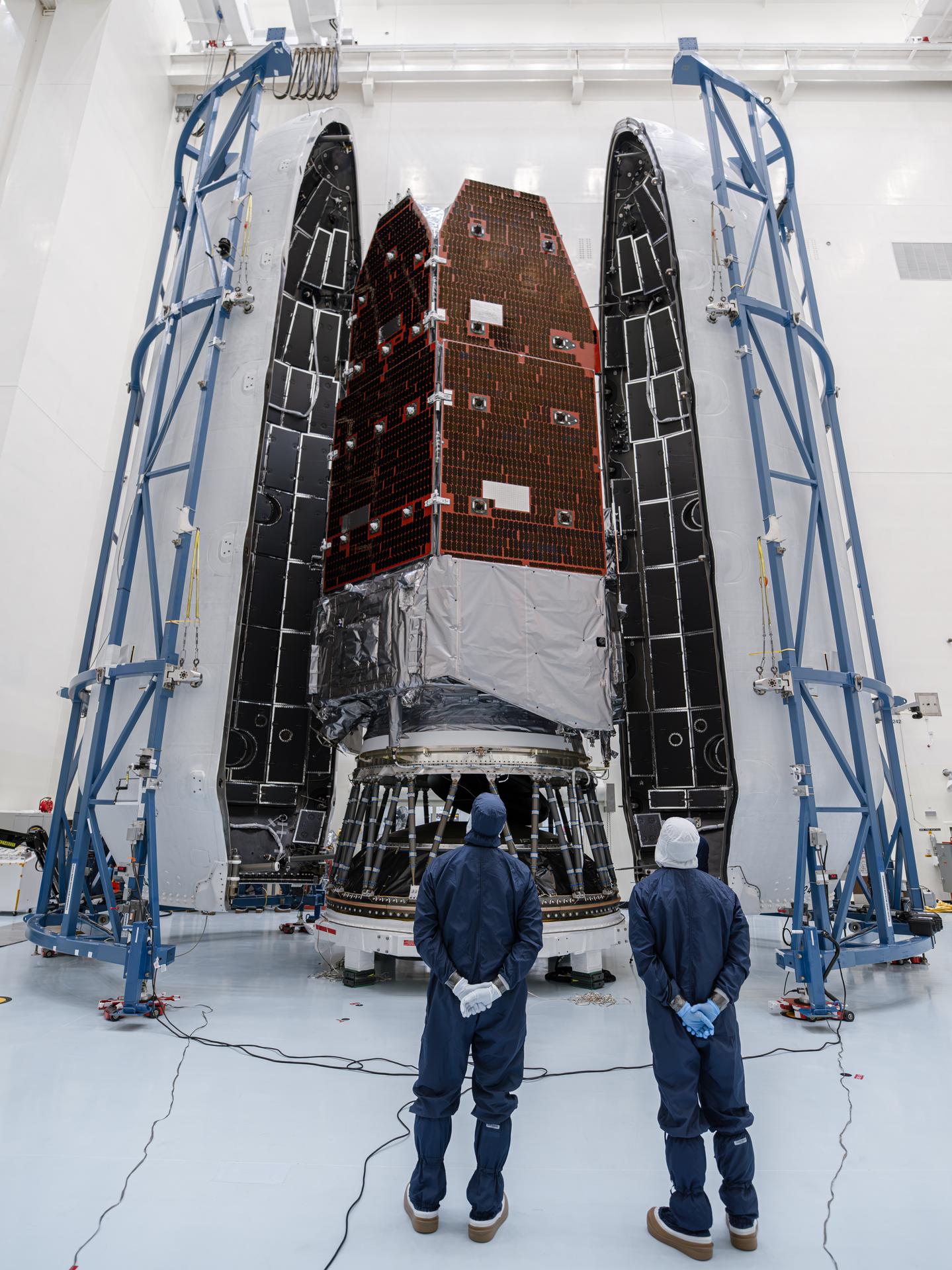
NASA’s Nancy Grace Roman Space Telescope lifted off from Kennedy Space Center at 7:26 a.m. EDT on August 30, 2026, marking the start of a mission designed to shed light on the universe’s most elusive phenomena. The liftoff atop a SpaceX Falcon Heavy powered the sophisticated observatory skyward into a million-mile trek toward the second Sun-Earth Lagrange point (L2), a region of gravitational stability where its eyes will probe cosmic mysteries for years to come.
Within minutes of launch, mission controllers at NASA’s Goddard Space Flight Center began receiving confirmation that Roman was healthy. The Falcon Heavy performed as expected, with separation occurring 31 minutes into flight and both boosters returning safely to the launch site for refurbishment. Not long after, the observatory’s solar arrays and sunshade successfully deployed, crucial steps in preparing the spacecraft for its journey through deep space and the extreme environment it will encounter at L2.
The Nancy Grace Roman Space Telescope is equipped for a sweeping mission: to conduct large-scale surveys with its ultra-wide infrared imaging, mapping billions of galaxies, and making unprecedented studies of dark energy, dark matter, and exoplanets. Led by a 2.4-meter primary mirror and a 300-megapixel Wide Field Instrument, Roman’s capacity to observe the cosmos exceeds that of Hubble by a factor of a thousand in survey speed. Over a five-year primary mission, with ambitions for a ten-year legacy, it is expected to produce up to 1.4 terabytes of data per day—an astrophysics record—made publicly accessible for scientific research globally.
Roman also carries a pioneering Coronagraph Instrument, which will test advanced technology to directly image planets beyond our solar system—a leap that could one day support missions seeking signs of life on Earth-like exoplanets. In the coming months, engineers will calibrate scientific instruments and run through complex commissioning tasks. NASA projects that Roman’s first public images will be unveiled in early 2027, offering an initial glimpse of thousands of galaxies and millions of stars in a single frame.
The mission’s namesake, Nancy Grace Roman, NASA’s first chief astronomer, shaped the agency’s astrophysics program and championed the original Hubble Space Telescope. Building on this legacy, the Roman Space Telescope intends to set a new standard for cosmic discovery, from unraveling mysterious dark matter and dark energy to mapping the architecture of distant planetary systems.
NASA has launched a comprehensive communications initiative, providing live updates and planning extensive educational programs to bring the journey and science of the Roman telescope to the global public in near-real time. As the telescope powers onward to L2, it symbolizes the next leap in humanity’s quest to understand the cosmos at its grandest scale.