
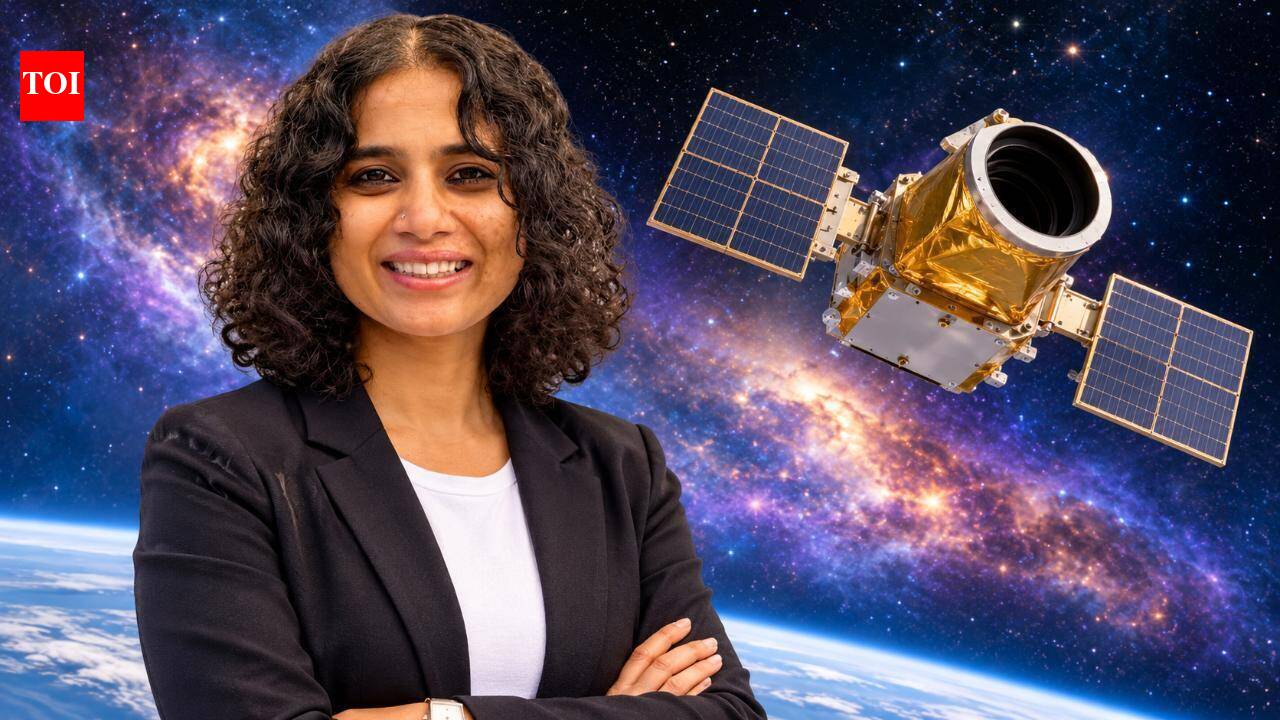
NASA is moving forward with an ambitious mission to illuminate some of the darkest corners of our galaxy, selecting the PUFFINS SmallSat to investigate interstellar dust in unprecedented detail. Officially titled “Polarimetry in the Ultraviolet to Find Features in InterStellar dust,” the PUFFINS program aims to provide astronomers with a groundbreaking look at cosmic dust grains that are smaller than 50 nanometers in diameter.
At the helm of this $20 million initiative is Dr. Ramya Manjunath Anche, an assistant research professor at the University of Arizona’s Steward Observatory. Originally from Bengaluru, India, Dr. Anche is leading a team that blends expertise in astrophysics, instrumentation, and data analysis. NASA’s Astrophysics Pioneers program announced the award and selection of PUFFINS for funding in October 2026, positioning it as a key investment in the next generation of small space telescopes.
The mission is designed to launch around 2030, and is currently in the early stages of design and development. Central to its strategy is a 10-inch (25 cm) ultraviolet telescope coupled with a state-of-the-art spectropolarimeter, all packed into a SmallSat platform. Unlike previous ultraviolet space telescopes, PUFFINS is engineered to survey the alignment and properties of interstellar dust grains by observing the polarized ultraviolet spectra from about 70 target stars within the Milky Way.
These dust grains, though nearly invisible and often overlooked, play a critical role in the lifecycle of stars and planetary systems. By analyzing their characteristics—and particularly how their orientation reveals the underlying structure of the galactic magnetic field—PUFFINS scientists hope to unravel longstanding mysteries about the formation and evolution of stars and planets.
The scientific significance of PUFFINS is broad: it not only fills a three-decade gap in space-based ultraviolet spectropolarimetry but also provides a technological bridge to future large flagship missions, including NASA’s planned Habitable Worlds Observatory in the 2040s. As noted in independent reporting from both Times of India and Mint Affairs, the project’s success could lay the groundwork for a new era in the study of the interstellar medium.
While PUFFINS has cleared a major hurdle with funding and leadership confirmed, many specific details—including the launch vehicle and exact mission trajectory—remain undisclosed as of late 2026. The team expects to refine these elements as the mission moves through its design and prototype phase.
For many in the global astrophysics community, PUFFINS represents more than just another satellite launch. By shining a light on some of the most elusive building blocks of the cosmos, it underscores both the international and interdisciplinary nature of 21st-century astronomy—and offers hope that long-held questions about the origins of stars, planets, and even life itself may soon have answers.