
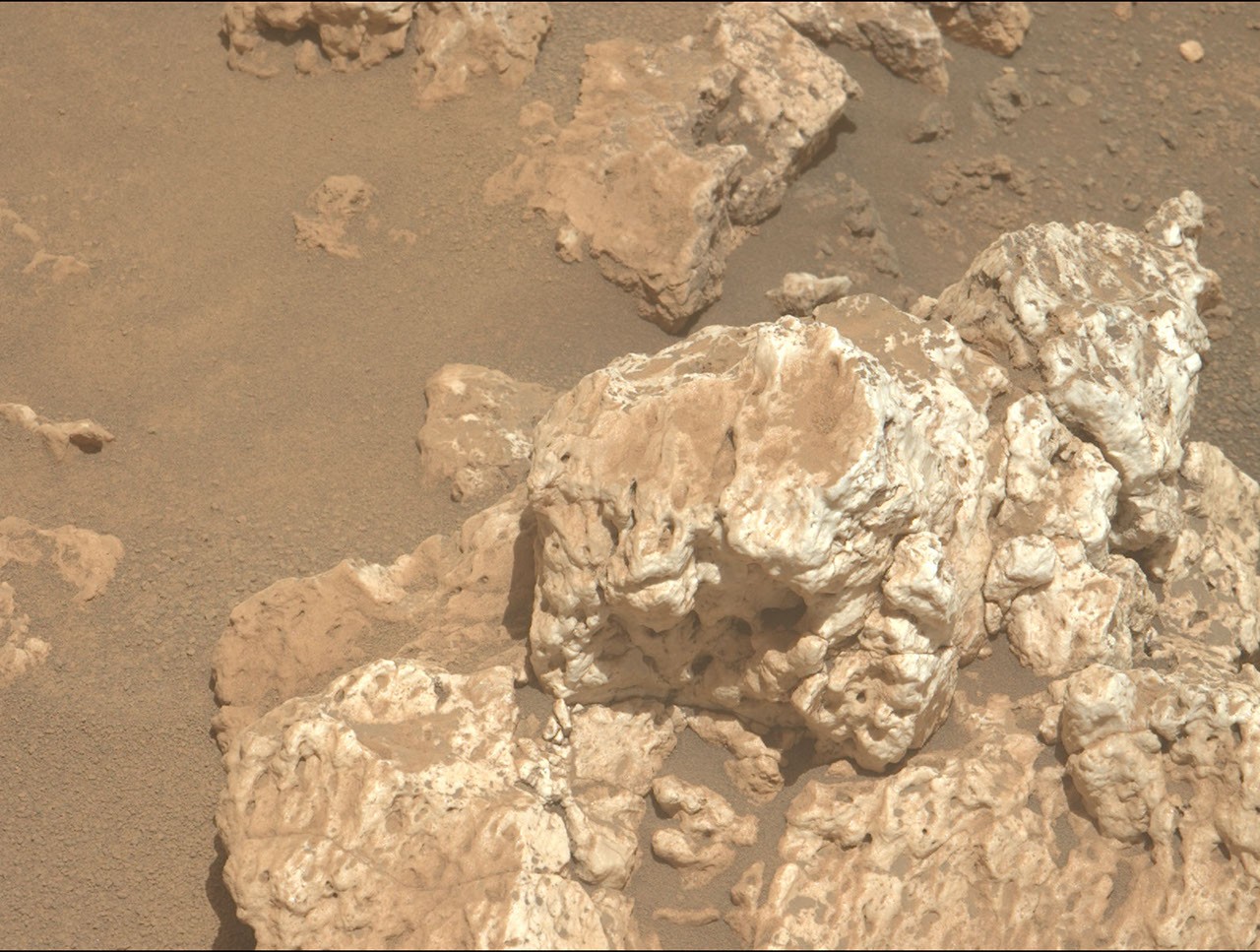
NASA’s Perseverance rover has encountered a remarkable cluster of bright, silica-rich rocks in the ancient ‘Idubi’ region on Mars, sparking a new phase in the search for evidence of past water — and possibly life — on the Red Planet.
The discovery, confirmed by NASA on November 16, 2026, comes as the rover traverses the Lac de Charmes region, an expanse known for its exposed old Martian crust. These ghostly rocks stand in sharp contrast to their darker surroundings, prompting the Perseverance science team to direct the rover’s instruments for a closer look.
Hydrated Silica: Traces of Water’s Legacy
Data freshly relayed from the rover’s SuperCam instrument indicate that the Idubi rocks are rich in hydrated silica — a mineral that, on Earth, forms in a variety of watery environments including hydrothermal systems, near-surface weathering, and around ancient groundwater flows. Unlike the mostly igneous and impact-generated rocks commonly found in the area, these light-toned fragments are composed of material that likely formed through long-gone interactions with liquid water.
This geological composition is significant: hydrated silica is prized by astrobiologists for its ability to preserve microfossils, protecting ancient biological signals across vast stretches of time. The rocks’ volume and accessibility allow Perseverance to carry out detailed proximity science — high-resolution chemical and mineralogical analysis that were impossible with smaller silica-rich pockets previously noted inside Jezero Crater.
Questions and Possibilities
While the existence of hydrated silica in the Idubi area highlights Mars’ watery past, the precise formation processes behind these rocks — whether through heat-driven hydrothermal action, groundwater interactions, or other means — as well as the hunt for signs of ancient life remain open scientific challenges. The current campaign utilizes Perseverance’s full suite of instruments, with NASA’s scientists hoping to uncover whether these rocks once supported conditions favorable for life and whether they might still preserve evidence of it today.
The Idubi discovery extends the scientific legacy of Jezero Crater, where Perseverance landed in 2021 and began exploring some of the oldest Martian terrain ever studied by a rover. This area holds particular promise precisely because water once lingered here, offering a key environment for searching for biosignatures to answer profound questions about Mars’ past habitability.
No conflicting reports on these findings have been published. The investigation is ongoing, with detailed analysis and data collection expected to continue as Perseverance presses deeper into the ancient landscape of Lac de Charmes, and with it, our understanding of Mars’ mysterious history — and its long-lost waters — continues to grow.