
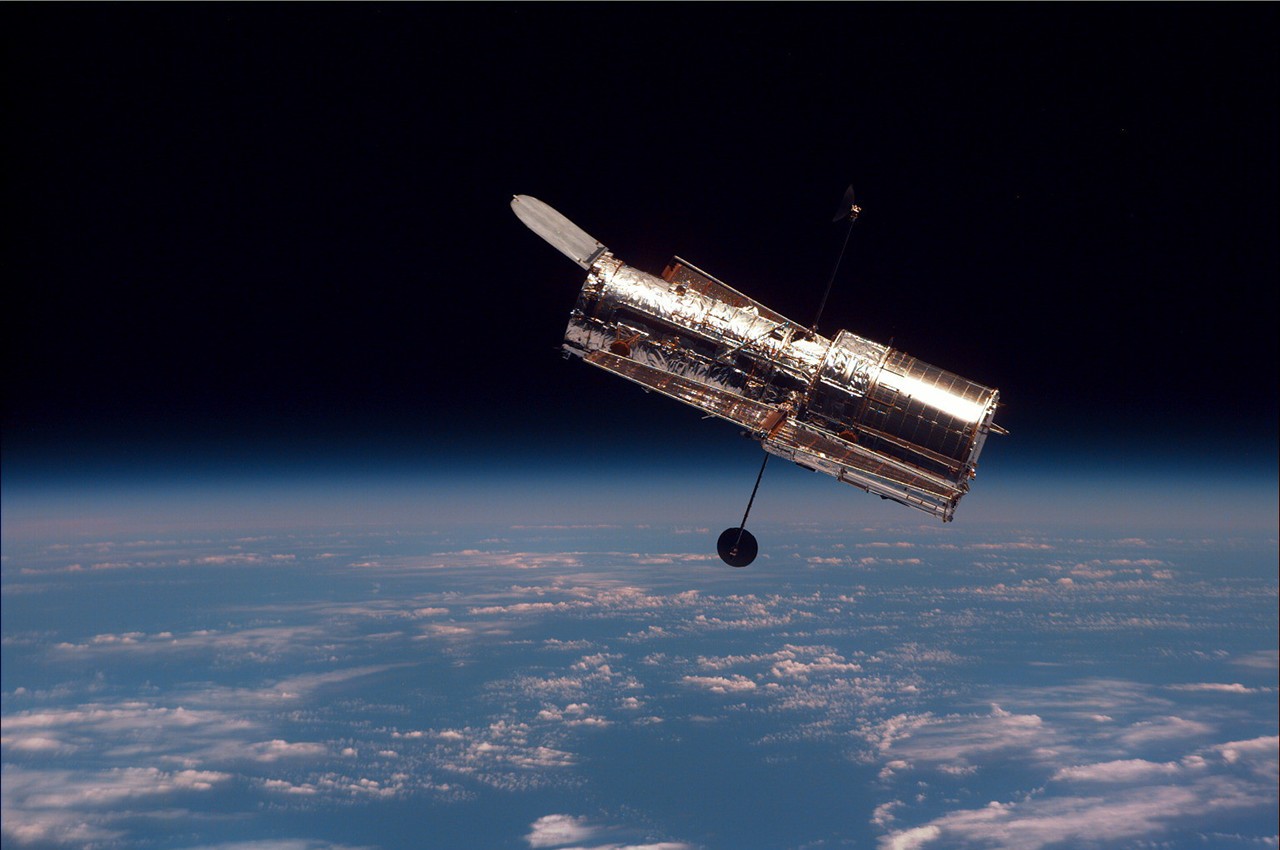
The Hubble Space Telescope, one of the most productive and celebrated scientific instruments in orbit, has marked its 200,000th circuit around Earth while NASA is actively seeking commercial industry solutions to sustain its mission or manage its eventual retirement.
On September 19, 2026, Hubble completed its 200,000th orbit—a testament to the enduring legacy of a spacecraft launched in April 1990 on the Space Shuttle Discovery. Operating 300 miles above Earth’s surface, Hubble has spent more than 36 years transforming humanity’s view of the universe, from capturing iconic images of distant galaxies to refining measurements of the cosmos’ expansion rate. As demand for Hubble’s observing powers continues to outstrip availability, scientists worldwide rely on the telescope to probe the deepest reaches of space and time.
In recent months, the momentum has shifted toward planning for Hubble’s future. On October 29, NASA officially issued a Request for Information (RFI) to the commercial sector. The call explores the feasibility of privately conducted missions to boost Hubble’s altitude, enhance its science capabilities, or, if needed, orchestrate a controlled deorbit at the end of its lifespan. These new servicing concepts would follow five previous astronaut-flown missions, the last of which took place in 2009.
Hubble’s lack of on-board propulsion means its orbit naturally decays due to atmospheric drag—a process NASA expects will require intervention by the early 2030s. The agency is looking for new ideas to safely extend the telescope’s working life, or, alternately, to manage a safe retirement. NASA officials have made clear that leveraging commercial capabilities could deliver major cost and innovation benefits, and that they are paying close attention to rapid advances in private space servicing technologies.
The push to keep Hubble operational comes as the telescope continues to deliver new scientific breakthroughs. During its milestone 200,000th orbit, Hubble observed the galaxy cluster MACS J0417 in its search for the supernova Athena, using its unique vantage to refine measurements of the Hubble Constant—the rate at which the universe expands.
NASA will accept responses to the commercial servicing RFI through late November, signaling potential for partnerships that could reshape the twilight era of the iconic observatory. For now, Hubble continues streaming back data with undiminished relevance, as scientists and engineers rally to ensure its historic contribution will endure for years to come.