
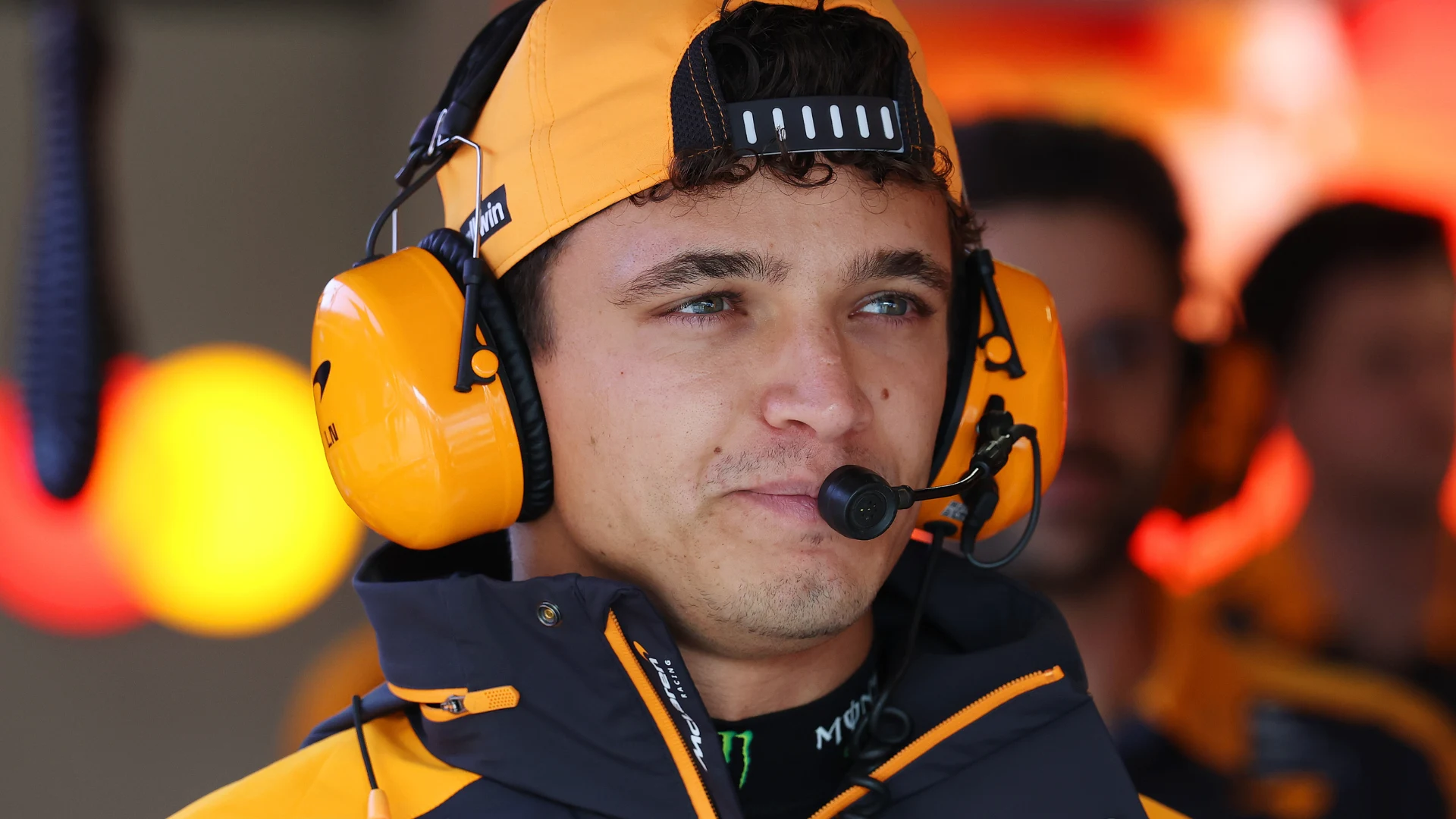
When Lando Norris claimed victory in the 2026 Brazilian Grand Prix, finishing over 15 seconds ahead of reigning champion Max Verstappen, it signaled a new phase in McLaren’s Formula 1 fortunes. This success, underscored by a subsequent double podium in Las Vegas, was a tangible reward for a string of aerodynamic and mechanical upgrades introduced to the team’s MCL40—the first major leap forward under the 2026 technical regulations.
Targeted Upgrades Yield Immediate Gains
In the lead-up to São Paulo, McLaren rolled out an integrated package of improvements to the underbody, front and rear wings, and floor, designed to refine aerodynamic efficiency and overall car balance. According to Norris, who assessed the upgrades during Friday practice at Interlagos, the modifications ‘seemed to gain performance,’ noting discernible improvements in both speed and handling. He described the car as still challenging to master, yet the extra grip provided a clearly more positive driving experience (Formula1.com, GrandPrix.com).
Breakthrough Results and Persistent Caution
The impact of these upgrades became clear: Norris took pole and won in Brazil, while in Las Vegas, he and teammate Oscar Piastri both secured podium finishes—Norris in second, Piastri in third, trailing Verstappen’s Red Bull (Speedweek.com). These results mark McLaren’s most consistent run at the front since the season began under the latest technical overhaul.
Yet amid the celebrations, Norris retained a cautious perspective on the team’s long-term prospects. Despite the breakthrough, he stressed that “McLaren is not at the level to fight for a world championship,” underlining that the upgrades are an important step rather than a final answer to the team’s ambitions. He identified further areas of development, particularly around slow-corner performance and car balance, as crucial to closing the gap to Red Bull and consistently contending for titles (SkySports.com).
Development Continues Into 2027
McLaren’s technical staff are now reported to be focusing on revised suspension geometry and rethinking aerodynamic concepts as development continues. The improvements at high-speed tracks have highlighted other performance weaknesses, especially in slower corners, which the team now seeks to address (Speedweek.com).
For a team that struggled at the start of 2026, the surge in results is significant. Nevertheless, both Norris and McLaren leadership are clear that the pursuit of Red Bull’s benchmark is far from over—and that each incremental upgrade is part of a broader, ongoing campaign to restore McLaren to the very top of Formula 1.