
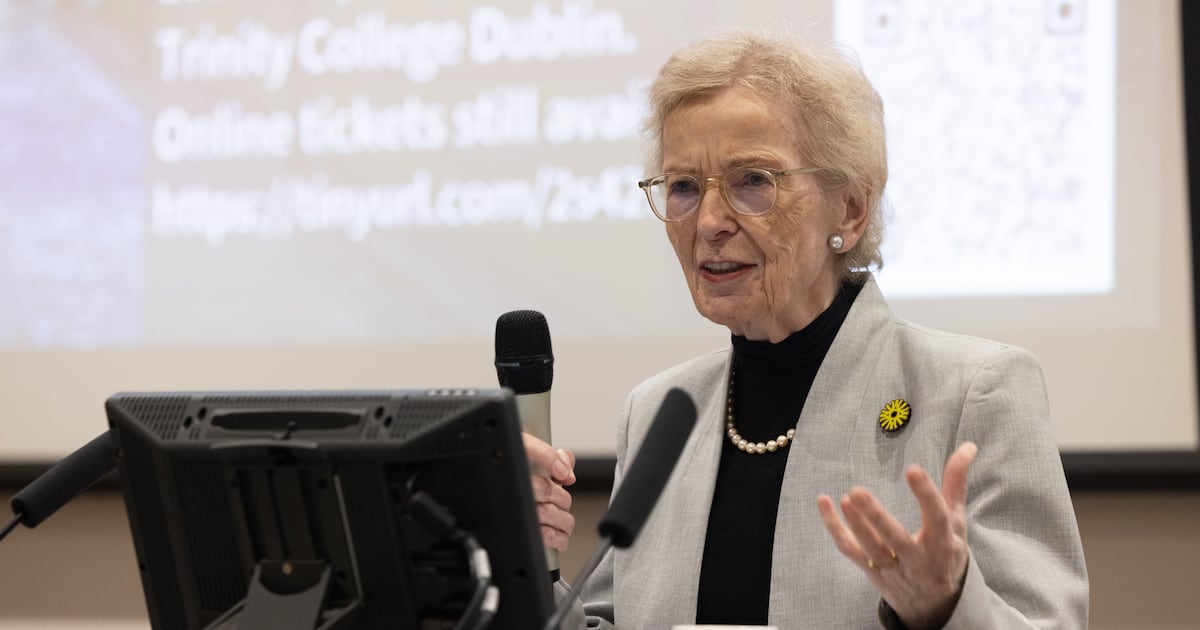
Advocates at a major Dublin summit are intensifying demands on the World Health Organization (WHO) to formally recognize the climate crisis as a Public Health Emergency of International Concern (PHEIC), citing mounting health impacts and urgent need for global intervention. The meeting, held on November 20, 2026, at Trinity College Dublin and organized by Irish Doctors for the Environment, brought together prominent voices in climate and health — with former Irish President Mary Robinson at the forefront.
Mary Robinson, who also serves as Chair of The Elders, voiced sharp frustration over the limited progress achieved at the recent COP31 climate talks. Addressing the conference, she pressed for governments and international agencies to elevate the climate emergency to the same status as pandemics and other global health crises. “This is a crisis that cuts across borders and walks into every hospital and home,” Robinson emphasized, according to the conference proceedings.
Backing Robinson’s urgent call, Dr. Mike Ryan, former emergencies chief with the WHO, highlighted the growing toll of climate-fueled health emergencies, from heatwaves to forced displacements and the spread of vector-borne diseases. Public health researcher Matthew Chersich warned of so-called ‘lost years’ ahead if international actors do not act swiftly to trigger emergency response frameworks tailored for escalating climate impacts.
The conference included the launch of a high-profile petition by Irish Doctors for the Environment. The petition, which garnered immediate support among health professionals and scientists, urges Ireland’s government to advocate for the PHEIC designation during its upcoming European Union presidency. Organizers argue the status would compel coordinated global investment and policy action to mitigate worsening health consequences already witnessed across vulnerable communities.
However, not all voices at the event were in support. The proceedings were briefly disrupted by attendees questioning both climate science and vaccine safety; organizers and panelists defended the scientific consensus underpinning UN and WHO positions.
The governmental response has been measured. Ireland’s Minister for Climate, Darragh O’Brien, responded in parallel public comments by defending the nation’s climate action record while acknowledging the daunting challenges in reaching 2030 emission targets. O’Brien pointed to recent gains in renewable energy and steps to curtail fossil fuel use, but stopped short of endorsing the petition’s demands.
As the WHO has not yet issued a PHEIC declaration for climate change, the outcome of the Dublin conference and subsequent petition remains uncertain. Still, the convergence of medical, scientific and civic leaders in the Irish capital marks an escalation in the campaign to frame the climate crisis as a threat not only to the planet but to global public health. Whether these appeals shift international policy, observers say, may hinge on Europe’s and Ireland’s stance heading into 2027 — and how quickly the WHO chooses to act in the face of mounting evidence.