
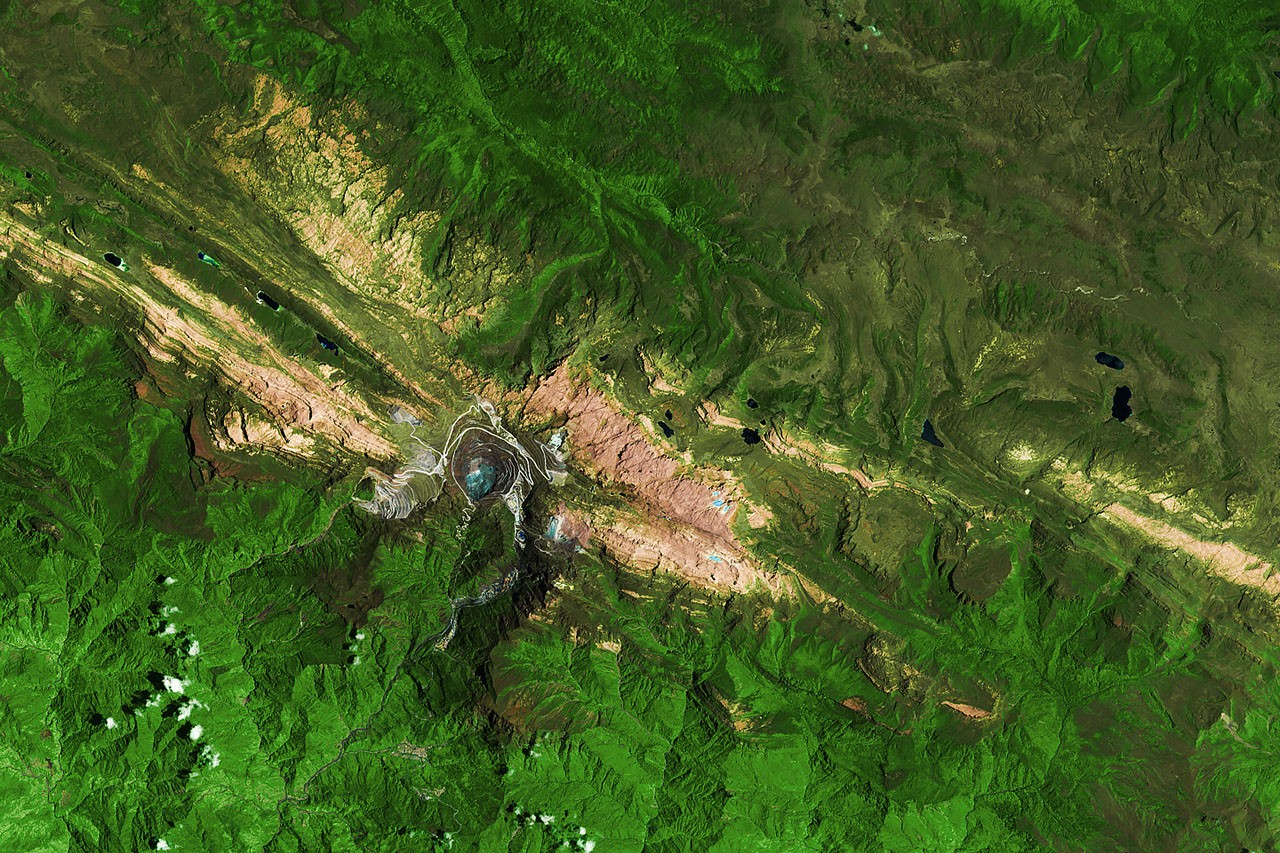
Photo: NASA Earth Observatory / Lauren Dauphin
On the slopes of Puncak Jaya, the highest peak in Indonesia’s Papua province, the once-vast equatorial glaciers have all but vanished. New satellite imagery released November 16, 2026, by NASA’s Earth Observatory reveals a dramatic scene: only a handful of thin, stagnant ice fragments cling to steep brown ridges, leaving nearly all of the Sudirman Range as bare rock.
A Vanishing Legacy in the Tropics
Glaciers on Puncak Jaya have long stood as a symbol of rare, year-round tropical ice. According to climate scientists at Indonesia’s Agency for Meteorology, Climatology, and Geophysics (BMKG), the ice cap shrank from about 4.31 square kilometers in 1988 to a mere 0.09 square kilometers by September 2025. That is roughly 2% of its size just three decades ago.
Field monitoring, notably at the East Northwall Firn site, confirmed by November 2024 that the once 32-meter-thick glacier was entirely gone. By late 2026, the only remaining segments are too discontinuous and thin to behave as flowing glaciers, according to satellite and field data. Instead, isolated remnants are exposed to rapid melting on every edge, accelerating their fragmentation and disappearance.
Climate Patterns Drive the Crisis
Scientists attribute the unprecedented loss to a dual onslaught: persistent global warming, which raises baseline temperatures, and irregular but powerful El Niño events. During El Niño years, warmer conditions send the freezing level far above Puncak Jaya’s summit, resulting in rain rather than glacier-sustaining snow. Without frequent snow cover to reflect sunlight, the glaciers melt even faster.
Regional and Global Implications
BMKG observers warn that the end of these iconic glaciers serves as a stark warning for the stability of tropical highland hydrology and biodiversity. Local communities in Papua may soon lose a vital seasonal source of meltwater. The final patches may linger into 2027, but projections increasingly suggest complete disappearance by as early as the end of 2026, based on both ground observations and projections from the 2019 and 2025 studies.
Globally, Puncak Jaya’s glaciers have been considered a “canary in the coal mine,” their swift demise echoing similar losses on Venezuela’s Humboldt Glacier, Africa’s Kilimanjaro, and Peru’s Quelccaya Ice Cap. What happens atop this isolated Indonesian summit encapsulates one of Earth’s most visible, rapid responses to anthropogenic warming.
What Comes Next
An aerial survey planned for December 2026 is expected to provide the most precise measurement yet of the last surviving ice. Still, with no sign of climate stabilization, the outcome appears clear: Puncak Jaya will soon join the growing list of places where glaciers have been erased within a single human lifetime.