
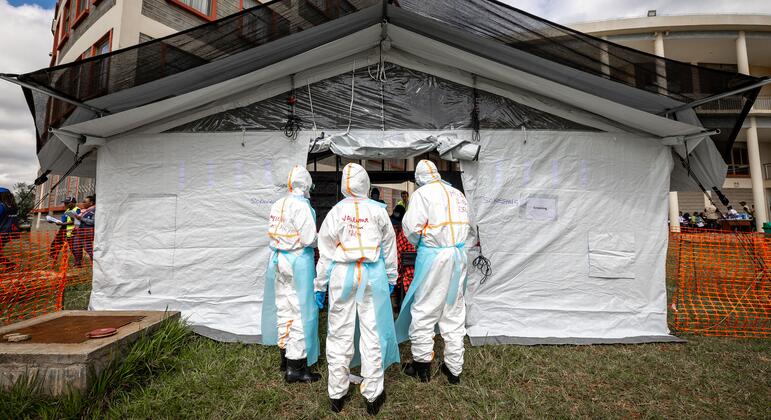
Kenya faces a moment of guarded relief as health officials mark the discharge of the country’s last active Ebola patient, beginning a meticulous 42-day countdown before the outbreak can be declared over. Just a month ago, the nation’s first confirmed case—a Kenyan man recently returned from the Democratic Republic of the Congo—set off an urgent public health response, after he died at a Nairobi hospital.
The race began with rigorous contact tracing: authorities identified and monitored 135 people who had come into contact with the patient, both within the country and abroad. Among those quarantined, eight more contracted the virus—four family members and four health workers—yet all were isolated before the disease could spill into the broader community.
Kenya’s last new Ebola case was recorded on October 19, according to the World Health Organization (WHO). Since then, WHO reports, seven patients have recovered and two succumbed. On Wednesday, with the last patient released and eleven more cleared from quarantine, Cabinet Secretary for Health Aden Duale underscored the ongoing need for vigilance: “The countdown is not the end of our response.”
Officials now face 42 days—twice Ebola’s maximum incubation period—of heightened surveillance. International health bodies, including WHO’s regional office, have praised Kenya’s swift containment effort, but stress continuous screening in health facilities, laboratory upgrades and persistent readiness among health workers.
The story is not yet finished. Kenya will reach a pivotal milestone on December 23, provided no new Ebola cases emerge, as the threat of cross-border infection from neighboring epidemic regions remains present. For survivors, health authorities promise follow-up care and support as the country’s health systems remain on high alert, determined that a vigilant response endures beyond the immediate emergency.