
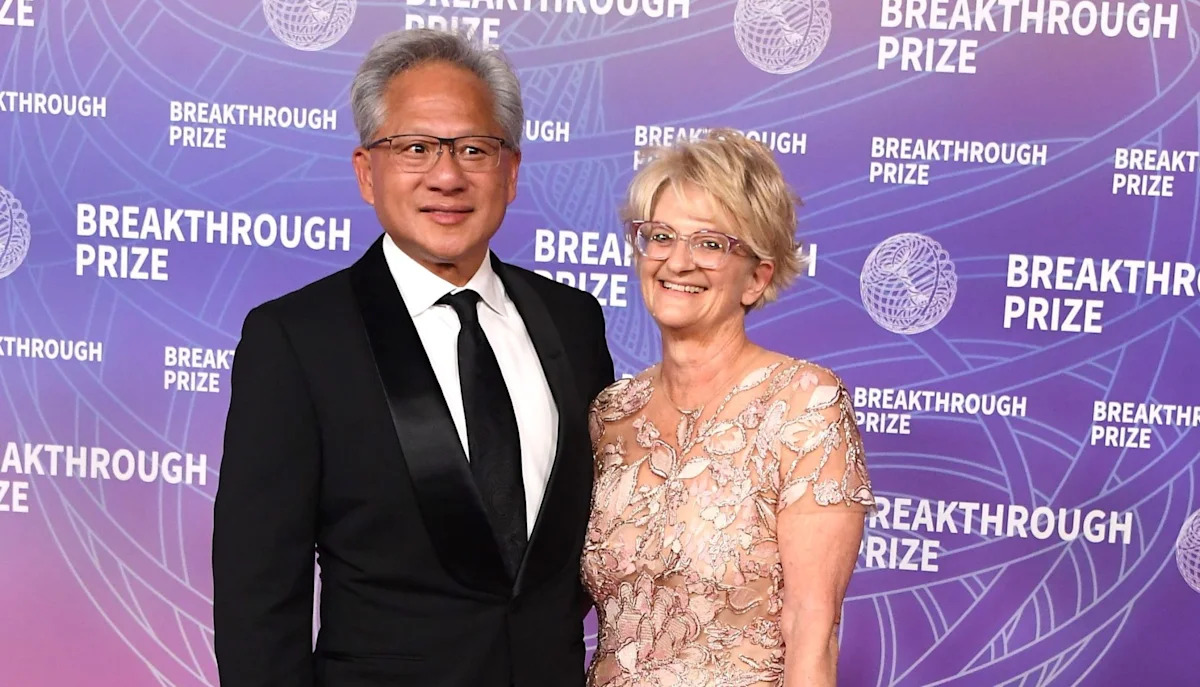
Jensen Huang’s abrupt return to his post as Chief Executive Officer of Nvidia set off a dramatic chain reaction across financial and philanthropic circles on November 23, as the company’s sagging shares rebounded over 30% in a single day and added $2.3 billion to the value of the Jen-Hsun & Lori Huang Foundation’s Nvidia holdings. The foundation, which now holds approximately 59 million shares, saw its asset value soar to roughly $9.7 billion by the close of trading that day, according to calculations from Yahoo Finance and foundation disclosures.
The Nvidia board of directors voted unanimously to reinstate Huang, the company’s co-founder and longtime architect of its transformation into a global leader in artificial intelligence hardware, after a tumultuous 11-day leave of absence. The departure had come amid an ongoing investigation into personal conduct allegations and concerns over potential ties between Huang and individuals implicated in illicit AI chip exports to China. Le Monde and Tom’s Hardware report the board faced substantial internal and external pressure, including vocal public support from President Donald Trump, who argued that U.S. national interests and the broader technology sector would be destabilized without Huang’s leadership.
The market’s reaction was immediate and dramatic. Nvidia’s share price vaulted to $165.05 by the close on November 23, more than erasing the sharp losses incurred during the CEO’s absence. Investors, who had driven shares down 24% over uncertainty surrounding the leadership vacuum, appeared reassured by Huang’s reinstatement, signaling confidence in his vision and stewardship of a company crucial to global AI development.
The day’s biggest beneficiary was arguably the Jen-Hsun & Lori Huang Foundation, which has held its vast position through years of market volatility since its creation in 2007. Founded by Jensen and Lori Huang with an initial endowment of 370,000 shares valued at $12.6 million, the foundation’s assets had swollen as Nvidia’s fortunes soared. By the end of 2020, the foundation was worth $828 million; by late 2024, that figure had climbed to $9.2 billion, as reported by Times Now World and regulatory filings. The foundation’s focus remains primarily on education, health research, and environmental causes, leveraging charitable grants that have scaled alongside the staggering appreciation of the stock.
Despite the celebratory return, several investigations remain open regarding Huang’s personal conduct and connections to contested AI chip exports. These ongoing issues threaten to introduce further volatility for both Nvidia and the foundation’s future holdings, though there is broad consensus on his technical and business legacy. Under Huang’s guidance, Nvidia cemented itself as the essential supplier for the global AI arms race, fueling rapid advancements and billion-dollar industries in sectors ranging from cloud computing to autonomous vehicles.
Financial analysts have noted that Nvidia’s stability is not only vital to its shareholders and the broader technology ecosystem but that the Huang family’s philanthropic power—boosted by this week’s market spike—could also play a growing role in the landscape of American foundations. As regulatory and political scrutiny continues, the company’s fortunes, and the foundation’s future impact, may remain closely tied to the fate of its co-founder at the helm.