
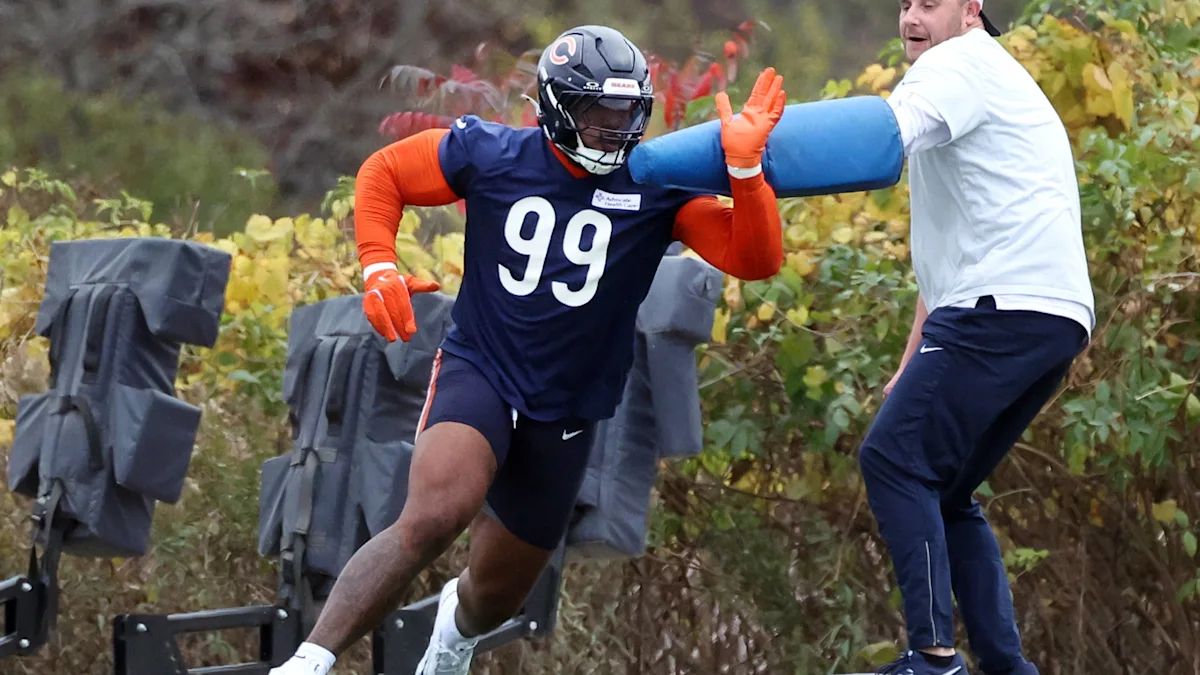
Controversy flared during the Thanksgiving Day face-off between the Chicago Bears and Detroit Lions after Detroit’s offensive linemen publicly accused Bears defensive tackle Jeffery Simmons of using deceptive tactics at the line of scrimmage. According to Lions center Juice Scruggs and guard Christian Mahogany, Simmons was heard vocalizing in a manner that allegedly mimicked the Lions’ snap count, resulting in consecutive false start penalties that contributed to a narrow 39-35 Chicago victory.
The Lions’ offensive woes were particularly acute during the second quarter, when Scruggs was flagged twice in rapid succession. Observers noted Simmons’ audible engagement at the line during these moments—behavior that, under NFL rules, could merit penalties if it was found to simulate the snap count and induce infractions. The allegations sparked debate across social media platforms and postgame press coverage, as fans and analysts dissected video clips and audio from the game. However, confirming intent and direct rule violations based on sideline noise remains a challenge for both officials and the league.
Simmons has emphatically denied any wrongdoing, insisting in postgame interviews that “I don’t have to cheat.” The defensive tackle, who joined Chicago following a trade from the Titans in late October, characterized his communication as standard on-field coordination with teammates. He further emphasized that the Lions’ cadence call is “White 80,” while he used only routine defensive signals and never uttered their trigger words. Simmons’ firm stance drew a mixture of support and skepticism from observers, as questions swirled about gamesmanship and the boundaries of competitive conduct at the professional level.
Officiating crews also appeared to take the matter seriously. At one point during the contest, a game official was seen speaking with Simmons on the sideline—an exchange widely interpreted as a warning or inquiry into the accusations. Despite this, there was no in-game penalty assessed for snap simulation, and no formal disciplinary action or ruling has since been issued by the league.
Lions head coach Dan Campbell acknowledged that assorted penalties—nine total, for 70 yards, including four false starts and multiple taunting violations—altered the game’s dynamics. One unsportsmanlike penalty, he noted, forced Detroit into a two-point conversion attempt instead of a routine PAT, though Campbell stopped short of suggesting officiating decisions alone decided the result. The Bears, meanwhile, claimed a pivotal division win that helped shape the playoff picture as the season heads into its final stretch.
As of November 27, the NFL has not announced any review or investigation into Simmons or the Bears’ defensive conduct. With tensions still simmering, attention is already turning toward the teams’ rematch in Week 17—this time in Chicago—where officials and fans alike will be on high alert for any hint of repeat incidents.
The absence of definitive evidence and the NFL’s apparent reluctance to intervene have left the situation unresolved, underscoring the fine line between strategic gamesmanship and prohibited simulation. As scrutiny on player conduct intensifies, the league may face mounting calls for clearer guidance on how to police communication overlap at the line of scrimmage.