
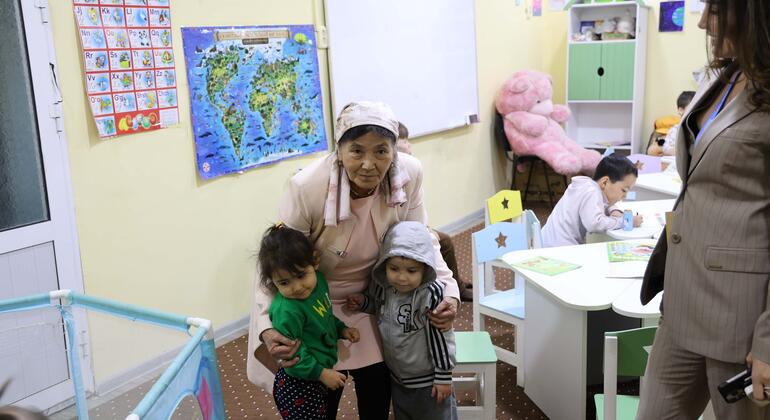
Behind the iron gate of a repurposed mansion in central Samarkand, a different kind of household has quietly grown: one where battered and outcast women find not just safety, but the beginnings of independence. Sheltering up to 50 residents at a time, the Rahmdillik (“Compassion”) crisis centre traces its roots to the vision of Dr. Bibisora Oripova, who transformed her experience treating burn victims into a mission to provide real sanctuary for survivors of domestic violence.
This evolution began in the 1990s, when Dr. Oripova first witnessed the dire aftermath of abuse at a local hospital. Too often, women whose lives had been shattered by violence had nowhere to go but hospital wards—unwelcome in their own homes or cast out by extended families. When Soviet-era long-term care faded, the gap became stark. Dr. Oripova persuaded local officials to allocate a building, laying the groundwork for what has grown—with government and international support—into a vital resource now visited by UN delegations such as that led by Sabine Mahl, the UN Resident Coordinator in Uzbekistan.
Rahmdillik extends far beyond emergency shelter. Women arrive in all circumstances—like Irina*, pregnant and with young children, who called for help and was told simply, “Come right now.” The centre offers legal and psychological counseling, vocational training, and direct navigation of the justice and welfare systems. From sewing workshops to a new children’s room filled with crafts and play, every aspect is oriented toward rebuilding lives. In cases where women choose to pursue police intervention, staff guide them through the arduous complaint process and accompany them to authorities, reducing the risk of retraumatization.
Yet most survivors never involve the justice system, Dr. Oripova notes—a reality shaped by cultural expectations and economic dependence. Many women hope time will mend their families, or fear for their children growing up without a father. Here, staff help advocate for government housing and allowances for those who decide to start over alone. Meanwhile, children attend local schools or stay in furnished nursery rooms, creating a sense of stability after upheaval.
Statistics only begin to hint at the scope: in 2023, Uzbekistan reported more than 40,000 cases of violence and harassment against women, with nearly as many protection orders issued. The actual prevalence, specialists acknowledge, is far greater, in part because social stigma and financial reliance keep victims silent. A UN study found that around 40 percent of women in the country believe that domestic violence can sometimes be justified—an indicator of ingrained social pressures confronting those who seek help.
The government has responded by expanding a network of specialized Inson centres across Uzbekistan, combining immediate aid with the latest screening protocols from the UN Population Fund. These interventions aim to expose not only overt violence but also more subtle forms, such as psychological or financial coercion. At Rahmdillik and beyond, the practical priority remains urgent, non-judgmental support, as Mahl emphasizes—ensuring no additional trauma for those seeking a path to safety.
For women like Irina,* Rahmdillik is far more than a shelter: “We are not homeless,” she insists. “Today, we have this home, and each of us is trying to get back on her feet and find her own path. Many of us succeed.”
*Name has been changed to protect privacy.