
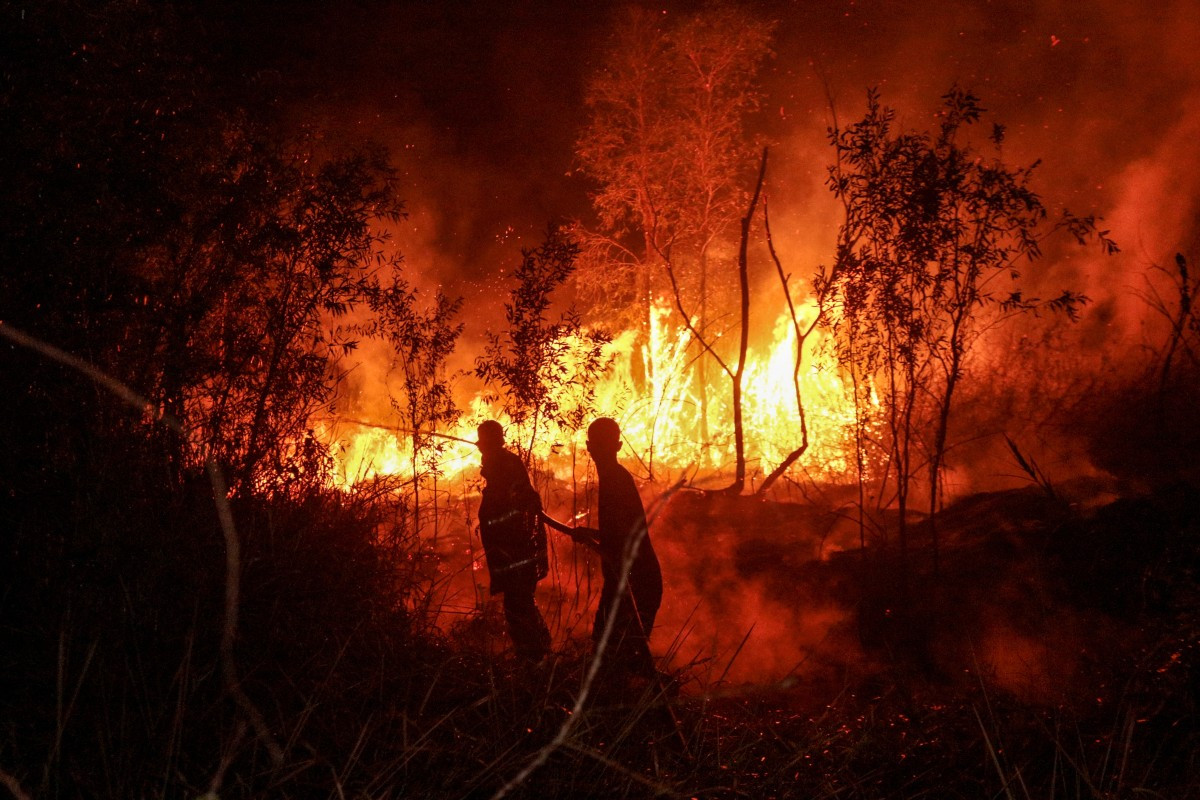
Indonesia’s 2026 forest fire season has underscored the archipelago’s ongoing struggle against land-clearing blazes, with cumulative carbon emissions reaching nearly 200 megatonnes by November 15—the third-highest total recorded since systematic monitoring began in 2003, according to the European Union’s Copernicus Atmosphere Monitoring Service (CAMS). Only the catastrophic years of 2015 and 2006 saw greater fire-driven emissions.
The fires, which peaked during the dry months, scorched approximately 2.88 million hectares by November 11—an area nearly 18 times the size of London and nearly a million hectares more than was reported in early September. The worst-hit regions included Kalimantan, Sumatra, and Papua. Dense smoke blanketed surrounding countries including Singapore and Malaysia at several points, raising concerns about air quality and regional health impacts.
The 2026 burning season briefly made Indonesia the world’s leading source of wildfire-attributed carbon emissions, with 19.7 million metric tons discharged during the first week of September alone—surpassing even Russia and accounting for more than a third of global fire emissions in that seven-day period.
Scientists attribute the ferocity of this year’s blazes in part to human-driven climate change, estimating that the compounded heat—around 1.6°C above historical norms—made such an extreme fire season roughly three times more likely. Prolonged drought conditions and the persistent threat of El Niño events intensified the risk in forests already destabilized by large-scale deforestation and agricultural conversion.
Indonesia’s forest loss surged prior to the fires, with watchdogs reporting more than 430,000 hectares cleared in 2025—the highest tally in almost a decade, a trend fuelled by state-backed food and energy estate projects. Vast expanses of peatland, some 3.8 million hectares categorized as high fire risk since 2023, exacerbated the crisis. Peat burns are notoriously difficult to extinguish and release disproportionate amounts of carbon dioxide.
Authorities mounted substantial firefighting efforts as the situation intensified, but government details regarding enforcement and fire prevention remain limited. By mid-November, the flames were largely contained, yet the environmental and health consequences—widespread haze, lost biodiversity, and long-term carbon releases—are far from resolved. Restoration and recovery efforts will continue for months or years, as scientists and policymakers press for enhanced monitoring and systemic mitigation strategies.
With the scars of previous fire disasters in 2006, 2015, and 2019 fresh in public memory, Indonesia’s struggle to balance economic development and ecological preservation remains at a critical juncture. The 2026 fire season is a potent reminder that bold and sustained action will be required to limit future catastrophes as a warming climate collides with land use pressures.