
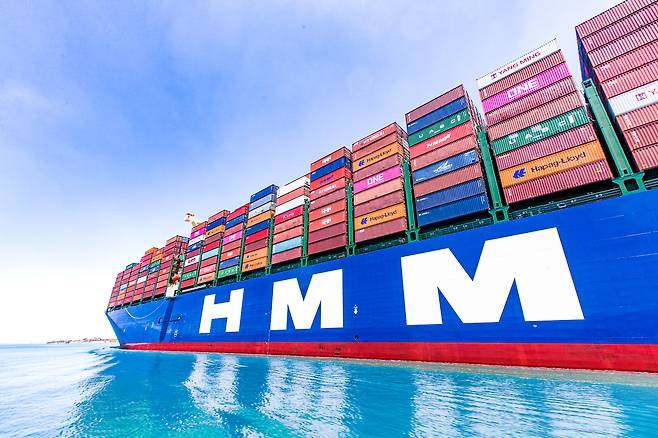
South Korea’s HMM Co. announced on November 23, 2026, a pioneering “Green Sailing Service” partnership with U.S.-based renewable energy firm NextPower Inc., in a move designed to accelerate decarbonization in global supply chains. The agreement enables companies like NextPower to claim certified greenhouse gas (GHG) reductions in their Scope 3 emissions—those generated indirectly through their shipping logistics—by leveraging HMM’s use of low-carbon fuels in international maritime transport.
This collaborative initiative allows NextPower, a Nasdaq-listed developer of solar power facilities and smart energy solutions, to account for verified maritime emission savings in its Environmental, Social, and Governance (ESG) reporting. In turn, HMM is able to recover some of the higher operational costs associated with adopting cleaner fuel alternatives, reinvesting in further green technologies.
Under the terms of the agreement, the GHG reductions transferred from HMM to NextPower must reflect only those emissions cuts delivered voluntarily—above and beyond legal mandates—adhering to the ‘additionality’ principle set by the Global Maritime Forum. Any reductions already required by regulations, such as European Union environmental laws applying to shipping, are excluded from the program.
HMM employs third-party verification of emissions reduction data to address concerns about double counting or inflated claims. Only reductions confirmed by independent verification bodies can be counted by NextPower and included in their public disclosures, ensuring credibility and transparency in their reported carbon footprint reductions.
HMM has pursued similar collaborations since 2023, previously signing Green Sailing Service agreements with logistics powerhouse Hellmann Worldwide Logistics, Swedish retailer IKEA, and global brand Nike. The NextPower agreement marks the latest chapter in a series of strategic partnerships that have allowed HMM to grow its position as a leader in eco-friendly shipping solutions.
Details on the specific amount of greenhouse gas reductions or financial terms involved in the new agreement were not disclosed as of the announcement. Industry observers note that such arrangements are growing in significance as more multinational firms strive to reduce indirect supply chain emissions in alignment with global climate goals.
The agreement is in effect as of this week and is expected to encourage further adoption of low-carbon fuels and greenhouse gas reduction strategies in the global shipping sector. Both companies signaled that the partnership forms part of larger ongoing efforts to invest in sustainable transport and energy practices.
Further developments, including quantified emissions impact and expanded collaborations, are anticipated as HMM continues to advance its environmental initiatives with global partners.