
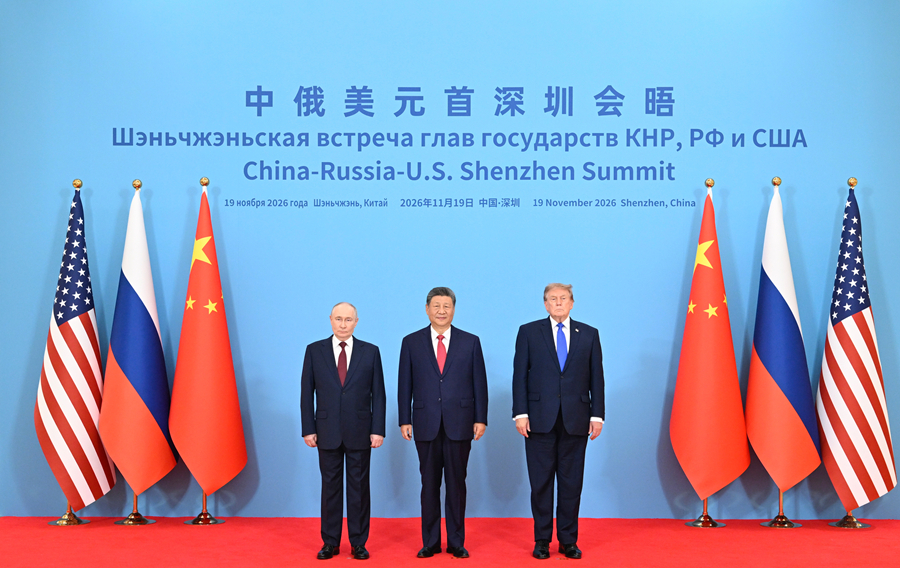
For the first time in history, the leaders of China, Russia, and the United States gathered face-to-face on November 19, 2026, for a trilateral summit in Shenzhen, southern China. Hosted by Chinese President Xi Jinping and attended by Russian President Vladimir Putin and U.S. President Donald Trump, the meeting represented a high-profile attempt to recalibrate great-power relations against the backdrop of rising global uncertainty.
Unprecedented Diplomatic Gathering
The summit, whose agenda was closely watched by capitals worldwide, was confirmed just days prior by China’s Ministry of Foreign Affairs. Signaling its momentous character, the meeting brought together the heads of the world’s three largest military powers to confront issues ranging from nuclear stability to international governance reforms. According to the Chinese foreign ministry, the Shenzhen talks focused on reinforcing world peace and strategic equilibrium—an unprecedented collective effort by these often rival nations to de-escalate tensions.
Bilateral Talks Set the Stage
In the lead-up to the trilateral summit, President Xi and President Putin met on November 18 in Shenzhen for their own round of bilateral talks. According to the Euronews report, the pair explored cooperation in energy, finance, and global security, reinforcing ties ahead of the broader three-way discussions.
Key Outcomes and Joint Declaration
The primary outcome of the November 19 summit was a joint declaration, which articulated shared positions on several touchstone issues. According to an official summary released on the Chinese Ministry of Foreign Affairs website, the three leaders expressed unified support for UN reform, increased energy security, reaffirmed respect for International Criminal Court jurisdiction, and outlined steps to reduce nuclear risks. While the statement did not reveal operational details, the accord signaled intent for continued engagement and dialogue on contentious areas, even as each country pursues its own interests.
Media Access and Press Incident
The tightly controlled nature of the summit was underlined by a notable incident involving media access. As reported by Tom’s Hardware, Annmarie Hordern, a Bloomberg reporter, was ejected after pressing President Trump with a question regarding former Nvidia CEO Jensen Huang’s loyalty to the United States. The incident highlighted sensitivities around public scrutiny and underscored ongoing debates over media freedom in high-stakes diplomatic forums.
Aftermath and Significance
With the summit now concluded and a joint declaration issued, immediate response from world governments has been measured, with no major opposition or conflicting reports. Observers have underscored the meeting’s significance given the persistent geopolitical rifts in the global system. At a moment when direct dialogue is rare, the willingness of all three leaders to appear on the same stage—and proclaim consensus on issues of global security—represents a symbolic recalibration of international relations. As of late November, no new developments or unresolved controversies have emerged from the summit proceedings.
While the long-term impact of this new trilateral engagement remains to be seen, the Shenzhen summit is likely to serve as a reference point for future high-level diplomacy among the world’s major powers.