
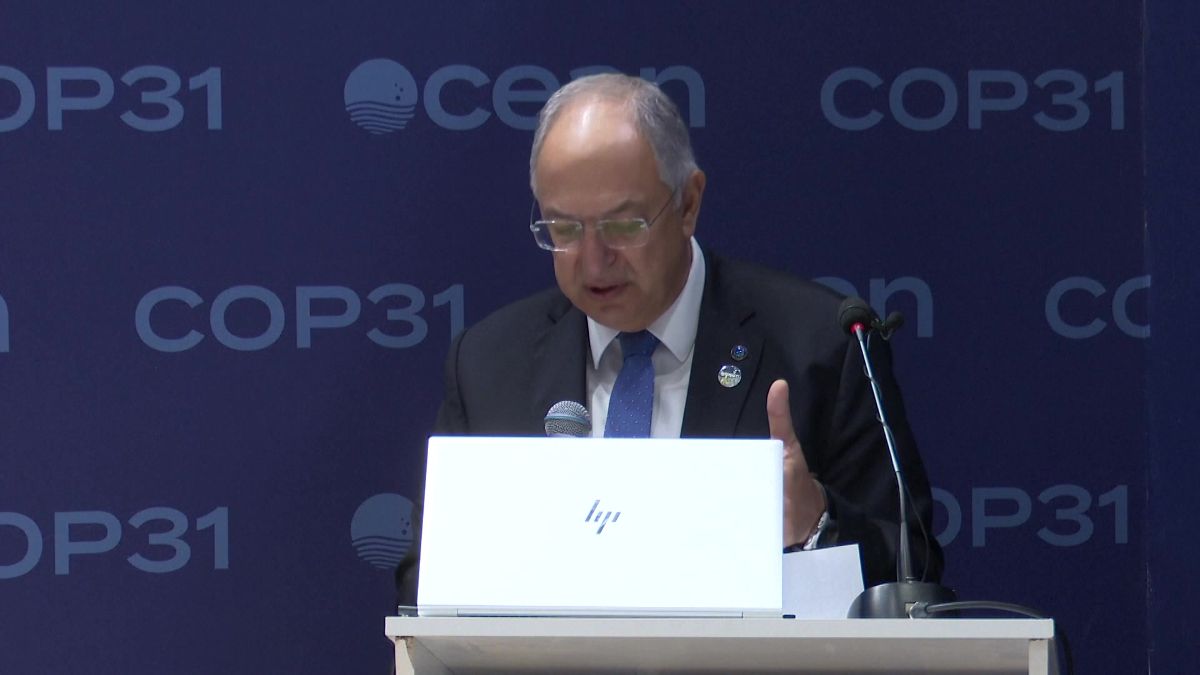
Few arenas at the global climate summit in Antalya commanded as much urgency as the Blue NDC Challenge, where European Commissioner for Fisheries and Oceans Costas Kadis confronted world leaders with blunt warnings over the world’s lagging commitment to ocean protection. Addressing representatives gathered at the France- and Brazil-hosted event on November 17, Kadis drew a sharp contrast: while the EU has elevated its ocean targets within national climate strategies (NDCs), many nations still sideline oceans in action plans amid, as he stressed, a mounting climate crisis that has rendered disengagement impossible.
Kadis traced the growing recognition that ocean action is central to climate mitigation—a notion underpinning the Blue NDC Challenge initiative launched at COP31—as large swathes of global emissions and biodiversity are tied to marine environments. The Commissioner’s address underscored a two-pronged challenge: integrating ocean protection meaningfully into national climate commitments, and ensuring that such integration is not merely rhetorical, but supported by finance, science, and monitoring.
The event, a central feature of COP31’s side-programme, echoed the priorities set out by European actors earlier in the year in Paris, at Blue Tech Europe, where marine innovation and data infrastructure were pitched as vital tools for global cooperation on ocean health. Kadis referred to these advancements, highlighting the EU’s coordination of marine observing technologies and interoperable data systems to support multinational decisionmaking.
Yet the Antalya gathering was not a forum for technocratic celebration alone. Kadis pointed to persistent gaps: several major emitters continue to omit the ocean from their NDCs or lack measurable targets, endangering both climate goals and marine biodiversity. He emphasized that the EU’s recent policies, including expanded blue carbon credits and ocean data integration, are insufficient in isolation; global alignment is needed.
Participants from across continents, including Iceland’s environment minister Jóhann Páll Jóhannsson, discussed next steps at EU-hosted sessions and the Blue NDC Call side event over November 16–17. For Kadis, the day’s challenge was setting a new baseline: universal adoption of robust, finance-backed ocean targets in national climate strategies. Whether these exhortations lead to concrete changes in the next generation of NDCs, however, remains the core unanswered question at the close of Antalya’s pivotal summit days.