
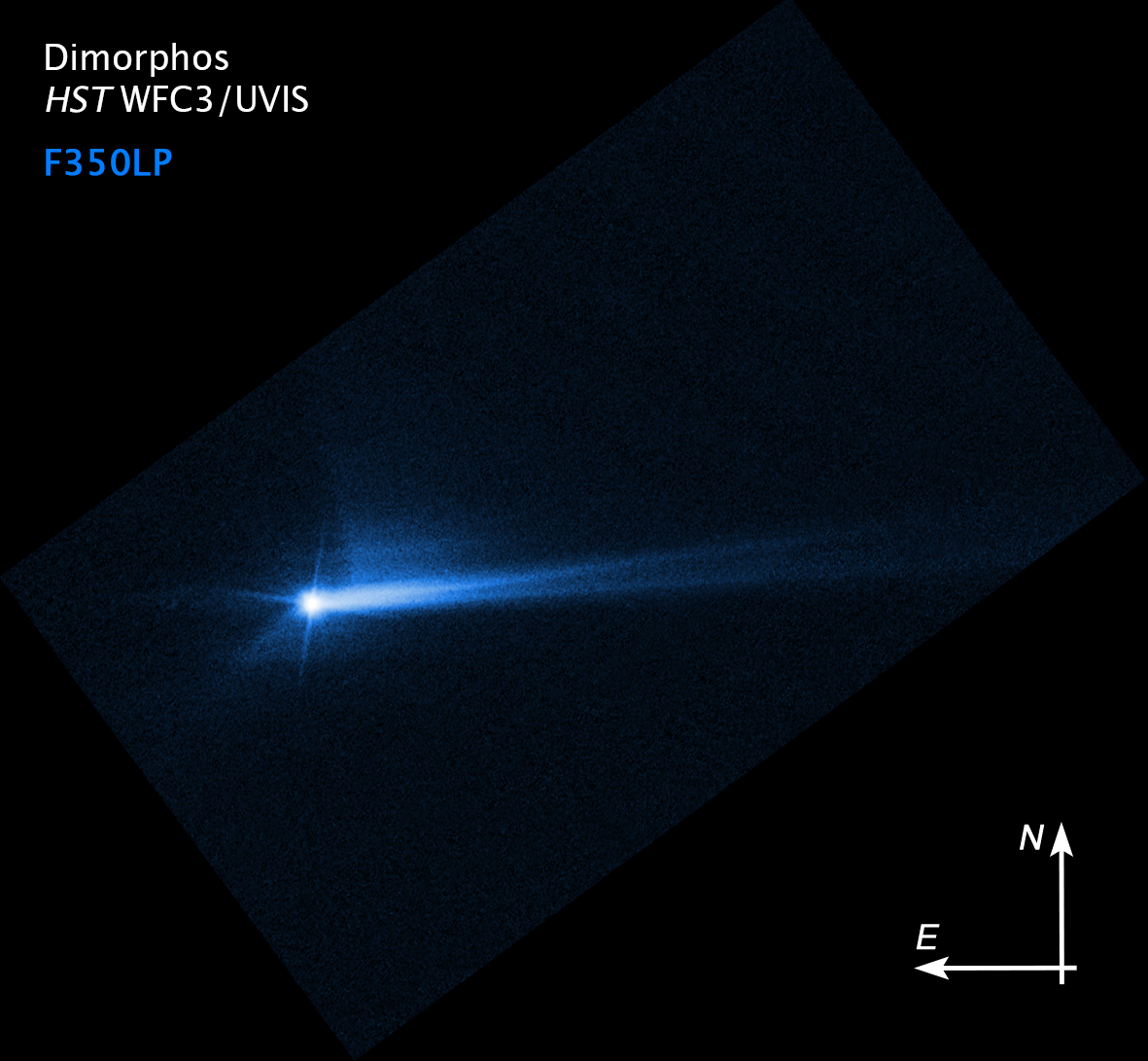
The European Space Agency’s Hera spacecraft has begun its first close-up survey of the binary asteroid system Didymos, where NASA’s DART mission dramatically collided into the moonlet Dimorphos in September 2022. Hera’s arrival and initial observations, ongoing since November 11, 2026, mark a pivotal new chapter in the international effort to understand and develop ways to protect Earth from hazardous asteroids.
Nestled some 11 million kilometers from Earth, Dimorphos—the smaller partner in the Didymos system—was famously struck by the Double Asteroid Redirection Test (DART) more than four years ago. That demonstration made history, as DART’s impact measurably changed Dimorphos’s orbit around Didymos by 33 minutes, offering humanity its first proof that the course of a celestial body can be altered through kinetic deflection. Since then, the Didymos system has been routinely monitored from afar, but detailed surface and structural analysis awaited Hera’s inspection.
Launched in October 2024, Hera’s mission is unique: while DART was a high-speed projectile, Hera is an explorer and scientist. Over the past week, Hera has maneuvered to within 25–30 kilometers (15–18 miles) of the asteroid pair, using high-resolution cameras and scientific instruments to map the aftermath of DART’s impact. Among its first observations transmitted to Earth are boulders, craters, and surface grooves, the latter of which may reflect both the original geological environment and the dramatic changes from DART’s collision.
This ongoing inspection is a crucial test not just for planetary defense strategies, but for advancing knowledge of asteroid composition and response to force. One focus of the Hera team is to pinpoint the precise changes in Dimorphos’s structure and the crater left by the DART spacecraft. Scientists hope that understanding how energy from the impact rippled through the tiny moonlet will refine asteroid deflection tactics for future threats. Hera is slated to close in further—targeting approaches within 20 kilometers in the coming weeks, which should yield unprecedented detail and help answer lingering questions about material redistribution and crater formation on small bodies.
NASA officials have previously confirmed the DART experiment exceeded expectations, surpassing the minimum anticipated change in orbit period by more than 25 times. The joint Asteroid Impact and Deflection Assessment (AIDA) collaboration, featuring DART and Hera, reflects the blossoming cooperation between the U.S. and Europe on planetary defense. With Hera’s eyes, the world may soon witness the full physical consequences of deflecting a cosmic visitor.
As Hera continues its survey, the world will watch for insights into not only what happened after humanity’s extraordinary experiment, but what it means for the future safety of our planet.