
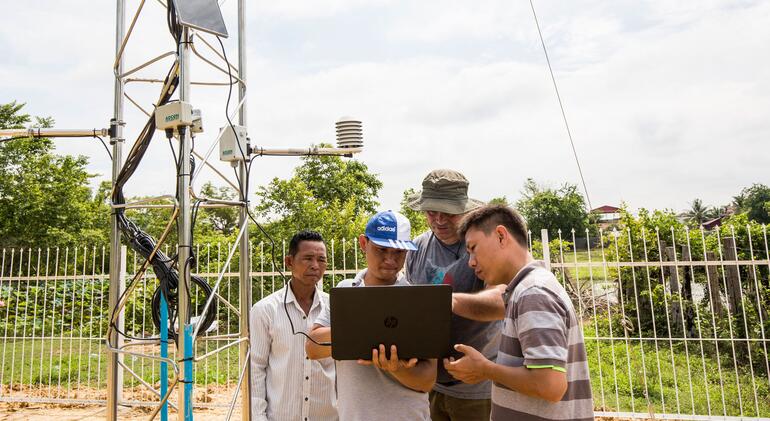
In Antalya, Türkiye, at the COP31 climate conference, a stark divide surfaced: while rapid warning systems now shield many communities across the globe from deadly natural hazards, millions—largely in the world’s most vulnerable regions—still face disaster without a signal that danger is near. United Nations Secretary-General António Guterres called for “Early Warnings for All” by the end of 2027, urging that no one should “lose their life simply because a warning came too late – or never came at all.”
The new Global Status of Multi-Hazard Early Warning Systems 2026 report, released by the UN Office for Disaster Risk Reduction and the World Meteorological Organization, revealed a marked acceleration in the adoption of these systems: 136 countries—about 70% of the world—can now send out alerts for hazards, an uptick of 17 nations since early 2025. This progress translates into tangible benefits. Where comprehensive warning systems are in place, disaster mortality plummets, with death rates 6.1 times lower and far fewer people affected compared to countries with only moderate or limited coverage.
Pivotal examples anchor this progress. In July 2025, following an 8.8-magnitude earthquake near Russia’s Kamchatka Peninsula, the Pacific Tsunami Warning Center issued alerts within ten minutes. As a result, Japan mobilized the evacuation of 1.9 million citizens, while Ecuador’s Galápagos Islands moved over 2,300 people from high-risk zones before tsunami waves struck. The advance warning transformed potential catastrophe into a logistical triumph.
In Madagascar, as Tropical Cyclone Gezani loomed in February, the Malagasy Red Cross’s early action meant up to 100,000 people received critical door-to-door evacuation support. In Rwanda’s Karongi district, daily life shifted swiftly as farmer cooperatives, SMS messages, local radio, and loudspeakers delivered flood warnings—giving residents crucial time to protect property and livelihoods before heavy rain hit.
Yet, the picture is uneven. “Around one in three countries still has no early warning system,” Guterres emphasized, pinpointing the greatest gaps in least developed nations, small island states, and regions divided by conflict. These places, he said, “did the least to cause the climate crisis, but are being hit first and hardest.” The disparity is stark: some single European countries have more operational weather stations than all of Africa combined, leaving huge zones completely unmonitored and populations unwarned.
Compounding the challenge, this year’s El Niño event is threatening to overwhelm monitoring capacity. WMO chief Celeste Saulo warned the current El Niño “could be literally off our monitoring charts.” While the phenomenon cannot be halted, robust warnings and proactive responses stand out as the world’s bulwark against its worst human consequences.
Critical to lasting protection, Guterres urged a step-change in approach: embedding early warnings as a permanent public service, closing the financing and technology gaps, and shifting from fragmented, short-term projects to coordinated support for locally led initiatives. Since 2022, about $2 billion has been mobilized reaching some 160 countries, but the UN leadership cautioned that funding must flow across the entire warning chain—from state-of-the-art forecasting to the last-mile communication tools and community volunteers who bring the message to every household.
Momentum is building; in 2025 alone, 146 anticipatory action programs activated early responses in 54 countries, reaching nearly 10 million people before disaster struck. But the UN’s message in Antalya is clear: as climate-fueled hazards escalate, scaling warnings to reach every community is no longer a distant goal but an urgent necessity with lives at stake.