
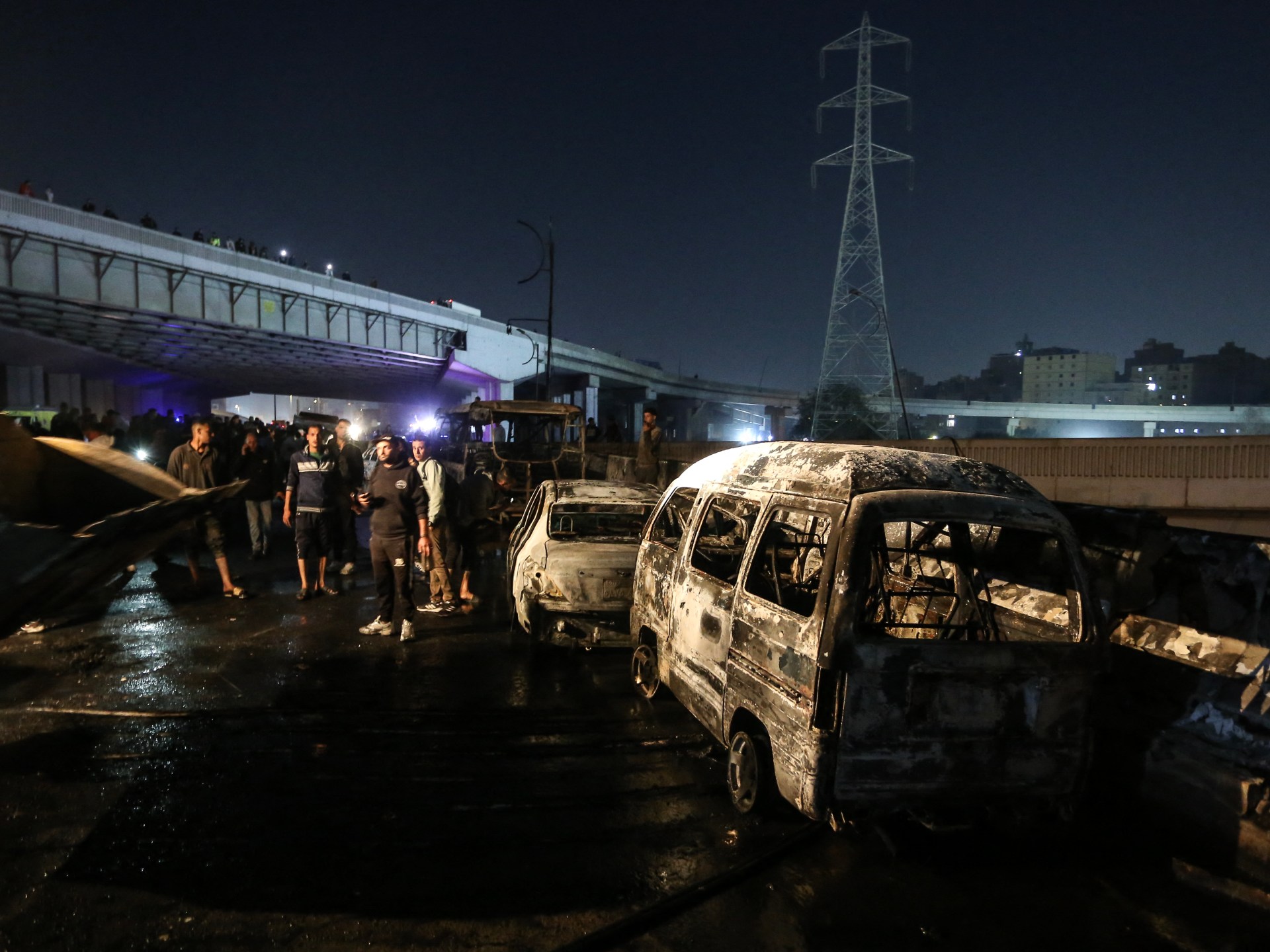
Egypt is reeling in the aftermath of a catastrophic fuel tanker explosion that killed at least 31 people and injured 21 more in Cairo’s Warraq district on November 25, 2026. The disaster, which occurred in the early evening on the city’s major Ring Road, stands among Egypt’s deadliest recent traffic accidents and has reignited national discussions over road safety and public accountability.
Tanker Overturns, Inferno Engulfs Traffic
At approximately 6:30 PM local time, a 21-year-old driver attempted to overtake vehicles at high speed on a busy stretch above Tunnel 10 in Giza Governorate. According to official investigations, this maneuver led to a collision with the rear-right side of a fuel tanker, toppling the vehicle and releasing its flammable cargo. The ensuing blaze swiftly engulfed at least 27 vehicles, including cars and motorcycles, trapping commuters and causing mass casualties.
Thirty-nine ambulances responded as emergency services raced to contain the flames and pull the wounded from charred vehicles. Survivors were rushed to several hospitals while the wreckage continued to smolder late into the night. Egypt’s Health Ministry confirmed the death toll at 31, with multiple victims yet to be formally identified. Twenty-one others remain hospitalized with varying degrees of burns and trauma.
Investigation: Driver Detained, Electrical Fault Disputed
The Public Prosecution Office has detained the young driver linked to the initial crash, launching an investigation into possible reckless driving and ordering forensic tests to determine if he was under the influence of drugs at the time. The authorities are continuing to examine the precise sequence of events, though early speculation that a fallen high-voltage cable contributed to the inferno was refuted by Egypt’s Ministry of Electricity, which stated all overhead lines remained intact.
While the investigation continues, the scale of the tragedy has renewed public scrutiny on Egypt’s endemic road safety problems. The country has long struggled with lax enforcement, deteriorating infrastructure, and high rates of fatal accidents, with several thousand Egyptians losing their lives each year in road incidents.
Government Response and National Mourning
President Abdel Fattah el-Sisi offered his condolences, directing officials to provide aid to the families of the victims and support to survivors. In an outpouring of national grief, the Ministry of Awqaf announced plans for absentee funeral prayers in mosques across Egypt following Friday prayers on November 27. The commemoration comes as sorrow and anger ripple across Cairo, with many voices demanding increased safety measures and thorough accountability for those found at fault.
The Ring Road explosion—both an acute tragedy and a symbol of ongoing hazards on Egypt’s roadways—has become a catalyst for national reflection. As investigations progress and families prepare to mourn, authorities face mounting pressure to address the systemic gaps that contributed to this disaster.