
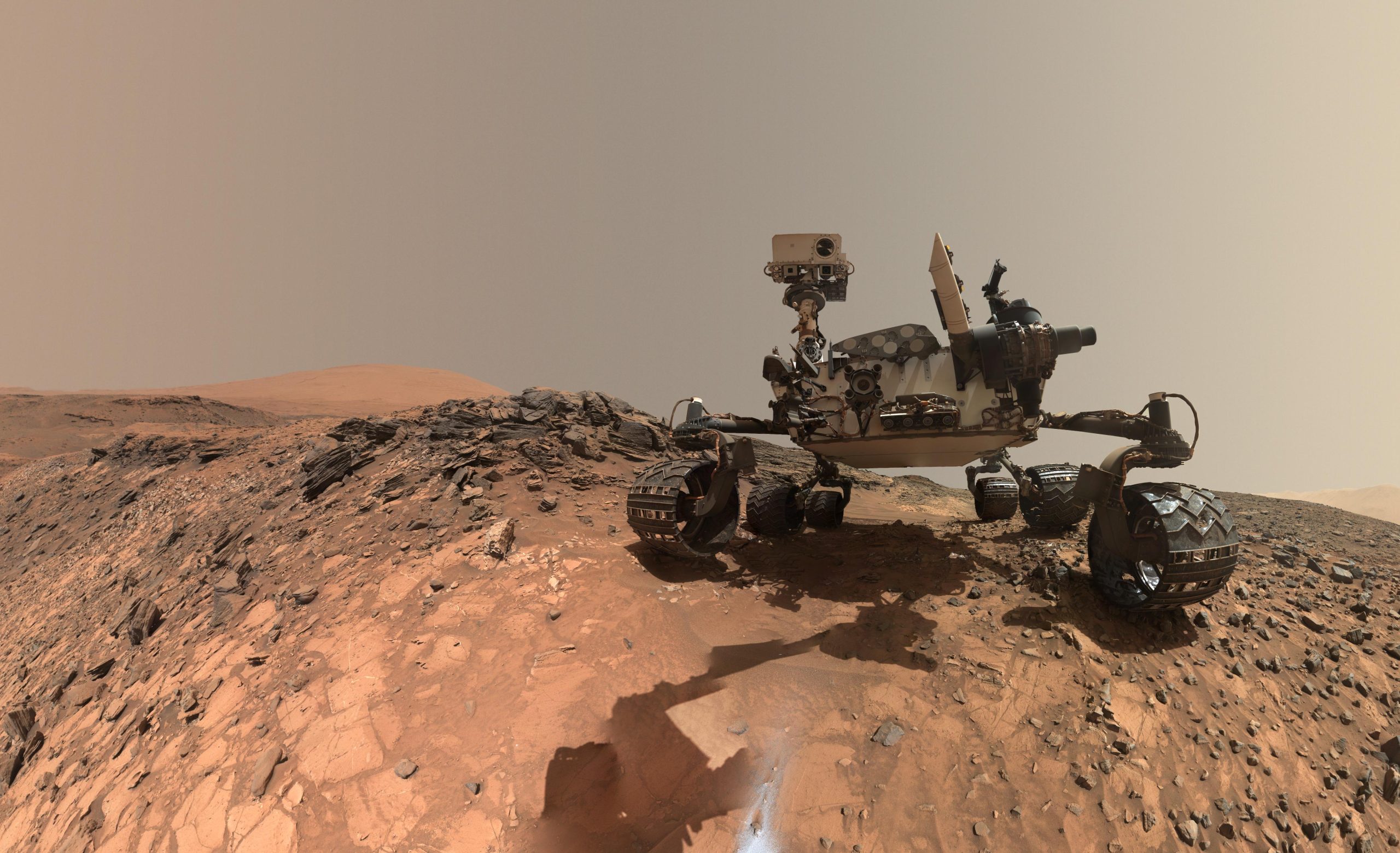
NASA’s Curiosity rover has uncovered compelling new evidence of ancient water activity and diverse organic molecules on Mars, sparking renewed scientific excitement about the planet’s potential to have hosted life. These latest findings, emerging from a series of detailed analyses as of November 16, 2026, come after more than a decade of Curiosity’s patient exploration of Gale Crater and the slopes of Mount Sharp.
Among the headline discoveries, the rover detected rippled rock textures in the “Marker Band” region—features consistent with wave action within a substantial Martian lake. The ripples, preserved in ancient sediment, provide the clearest geological fingerprint yet observed that surface water once shaped the Martian landscape. In nearby Gediz Vallis, Curiosity also mapped out large debris mounds believed to be remnants of wet landslides, supporting the view that flowing water played a persistent and dynamic role in Mars’ geological past.
Perhaps even more tantalizing are Curiosity’s recent results from the Sample Analysis at Mars (SAM) instrument. While drilling into the Mary Anning 3 rock sample, the rover’s sophisticated lab detected a suite of complex organic molecules, including nitrogen-bearing compounds and benzothiophene—some of which are fundamental to biological chemistry on Earth. Although these molecules can form through non-biological processes, their presence, especially in conjunction with water-formed rocks, raises the prospect that ancient Mars might have offered a habitable environment.
Adding further weight to the mystery, Curiosity has found rocks composed almost purely of sulfur—chemical signatures that may be linked to unique preservation processes for organic material. At the atmospheric level, the robot’s multi-year sampling of Martian CO₂ has revealed seasonal swings in methane concentration: these regular summer peaks and winter lows may hint at subsurface sources, potentially thin films of water or more exotic chemistry, though scientists caution that definitive links to biology remain unproven.
Tracing Mars’ Environmental Evolution
According to NASA officials, these discoveries reinforce a gradual picture of Mars’ transformation from a warmer, wetter world to the arid, oxidizing planet seen today. The evidence of ancient lakes, flowing water, and preserved organic matter is now among the strongest yet for a Martian environment that, billions of years ago, possessed key building blocks and energy sources potentially compatible with early microbial life.
While Curiosity has not yet identified direct signatures of life, NASA scientists such as Dr. Jen Eigenbrode highlight the mission’s success in unearthing increasingly complex organic molecules—not only confirming that organics survived the planet’s harsh surface, but that future robotic or human missions focused on deeper drilling could uncover still more revealing samples.
Ongoing Exploration on the Red Planet
The Curiosity rover remains active in Gale Crater and is currently targeting new drilling sites to probe layers of Martian sedimentary rock believed to record earlier climate conditions. The mission’s ongoing journey is being closely watched as NASA and global partners draft ambitious plans for even larger rovers and, ultimately, potential sample return flights.
Curiosity’s long-term data, now spanning more than a decade, are steadily rewriting our understanding of Mars—from a cold and inhospitable desert to a planet whose past may have once offered the basic ingredients needed for life as we know it. For now, the Red Planet’s greatest secrets continue to be pried from its rocks, one sample at a time.