
With time running short at COP31 in Antalya, the promise of global unity on climate action collided this week with persistent divides on core issues, as delegates launched the second major “Global Stocktake” since the Paris Agreement. This five-yearly progress audit aims to measure whether national efforts add up to what’s needed to cut emissions, adapt to climate change, and help countries most in need—yet 21 major points of contention remain, leaving hopes for a sweeping new agreement in jeopardy.
The Global Stocktake, now central to COP31’s agenda, will conclude in 2028, making this the final checkpoint before the 2030 Paris Agreement targets. The first evaluation, concluded at COP28 in Dubai, spurred ambitious pledges to triple renewable energy and double energy efficiency, yet many of these are still short of real-world results. UN climate chief Simon Stiell, emphasizing the urgency, pointed to only “two years” left to show the world can shift ambitious climate plans into tangible reductions and increased adaptation. Despite progress lowering projected global heating from 4°C to 2.6°C, the reality check revealed the pace remains insufficient to protect vulnerable populations and economies.
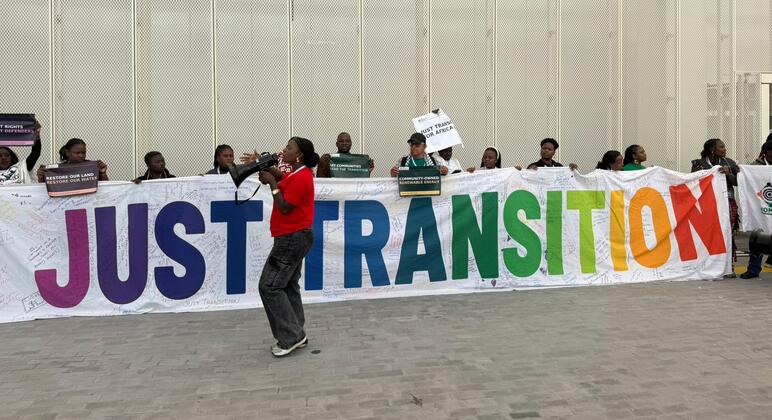
The deadlock in negotiations centers on three intertwined questions: who shoulders the cost of climate action, how quickly the world withdraws from fossil fuels, and whether the transition can be truly “just” if developing countries cannot afford the necessary changes. Finance, in particular, has emerged as a flashpoint. Civil society groups at the summit bluntly criticized the slow pace, with Seher Raheja of India’s Centre for Science and Environment warning that talks were “kicking the can down the road,” and Pooja Dave of Climate Action Network International calling broken adaptation promises “literally about our survival.” The inability to agree on who pays risks undermining commitments made to those most affected by climate impacts, who often have the fewest resources to adapt.
Beyond the negotiation rooms, COP31 also marked Wednesday as Human, Social Development and Gender Day—a timely focus as the just transition debate sharpened. Here, attention turned to whether women and marginalized communities are being included in climate decision-making and whether climate policies genuinely protect livelihoods as economies shift. Tuvalu’s Prime Minister Feleti Teo reminded delegates that resilience “has a limit. And beyond that limit is survival,” highlighting the realities faced by communities on the climate front lines, while Brazilian negotiator Lilian Chagas warned that failing to empower women in climate science and health undermines effective adaptation.
Economist Mariana Mazzucato, speaking at a high-level event, cautioned that the just transition debate must not be reduced to merely finance: “We don’t fix markets. We shape the market to deliver inclusive and sustainable growth.” She argued that public investments must embed social concerns from the start—otherwise climate action risks repeating patterns of exploitation, such as lithium extraction that harms water supplies and vulnerable populations.
Underlying these disputes is a growing concern over whether the latest science can inform decision-making in time. The Intergovernmental Panel on Climate Change (IPCC) faces internal disagreements over the schedule for its next major reports. Vulnerable countries want data finalized ahead of the next Stocktake, while others, including Russia, Saudi Arabia, and China, worry that a rushed timeline would disadvantage developing-world scientists. IPCC Chair Jim Skea confirmed future assessments will address not only adaptation but, for the first time, adaptation finance and losses.
As negotiations stretch on—with new draft texts and political deals promised, but expectations of an extended final session—the conference is under pressure to deliver more than rhetorical ambition. Türkiye’s push to raise electricity to 35% of global final energy use by 2035 has attracted support from 75 countries, but critical issues such as adaptation funding, mitigation pace, and justice in the energy transition remain locked behind bracketed, unresolved text. The outcome at Antalya may define not just whether climate diplomacy stays on its agreed track, but how—or whether—the world can equitably and rapidly accelerate efforts to limit the climate crisis’s global toll.