
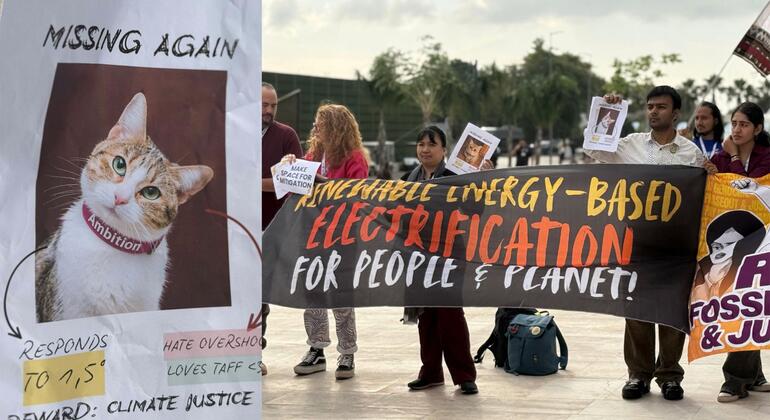
Political wrangling at the COP31 climate summit in Antalya, Türkiye, reached a critical juncture on Thursday as negotiators unveiled a new draft agreement stripped of explicit calls to transition away from fossil fuels. While activists outside brandished humor-filled posters declaring a fictional cat named “Ambition” missing, the symbolism masked deepening divisions inside the summit halls about how—and how fast—the world should act on the climate crisis.
The draft agreement now focuses on promoting clean energy and electrification, notably referencing Türkiye’s proposal to boost electricity’s share of global energy use to 35 percent by 2035. Missing from the new language are direct references to phasing out coal, oil, and gas—long demanded by vulnerable nations and civil society groups. The text does, however, confront the grim reality that the world looks set to overshoot the Paris Agreement’s signature 1.5°C warming limit, a first for a COP summit. Australian negotiator Chris Bowen, leading the talks, emphasized that the summit must not be remembered for conceding failure, pledging talks would continue “through the night” to bridge the gulf between countries before Friday’s deadline.
Contentious issues remain unresolved across several negotiation tracks—including the financing of climate adaptation and justice for affected communities. The updated draft reaffirms a goal to triple adaptation funding by 2035 but leaves the arithmetic and mechanisms to future negotiations, frustrating civil society advocates. “Adaptation finance is not nice to have. Adaptation is how we all survive this climate crisis together,” argued Teresa Anderson of ActionAid International, adding that developing nations continue to shoulder unequal burdens without adequate support.
Underlying the policy debates are fresh data capturing both climate action’s advances and its shortfalls. The UN’s 2026 Climate Change Yearbook found that just 44 of 96 global climate indicators are heading in the right direction, with renewable energy capacity growing 17 percent from 2024 to 2025. However, progress is uneven, and crucially, adaptation finance declined sharply between 2022 and 2024. A high-level event at the summit promoted an electrification package spanning more than 150 countries and the EU, spotlighting new grid infrastructure and at least $156 billion in planned annual investments. Yet, UN climate chief Simon Stiell warned that technology and finance must reach more vulnerable communities faster, and that adaptation alone cannot make up for delayed broader transitions.
The human stakes of policy inertia were brought vividly to delegates’ attention. The death of a Canadian child with asthma, exacerbated by wildfire smoke, and portraits of Ugandan children struggling through floodwaters underscored the real-world consequences of climate inaction. Young Ugandan activist Alison Nisima called for investment in local preparedness, insisting that timely warnings must enable communities to act—not merely brace for disaster.
The summit now confronts a stark crossroads: whether governments can break the deadlock, reinstate meaningful commitments on fossil fuel transition, and clarify financial support, or adjourn with ambitions once again reported missing. The fate of both the text—and the world’s climate momentum—remains unresolved as Friday’s closing deadline looms.