
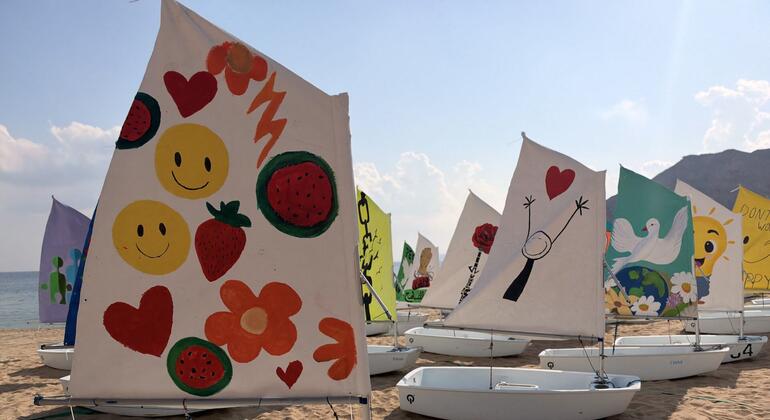
Children’s voices rang out from the stage in Muscat, Oman, as the Muscat Plan of Action Forum drew to a close on the International Day for Tolerance. Their message to the world was striking in its clarity: peace demands an end to hatred, a respect for diversity, and an unwavering commitment to human rights. Framed not just as distant goals, but as immediate personal pledges, the children committed themselves to building bridges of solidarity, safeguarding their planet, and acting as ambassadors for peace in their own communities.
This two-day forum assembled not only young delegates, but also UN officials, religious authorities, and traditional leaders from around the world. Their common aim: to translate the aspirations of the Muscat Plan of Action—first launched at UN Headquarters in New York in June—into actionable programs and partnerships. Oman’s Minister of Endowments and Religious Affairs, Mohamed bin Said bin Khalfan Al Mamari, argued that difference itself is not the source of conflict—instead, he called for justice-built systems, strong local mediators, and a greater role for women and youth in preventing harm before it starts.
The historical urgency of the forum’s themes was underscored by Chaloka Beyani, UN Special Adviser on the Prevention of Genocide, who warned of the danger when tolerance breaks down. Citing the atrocities in Rwanda and Srebrenica, Beyani explained how unchecked discrimination and exclusion can escalate from words to violence, urging international vigilance and early intervention. Religious leaders, like Metropolitan Emmanuel of Chalcedon, emphasized that priests, imams, and rabbis can act as frontline sentinels against the kinds of rhetoric that have, in the past, preceded mass atrocities.
Beyond speeches, the forum highlighted concrete examples of traditional and community mediation. Queen Gladys Mbuya of Cameroon recounted how a local leader resolved a tense land dispute between farmers and Indigenous Bororo herders—not by punishing one side, but by facilitating a full-day meeting that concluded in a workable agreement, tailored to the needs of both. This approach, she argued, is at the heart of lasting peace: finding solutions everyone can accept, not simply enforcing retribution.
With these lessons in mind, the forum’s conclusion focused on implementation. A five-year global roadmap was unveiled, structured around three distinct tracks. The first, cooperation, includes an annual progress meeting in Muscat. The second centers on capacity building, delivering training in local languages to strengthen mediation skills. The third focuses on communication, creating a global platform where practitioners can share peacebuilding experience and proven strategies.
The Muscat Plan’s agenda—shaped by the urgent calls of children and the hard-won wisdom of mediators—is now anchored not only in principle, but in the expectation of measured progress and annual accountability from 2027 through 2032. Whether these commitments will build enduring bridges in a fractured world is the challenge that now lies ahead.