
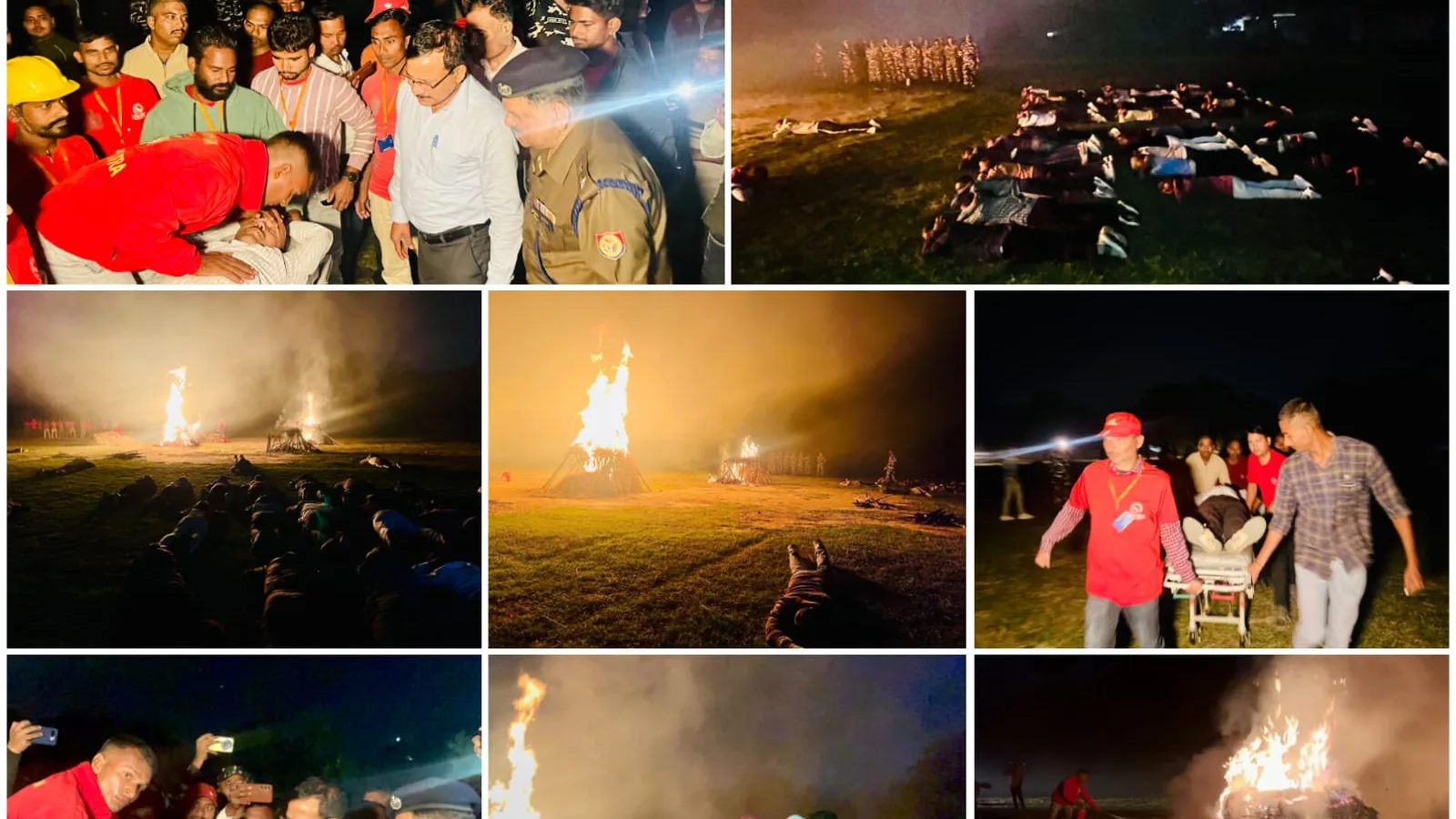
As dusk fell on November 22, 2026, the city of Bahraich in Uttar Pradesh enacted a drill with all the hallmarks of an emergency—from the wail of air raid sirens to the sudden stillness of a simulated blackout. The exercise, held at the city’s Police Lines and involving a broad coalition of agencies, was part of a sweeping statewide effort to test and sharpen emergency systems should a real crisis arise.
The drill, organized by the Civil Defence Department, brought together participants from the police, fire services, health department, Sashastra Seema Bal (SSB), Home Guards, National Cadet Corps (NCC), and disaster management volunteers. Beginning at 6:00 PM, the event commenced with a two-minute air raid warning siren, triggering a carefully coordinated series of rehearsals that included blackout protocols, building evacuations, fire suppression, and mock first aid responses.
District Magistrate Ankit Khandelwal, who closely monitored the operation, underscored the vital importance of timely inter-departmental communication and swift mobilization in the face of an emergency. By simulating everything from the transportation of the injured to the triage of mock casualties at hospitals, the drill tested the readiness not just of officials, but of Bahraich’s broader emergency infrastructure.
Local residents received advance notice to avoid panic, an essential component for ensuring realistic and constructive participation. This public transparency mirrored efforts in cities across all 75 districts of Uttar Pradesh, where similar drills unfolded simultaneously to stress-test systems under the pressure of coordinated demands.
While mock drills have become a standard strategy in India for strengthening disaster and crisis preparedness—from natural disasters to the specter of aerial threats—officials have noted the rising urgency of such measures in recent years, as urban centers grow and threats evolve.
The Bahraich event proceeded as planned, with officials reporting that objectives were met and all emergency units demonstrated readiness. According to reports, no unresolved issues arose over the course of the exercise, suggesting a solid baseline of preparedness should a real-world crisis occur.