
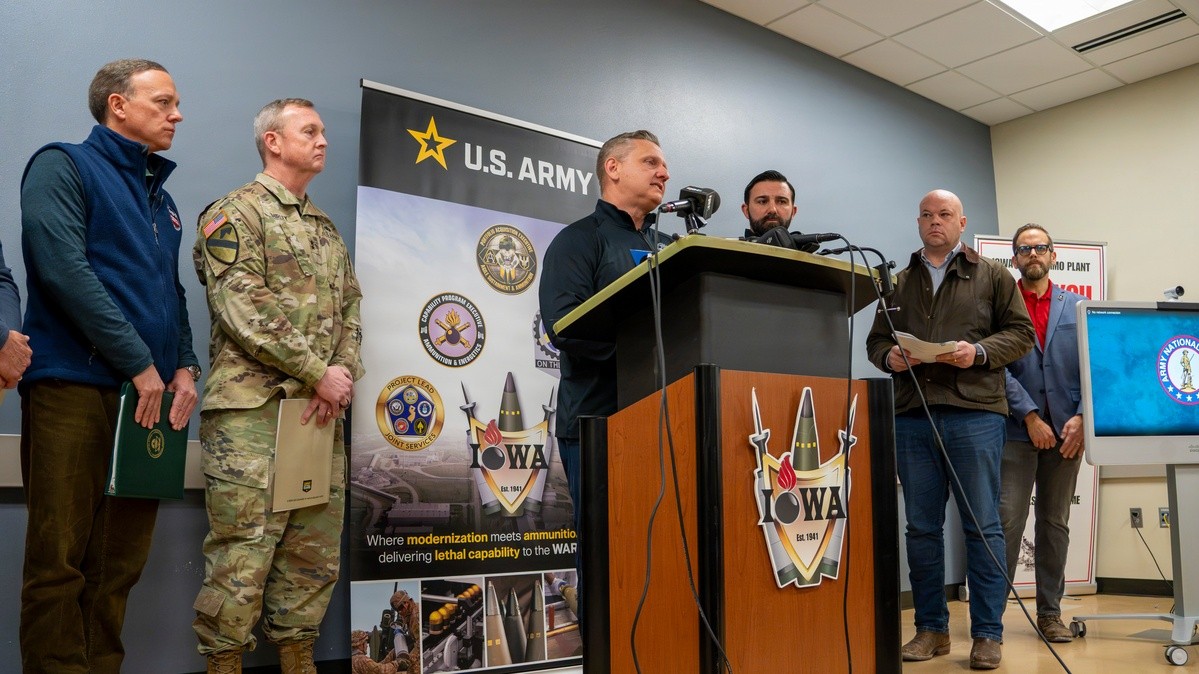
In a tense operation drawing on federal, state, and local coordination, the U.S. Army on November 25, 2026, executed a controlled detonation of nearly 10,000 pounds of highly unstable lead azide at the Iowa Army Ammunition Plant, successfully eliminating an escalating hazard that had loomed over the region for years.
The material—68 aging drums of lead azide primary explosive in crystallized form, discovered during a routine inspection in March—was stored in earth-covered magazines at Middletown, Iowa. Officials revealed that the stockpile had degraded to a state where any attempt at transport or open-lid remediation risked triggering a catastrophic, uncontrolled detonation. “It would be irresponsible for us to not take the determined, consensus-based course of action,” said Army Sustainment Command’s Maj. Gen. Eric Shirley, emphasizing that moving the drums was no longer an option after rapid deterioration in recent months had caused dangerous crystal buildup inside and outside the containers.
After exhaustive technical reviews involving the Army, EPA, ATF, and national explosives experts, the consensus landed on an in-place detonation by Army explosives ordnance crews. The operation, carried out at 9:00 a.m. (CST) inside the depot, involved extensive precautions: a five-mile southwest evacuation zone, recommended relocation for residents and businesses, and a sophisticated shield of sand, concrete, over 100,000 gallons of water, and foam intended to absorb shock and minimize airborne dust and lead particles. Public communication included eventually issuing a shelter-in-place alert to nearby residents roughly an hour before the blast, a decision that later drew criticism from some quarters for its timing and transparency.
Immediate air quality monitoring conducted by the EPA after the explosion reported no detectable lead levels beyond the site, and residents received an all-clear notification later that day. Nonetheless, authorities and independent experts are initiating weeks of environmental monitoring, including soil, water, and sediment sampling near homes, farms, and water sources to confirm there are no lingering threats to public health.
The success of the operation did not quell public unease. Some Middletown residents and local officials expressed frustration with how and when they were notified. Iowa’s Governor-elect Rob Sand criticized the Army’s communication, calling for a full accounting and better transparency in future high-risk federal actions affecting communities. Tempers flared further when Vice President JD Vance, attempting to address federal responsibility, pointed blame at the Obama administration—a claim met with rebuttals noting that two subsequent Trump-led administrations had also failed to act on the dangerous cache.
Lead azide, an explosive long used in military detonators, becomes increasingly hazardous as it ages and dries out. The Army’s resolution of the crisis at Middletown, after years of dormancy and mounting risk, shines a spotlight on the hidden legacy hazards scattered across America’s munitions infrastructure. Federal agencies are now under renewed scrutiny to prevent similar threats elsewhere and to keep lines of communication with affected communities open and proactive.
For now, Middletown’s story closes with a sigh of relief—but vigilance remains. Environmental checks around the site and the water supply will continue in the weeks ahead, ensuring that the explosive solution did not introduce new, invisible dangers.